
MONTGOMERY, Ala. – The Alabama House of Representatives and State Senate on Wednesday passed two bills to allow special primary elections for certain State Senate and congressional districts if courts let the state revert to old maps.
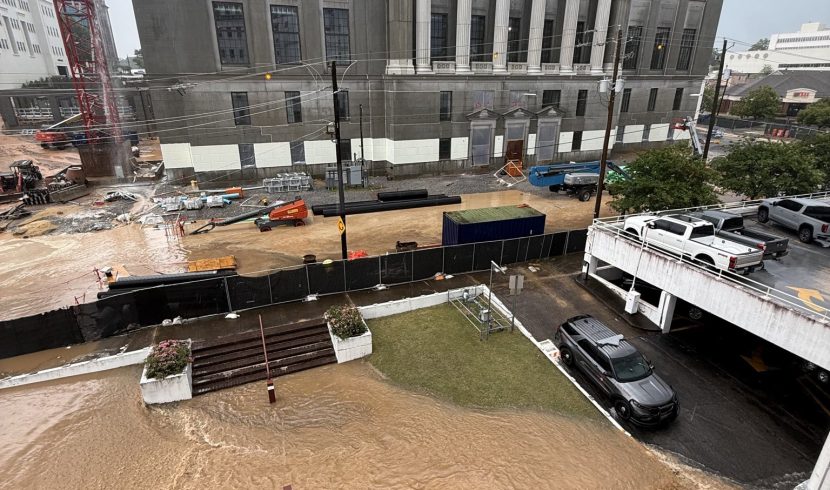
And they did it amidst hundreds of protestors crowding the hallways and a severe thunderstorm causing panic and an eventual evacuation of the State House due to flooding.
The two bills are the only ones being considered during Alabama’s special legislative session. The House bill deals with Alabama’s congressional map, while the Senate bill addresses two State Senate districts.
Gov. Kay Ivey called the special session in response to the U.S. Supreme Court’s 6-3 ruling in Louisiana v. Callais. That decision limits the consideration of race when drawing congressional districts, stemming from a majority-minority district in Louisiana.
The legislation up for passage in the Legislature would only matter if the courts change their previous decisions. Alabama Attorney General Steve Marshall and Secretary of State Wes Allen have filed several emergency motions to ask the Supreme Court to lift its injunction quickly, but as of Thursday morning, the court has not acted.
Senate floor action
The Senate took up its bill dealing with State Senate Districts 25 and 26 at 4:00 p.m. As senators were gathering on the floor, demonstrators were gathering steps away in the lobby for a sit-in to express anger over the possible result of the Legislature’s actions.
Moments later, as the Senate had just begun its discussion on the bill, a tornado warning was issued for Montgomery and alerts began buzzing on phones throughout the building. A tornado never developed, but a severe thunderstorm brought torrential rains causing flooding around and inside the State House.
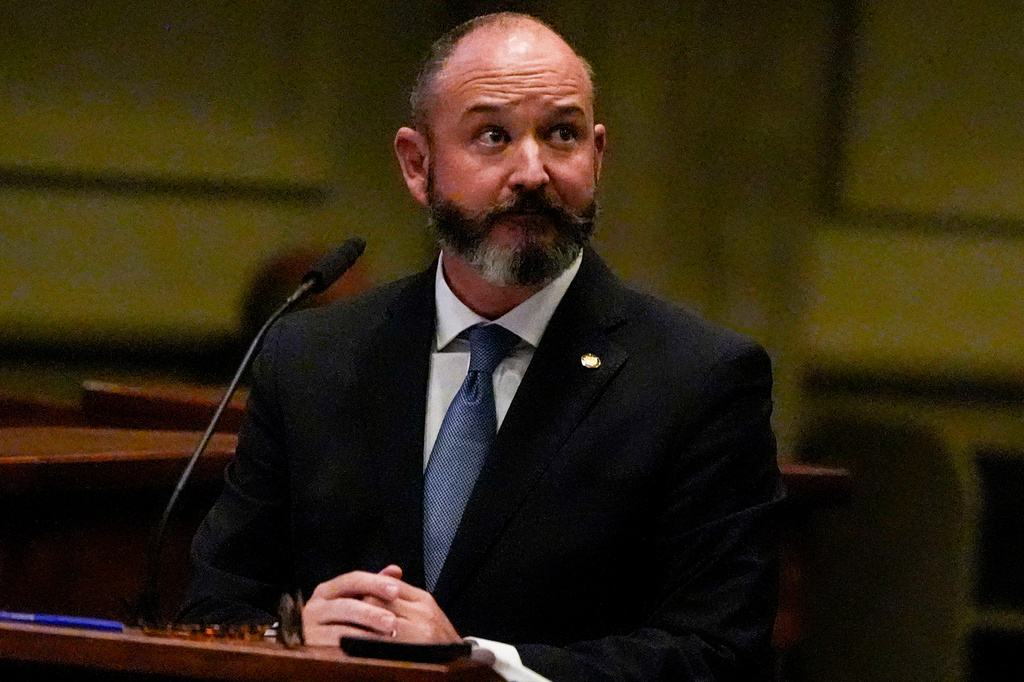
Eventually, the State House alarms sounded and security began to evacuate the building. But before leaving the floor, senators called for a final vote and passed the special primary bill, sending it to the House.
Crazy moments unfolding at the Alabama State House. During Senate debate over the redistricting bill involving Senate Districts 25 and 26, fire alarms suddenly began sounding after an already tense day that included a tornado warning.
The Senate quickly moved to pass the bill as… pic.twitter.com/xryHOVMoTK
— Jeff Sanders (@JeffSandersNews) May 6, 2026
House floor action
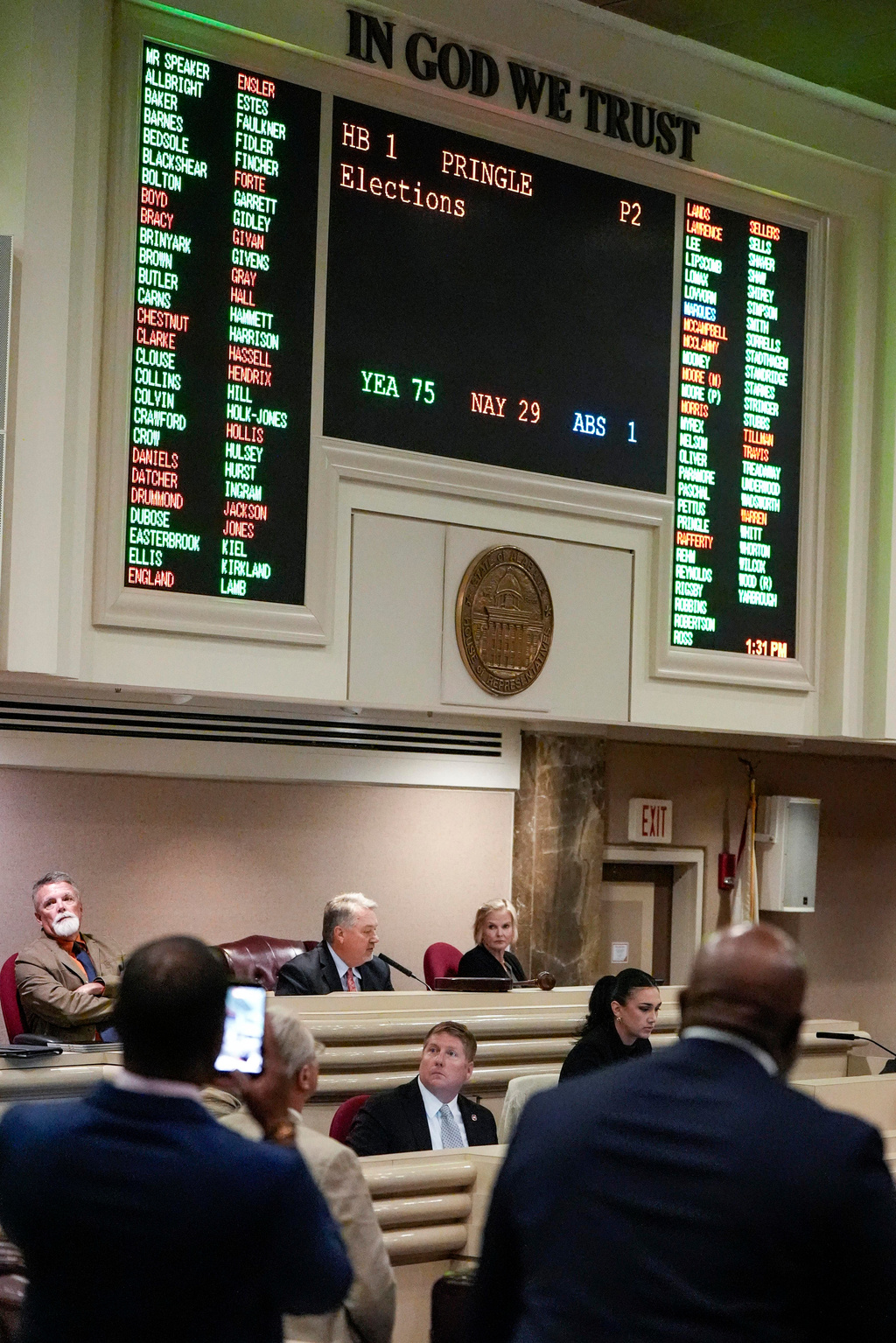
The House approved House Bill 1 after more than four hours of debate.
Sponsored by House Speaker Pro Tem Chris Pringle, R-Mobile, the bill sets up a contingency plan for primary elections to be used if the U.S. Supreme Court lifts the injunction barring Alabama from altering its congressional map before 2030.
If the Supreme Court does this, the state would revert to a 2023 map approved by the Legislature and signed into law by the governor. That map was previously struck down by the Supreme Court because it illegally diluted the impact of Black voters.
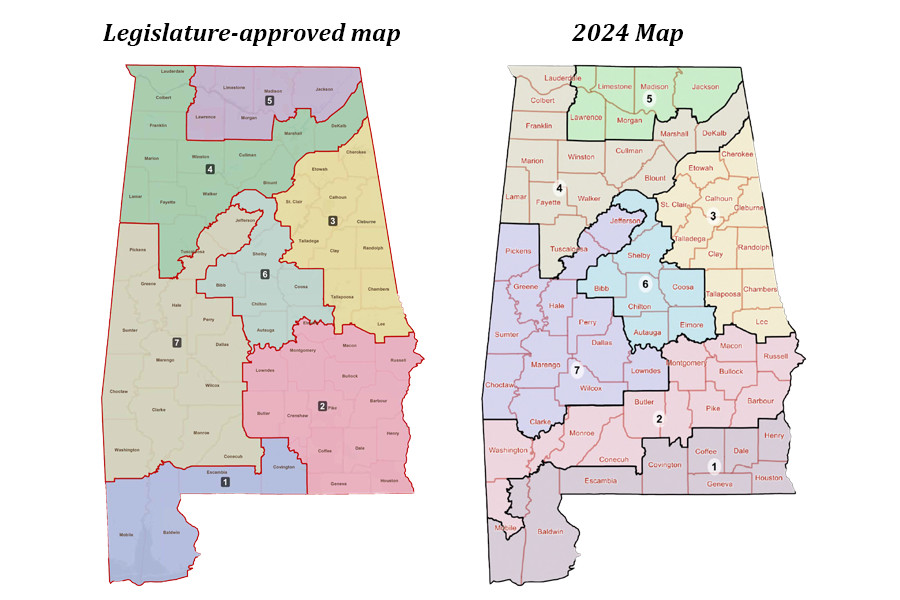
Returning to the 2023 map would impact Alabama’s 1st, 2nd, 6th and 7th congressional districts. That map would likely mean six Republicans and one Democrat representing Alabama in the U.S. House of Representatives.
Alabama’s current congressional map includes two Democrat-held seats and is the result of Voting Rights Act litigation from 2023.
The bill would allow the governor to invalidate the results of the May 19 primary for those districts. Ivey could then call a special replacement primary to decide each party’s nominees for the November general election.
Those races would be decided by plurality. That means there would be no runoffs and the candidate with the most votes would earn the nomination.
During floor debate, 27 of the 29 members of the House Democratic Caucus spoke in strong opposition to the bill. Most Democrats took the full 10 minutes afforded to each speaker, extending debate to around four-and-a-half hours.
Outside of Pringle, the bill’s sponsor, no Republicans spoke in favor of the bill.
House Democrats repeatedly brought up that the U.S. Supreme Court’s decision in Louisiana v. Callais does not overturn the court’s ruling in Allen v. Milligan, the case that prohibited Alabama from using its 2023 maps.
“Second, contrary to the dissent’s assertion, we have not overruled Allen,” the Callais majority opinion reads. “As is our general practice, the Allen Court adjudicated the case based on the parties’ arguments, and in that case, the State did not defend its map on the ground that it was drawn to achieve a political objective.”
Democrats called the special session as a whole “unnecessary,” “speculative” and “a sham” because there’s no guarantee that the Supreme Court will take up Alabama’s case.
“What we have done here is waste taxpayers’ time and waste the taxpayers’ money and created uncertainty,” Rep. Ontario Tillman, D-Bessemer, said after the bill passed. “Your votes may not be counted, and it’s because of this Legislature, the majority party in this Legislature, because they want to dilute Black votes throughout the state of Alabama.”
Outside of the cost of bringing all 140 members of the Legislature back to Montgomery for the special session, the bill’s fiscal note estimates that the potential special elections would cost the state $4.45 million over fiscal years 2026 and 2027.
Democrats also expressed concerns that returning to the 2023 maps would “reverse 60 years of progress” and limit Black representation in Congress.
“At the core of this is race, and I know people don’t like to talk about race… but we have to admit that in order to achieve a partisan end goal that has been stated,” Rep. Phillip Ensler, D-Montgomery, said on the floor.
“There has to be a racial gerrymander that already has been ruled unconstitutional and illegal by a court to achieve that end goal. What we are doing here is saying that Alabama wants to revert to a map that will dilute the voice of Black people.”
Though Pringle said repeatedly on the floor that he does not believe the bill will stop Alabamians from selecting their candidate of choice, a previous press release from the House GOP said that the 2023 map would put “all seven of Alabama’s Congressional Districts in play for Republican candidates.”
Pringle referred Democrats to review the maps themselves when asked specific questions about how voters would be affected. He repeatedly stated that he is not an attorney and declined to answer any questions about the state’s ongoing litigation.
Rep. Prince Chestnut, D-Valley Grande, said after the bill passed that reverting to the 2023 map would lead to less substantive representation for people of color in Alabama.
“They’re basically going to be cracking up our districts so that there’s minority vote dilution,” Chestnut said.
“As a result of that, we don’t get representation that looks like us, we don’t get representation that thinks like us, we don’t get representation that understands the peculiar culture that we have. The culture that was born out of the soil of America. We are the culture, but yet we won’t even be able to be represented adequately and fairly. That’s all we’re asking.”
The House passed the bill by a vote of 75-29, with Rep. Rhett Marques, R-Enterprise, abstaining. Marques is running to represent AL-1, one of the congressional districts that would be affected by the bill.
The bills will be considered in the opposite houses’ committees on Thursday and will be up for final passage on Friday.
The scheduled May 19 primary will take place no matter what.
ADN Publisher Todd Stacy contributed to this report.