
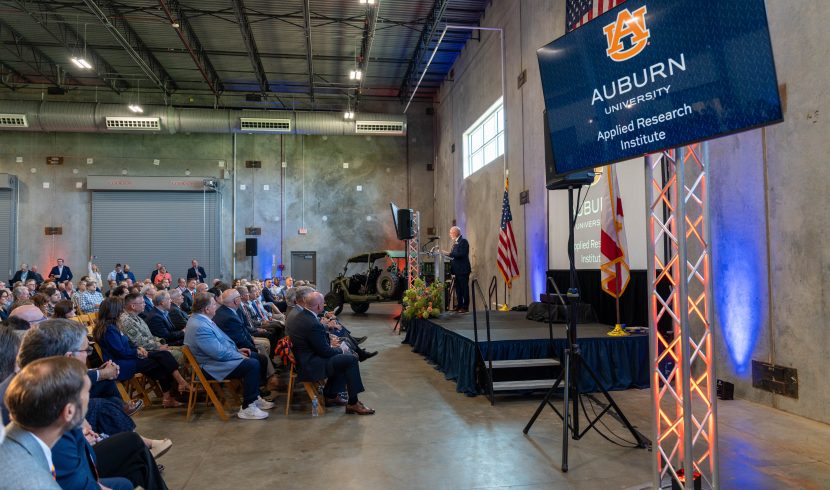
Auburn University opened a new 50,000-square-foot research laboratory in Huntsville Tuesday, expanding the university’s work on national security, missile defense and space technology.
“This is a momentous day for Auburn and for the security of our nation,” Steve Taylor, Auburn’s senior vice president for research and economic development, said. “Auburn’s work in Huntsville, particularly the radiation effects testing, will meet an urgent need for our Department of War partners.”
Hundreds attended Tuesday’s grand opening and ribbon-cutting, including Assistant Secretary of War for Science and Technology Joseph Jewell, Maj. Gen. Jason Cothern, U.S. Sen. Tommy Tuberville, U.S. Reps. Mike Rogers, Robert Aderholt and Dale Strong and Huntsville Mayor Tommy Battle.
Auburn and its partners invested more than $30 million in the facility, which was completed in 11 months with support from the City of Huntsville’s Industrial Development Board, according to a university news release.
The new Auburn University Applied Research Institute facility is in Cummings Research Park, less than a mile from AUARI’s existing Voyager Way location and minutes from Redstone Arsenal.
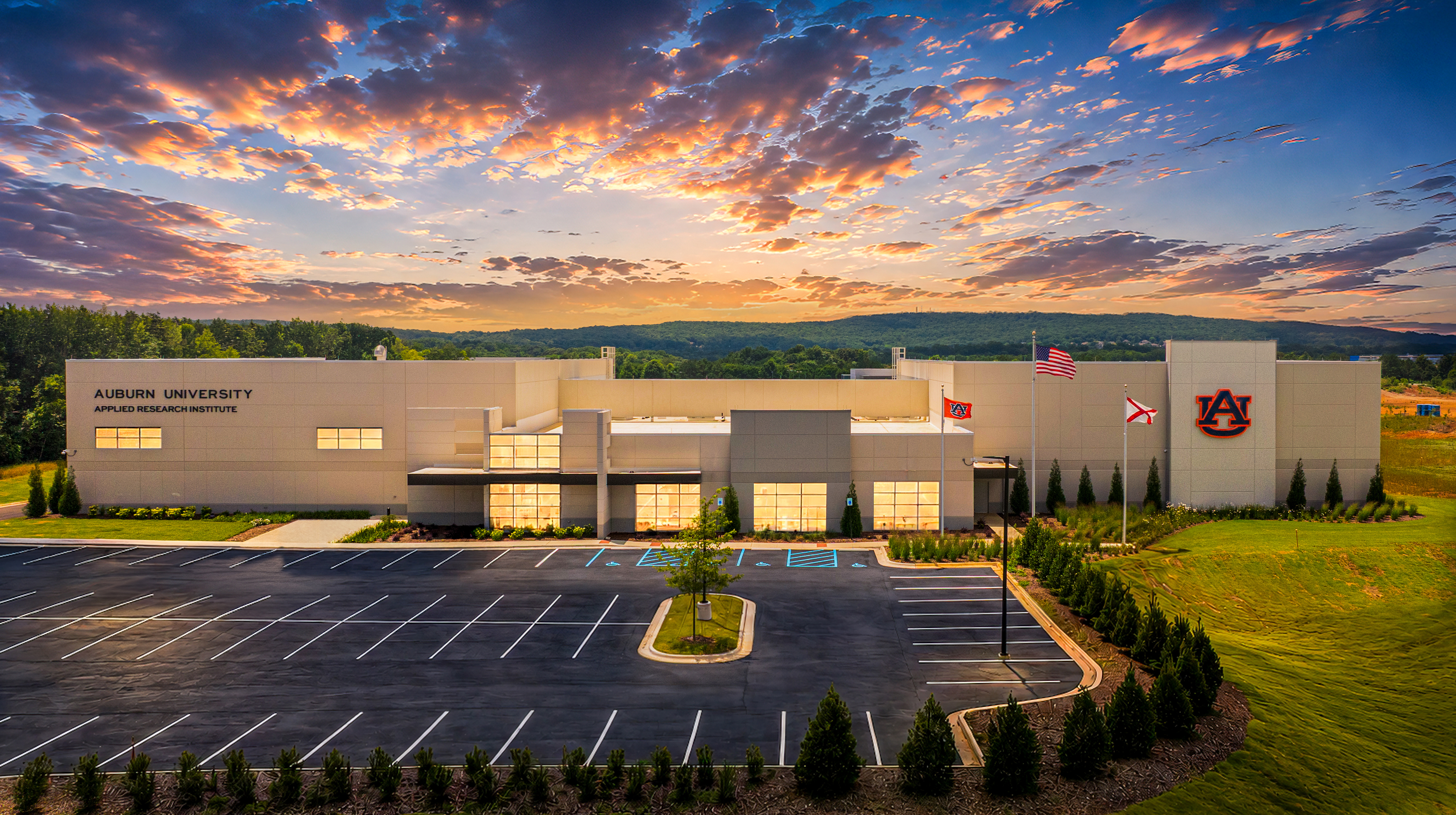
The laboratory includes space research, advanced manufacturing and rapid prototyping capabilities. It also houses a superconducting cyclotron that researchers will use to test how electronic components perform in radiation conditions similar to those found in space.
Auburn says the facility will be the nation’s only university-led operation dedicated to that type of testing. The work is designed to determine whether microelectronics can withstand radiation before they are used in satellites, spacecraft, missile defense systems and other equipment.
“To provide for a highly reliable defense of our nation and our armed forces, we need to test every microelectronic component for its performance in space,” Cothern, deputy director of the Missile Defense Agency, said.
Cothern said the agency will have priority access to Auburn’s proton cyclotron facility to test microelectronics used in advanced defense systems.
The Missile Defense Agency awarded Auburn an $11.4 million contract in November 2024 to support the radiation-testing capability and added another $7.5 million in July. Testing is expected to begin in early 2027.
The Missile Defense Agency will be the primary user of the radiation-testing facility, but Auburn says other federal agencies, military services and commercial partners also will be able to use it.
AUARI also works with NASA, several branches of the military and other federal defense and space agencies, along with aerospace and defense companies.
Auburn students will work alongside faculty members, engineers and scientists on research and prototype development at the Huntsville facility.
Jonathan Pettus, executive director of AUARI, said the laboratory was built in response to growing demand for faster development of defense technology.
“Our government partners need innovative capabilities delivered faster than ever before,” Pettus said, “and this facility helps ensure Auburn can continue developing solutions at the speed the mission demands.”