
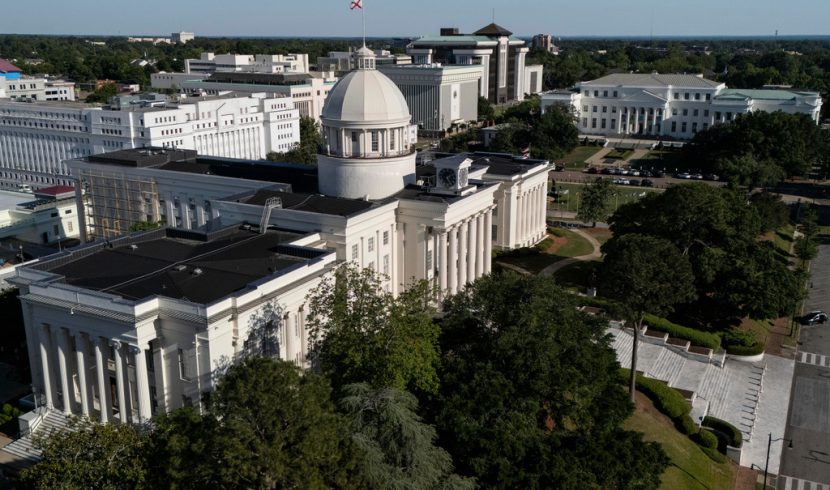
MONTGOMERY, Ala. – First votes are expected today on bills to allow Alabama to hold special primary elections this year in some congressional and State Senate districts if the state is allowed to revert to previous maps drawn by Republicans.
The Alabama Legislature convened on Monday for a special session to set primary dates to be used should the courts approve the state’s expedited request to allow the originally-passed congressional map from 2023 and the State Senate map from 2021 to go back into effect.
The congressional plan is starting in the House, with House Bill 1 from Speaker Pro Tem Chris Pringle, R-Mobile. It sets up a contingency plan for congressional elections to be used if the court acts. Should the court allow Alabama to revert to its original 2023 map, only the 1st, 2nd and 7th congressional districts would be impacted. The 2023 map would likely mean six Republicans and one Democrat representing Alabama in the U.S. House.
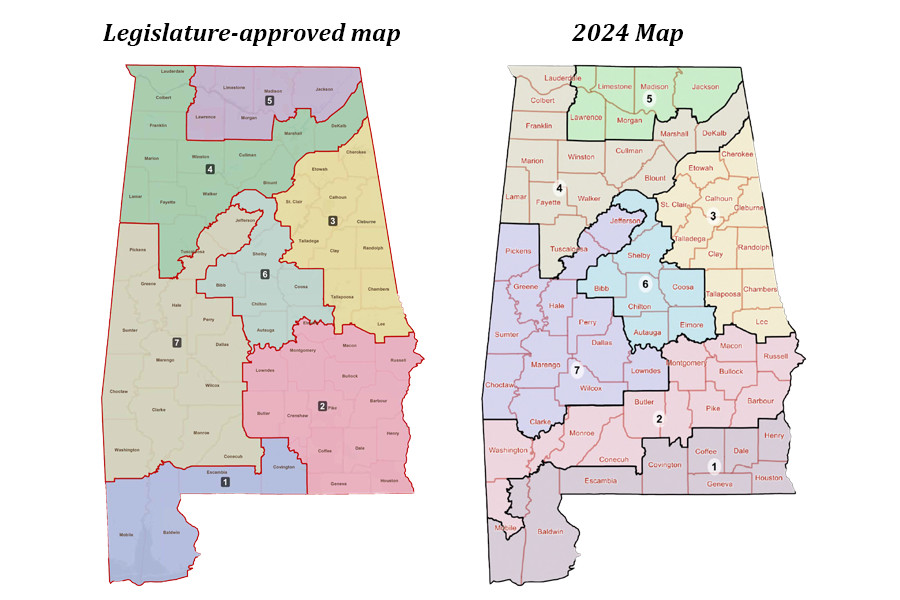
Pringle’s bill would allow the governor to invalidate the results of the May 19 primary for those districts. Ivey could then call a special replacement primary to decide each party’s nominees for the November general election. Those races would be decided by plurality, meaning there would be no runoffs and the candidate with the most votes would earn the nomination.
“I am committed to ensuring that every Alabamian has fair representation in Congress,” Pringle said in a news release. “Control of the U.S. House of Representatives could come down to a handful of seats. HB1 ensures that should the courts provide the relief Alabama is entitled to, we are ready to act without delay.”
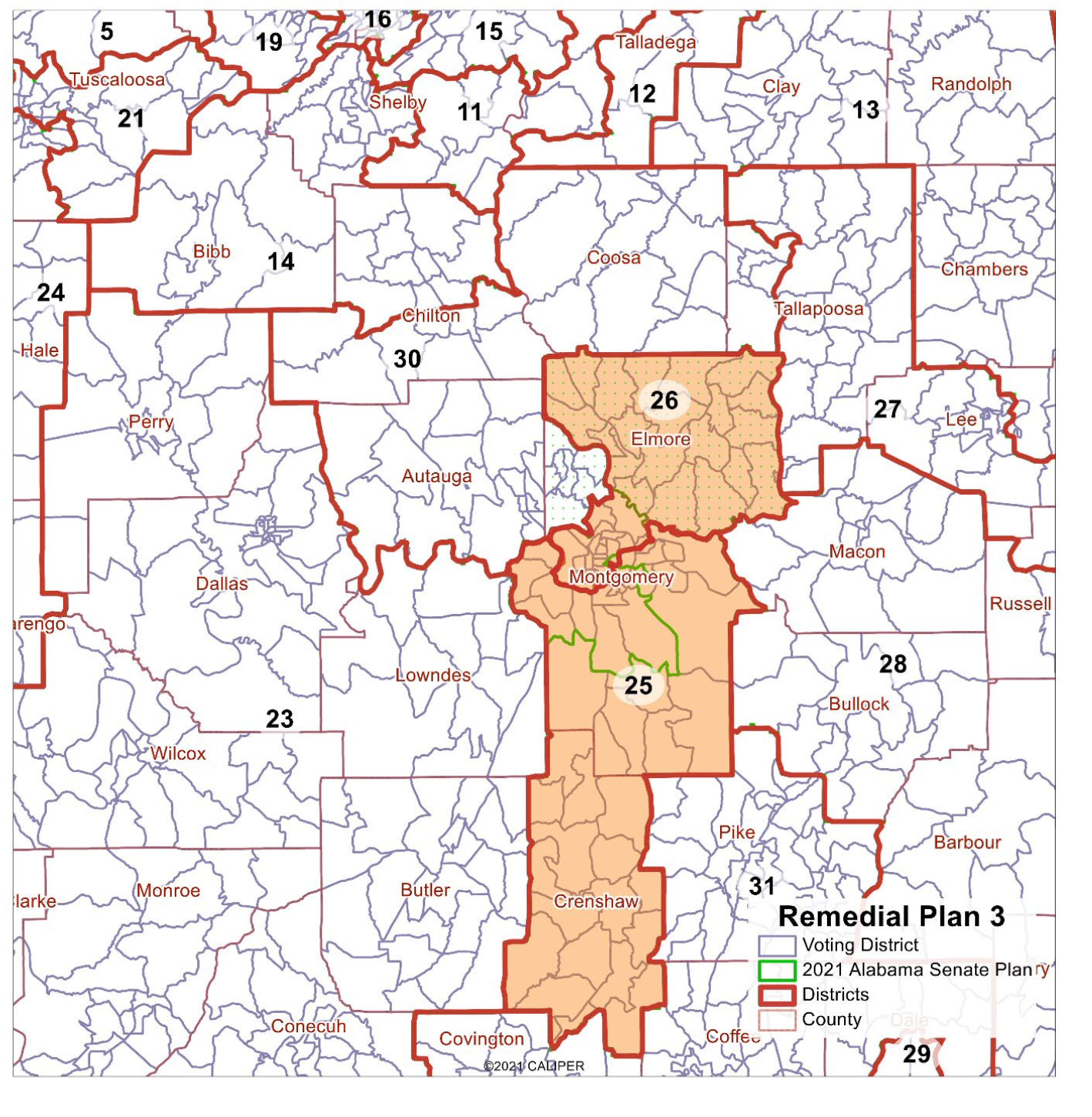
Sen. Chris Elliot, R-Josephine, introduced Senate Bill 1 to set up the same plan for the state Senate districts that would be affected by a potential court decision. If Alabama returns to its 2021 state Senate district map, Montgomery-area Districts 25 and 26 would be affected.
Gov. Kay Ivey’s decision to call lawmakers back to Montgomery came after the U.S. Supreme Court handed down a decision against race-drawn districts last week.
The Supreme Court’s 6-3 ruling in Louisiana v. Callais limits the consideration of race when drawing congressional districts, stemming from a majority-minority district in Louisiana. Alabama’s current congressional map includes two Democrat-held seats and is the result of Voting Rights Act litigation from 2023.
Alabama officials subsequently filed emergency motions with the Supreme Court to lift the injunctions that block the state from using its 2023-passed congressional map. Federal judges ruled that Alabama cannot alter its map again before 2030, the year of the next census.
Redistricting opponents rallied Monday across the street from the historic Alabama Capitol, where the Confederacy was formed in 1861 and where the Rev. Martin Luther King addressed a crowd of thousands after the 1965 Selma-to-Montgomery voting rights march. They warned of the effect of eliminating away one or more of Alabama’s Black representatives in Congress.
“Much blood, sweat and tears was shed in an effort for us to gain the right to vote,” said Sheyann Webb-Christburg, who as a child participated in the 1965 Bloody Sunday voting rights march in Selma. “In 2026, there are still people who are still not exercising that right to vote, and we are still fighting today, even in an effort to keep our right to vote.”
President Donald Trump on Sunday encouraged more states to join in redistricting, saying in a social media post that Republicans could gain 20 House seats.
Ivey said last week that the 2023 ruling meant she was not in a position to call a special session but said later in the week that she was “hopeful” the Supreme Court would rule in favor of Alabama.
Ivey’s proclamation listed primary elections as the only topic for the Legislature to take up during the special session. Any other legislation would require a two-thirds vote to bring up.
Sen. Rodger Smitherman, D-Birmingham, and Senate Minority Leader Bobby Singleton, D-Greensboro, both filed bills related to reapportionment on Monday. Republicans hold a supermajority in both houses of the Legislature, so it’s unlikely those bills will be considered.
The special session is expected to last five days, the minimum amount of time it takes to pass a bill.
The House will gavel in Tuesday at 9 a.m., and the Senate will convene at 10:30 a.m.
Elliott’s bill will be heard in the Senate Fiscal Responsibility and Economic Development Committee at 9 a.m. There is a public hearing. The House Ways and Means General Fund Committee will meet at 9:30 a.m. to consider Pringle’s bill. That meeting also includes a public hearing.
The Associated Press contributed to this report.