
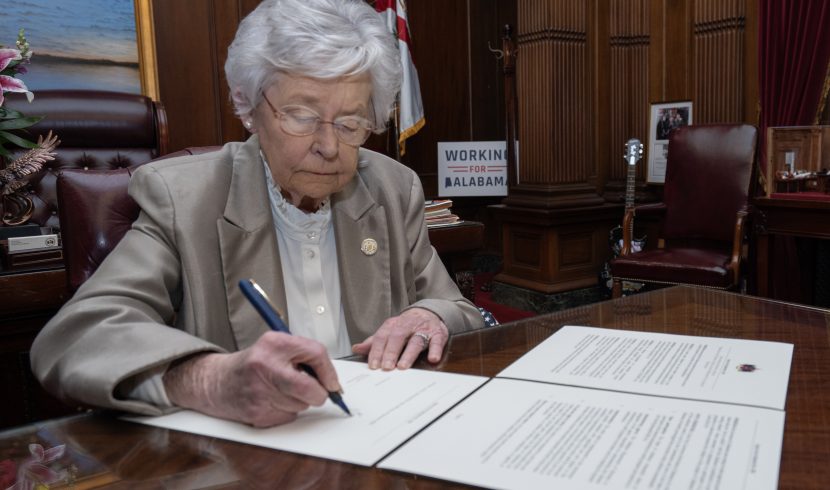
MONTGOMERY, Ala. – Gov. Kay Ivey has called the Legislature back to Montgomery for a special session on redistricting after the U.S. Supreme Court handed down a decision against race-drawn districts earlier this week.
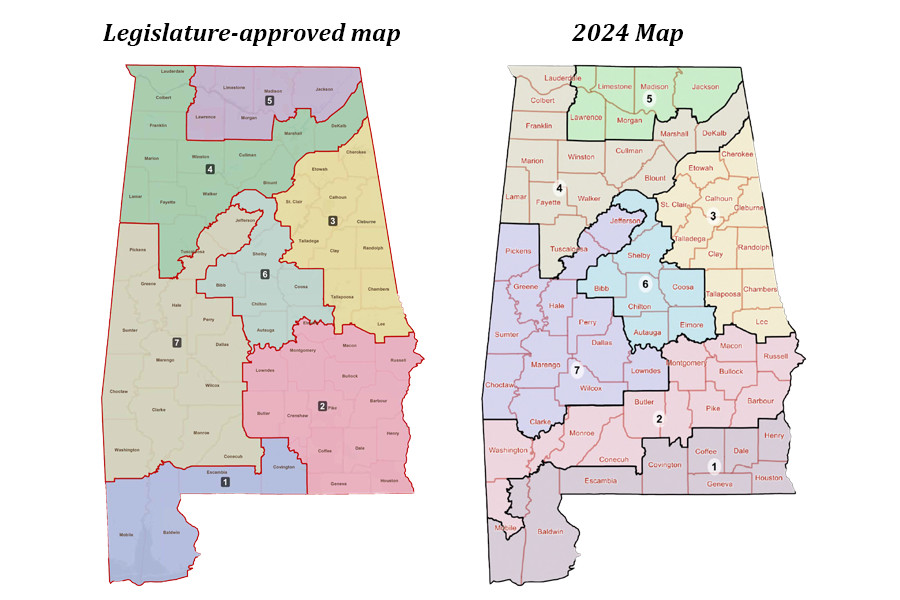
The Supreme Court’s 6-3 ruling in Louisiana v. Callais limits the consideration of race when drawing congressional districts, stemming from a majority-minority district in Louisiana. Alabama’s current congressional map that includes two Democrat-held seats is the result of Voting Rights Act litigation from 2023.
Ivey’s announcement came after Alabama officials on Thursday filed emergency motions with the Supreme Court to lift the injunctions that are blocking the state from using its 2023-passed congressional map. The court ruled in 2023 that Alabama cannot alter its map again before 2030, the year of the next census.
Attorney General Steve Marshall and Secretary of State Wes Allen’s emergency filings asked for the court’s quick review so that Alabama can have the “same opportunity as other States to use a lawfully enacted congressional map free of an injunction that cannot be reconciled with Section 2 of the Voting Rights Act” after the recent decision. Section 2 broadly prohibits race-based discrimination in voting practices.
The special session will include legislation setting a special primary election for the specific districts impacted by the court order, according to Ivey’s statement. Should the court allow Alabama to revert to its original 2023 map, only the 1st, 2nd and 7th congressional districts would be impacted.
Ivey had said earlier this week the 2023 ruling meant she was not in a position to call a special session but now says she is “hopeful” that the Supreme Court will rule in favor of Alabama.
“By calling the Legislature into a special session, I am ensuring Alabama is prepared should the courts act quickly enough to allow Alabama’s previously drawn congressional and state senate maps to be used during this election cycle,” Ivey said in a news release. “If the court-ordered injunction is lifted, Alabama would revert to the maps drawn by the Legislature for congressional districts in 2023 and state senate districts in 2021.”
The currently-scheduled May 19 primary is less than three weeks away. Some ballots have been printed, and absentee voting is already underway.
Speaker of the House Nathaniel Ledbetter, R-Rainsville, and Senate Pro Tem Garlan Gudger, R-Cullman, applauded Ivey’s decision in a joint statement released shortly after her announcement. They said the special session is an opportunity to set a contingency plan for the upcoming primary election if the high court changes its mind.
“While there are no guarantees that Alabama’s now unlawful, court mandated roadblock will be removed in time, we have a responsibility to give our state a fighting chance to send seven Republican members to Congress,” the two leaders said. “Control of the U.S. House of Representatives could come down to just a handful of seats, and when the dust settles, the people of Alabama will know that their Legislature stood firm, acted decisively, and did everything within its power to fight for fair representation.”
If Alabama ends up with its 2023 congressional map, Alabama’s 1st and 2nd congressional districts would be the ones impacted. U.S. Rep. Shomari Figures, D-Mobile, who won his seat in 2024 after litigation led to a second majority-Black district, said the “the state is essentially asking the courts to close their eyes and forget what they already saw.”
“We fully expected Republican efforts to try to get the courts to ignore the findings made by three Republican-appointed judges, including two appointed by Donald Trump,” Figures said in a statement to Alabama Daily News. “The judges unanimously found that the State of Alabama intentionally discriminated against Black voters when they drew the district maps after the 2020 census and subsequently refused to follow court orders to correct the issue. ”
“This same Supreme Court has already upheld the findings in this case once, and we are confident the courts will uphold the law again,” he added.
The special session will begin on Monday at 4:00 p.m. Ivey said she expects it to last no more than five days, the minimum time necessary to pass a bill.