
MONTGOMERY, Ala. – Two bills to allow special primary elections in some congressional and State Senate districts passed out of committee on Tuesday, the second day of Alabama’s special session.
Senate Bill 1 and House Bill 1 would only take effect if the courts approve the state’s expedited request to allow the originally-passed congressional map from 2023 and the State Senate map from 2021 to go back into effect.
House bill about congressional maps
House Bill 1, sponsored by House Speaker Pro Tem Chris Pringle, R-Mobile, sets up a contingency plan for congressional elections. The state would use this plan if the U.S. Supreme Court lifts the injunction barring Alabama from altering its congressional map before 2030.
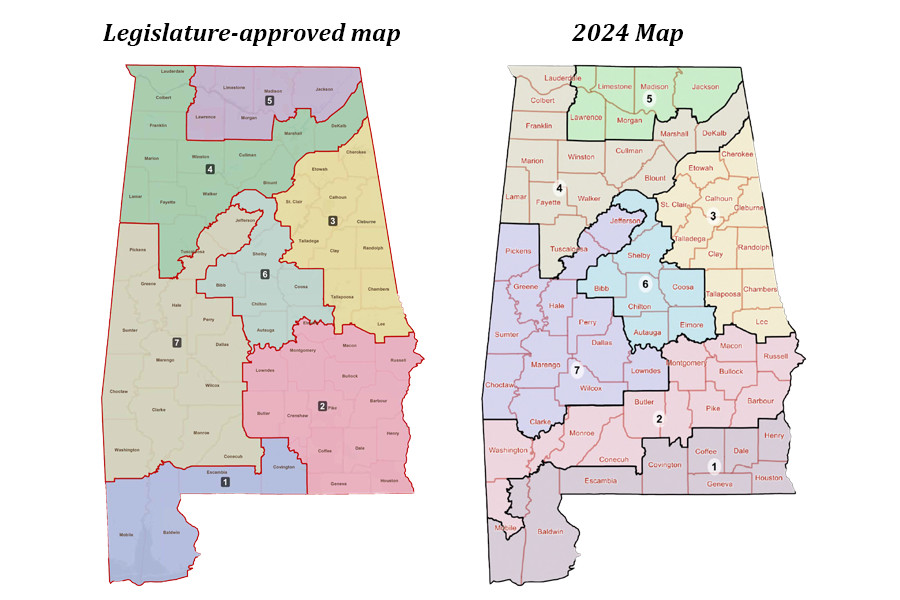
Returning to the 2023 map would impact Alabama’s 1st, 2nd, 6th and 7th congressional districts. That map would likely mean six Republicans and one Democrat representing Alabama in the U.S. House of Representatives.
Alabama’s current congressional map includes two Democrat-held seats and is the result of Voting Rights Act litigation from 2023.
The bill would allow the governor to invalidate the results of the May 19 primary for those districts. Gov. Kay Ivey could then call a special replacement primary to decide each party’s nominees for the November general election.
Those races would be decided by plurality. That means there would be no runoffs and the candidate with the most votes would earn the nomination.
The fiscal note for the bill estimates that reimbursing counties for the additional election expenses would cost $4.45 million over fiscal years 2026 and 2027.
During this year’s budget process, state financial leaders expressed concerns about revenue to support the General Fund budget going forward.
Finance Director Bill Poole previously estimated a 4.2% decline in revenue for FY27, which begins Oct. 1, 2026. The drop comes from a sharp decline in interest earned on the state’s deposits, Poole said.
The House Ways and Means General Fund Committee approved Pringle’s bill on Tuesday by a party-line vote.
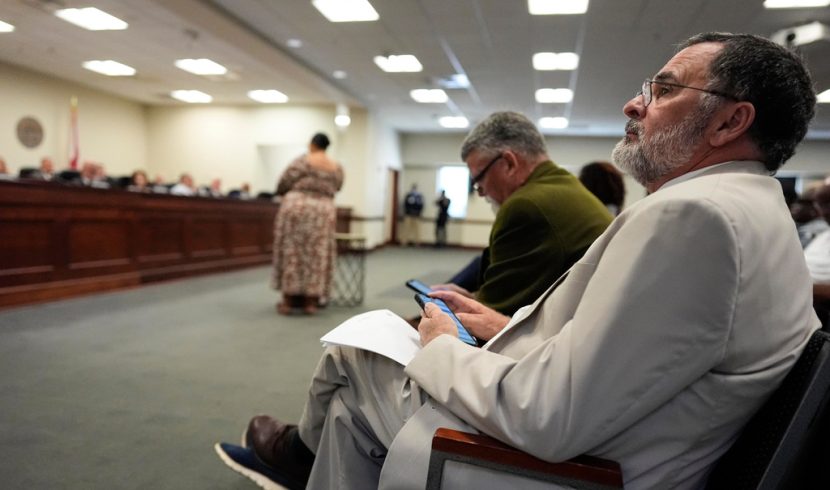
Five members of the public and Rep. Juandalynn Givan, D-Birmingham, spoke against the bill. No one spoke in favor of it.
Opponents of the bill said it will dilute the Black vote and lead to less representation by people of color. They brought up that the courts previously struck down the maps for exactly those reasons.
“Clearly back then, that map was deemed not in the best interest of Black people in the state of Alabama,” Rep. Napoleon Bracy, D-Saraland, said. “Right? And then now all of a sudden, if the Supreme Court says something different, the same racist map that was struck down will come back to life and all of a sudden not be racist anymore?”
Pringle repeatedly said the bill had nothing to do with redistricting. He said it is narrowly tailored to allow the state to hold a special election in case of court action.
“We are not doing anything to deny anybody’s right or ability to go into the polls and cast their vote for the candidate of their choosing,” Pringle said.
Other Democrats on the committee questioned where the state would find the money to pay for the additional elections. They also brought up the Purcell principle, which stems from a 2006 Supreme Court decision that ruled that states should not change voting rules too close to an election to avoid confusing voters. The primaries are now less than two weeks away.
Senate bill about State Senate districts
Sen. Chris Elliott’s, R-Josephine, Senate Bill 1 sets up the same plan for the state Senate districts that would be affected by a potential court decision.
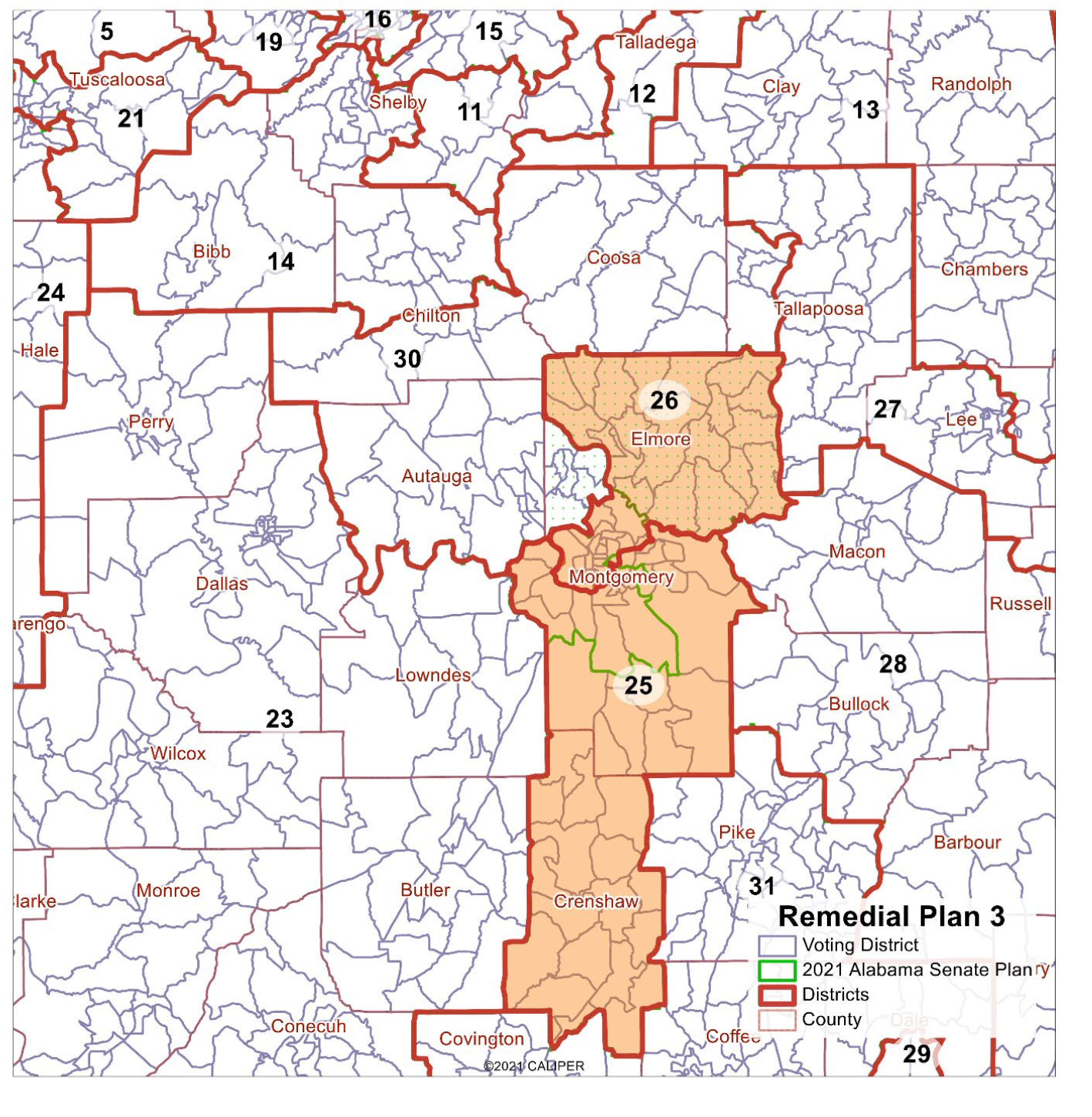
Returning to the 2021 State Senate district map would affect Montgomery-area Districts 25 and 26.
Elliott’s bill would cost the state $600,000 over fiscal years 2026 and 2027, according to the fiscal note.
The Senate Committee on Fiscal Responsibility and Economic Development also approved that bill on a party-line vote on Tuesday.
Five members of the public, Sen. Rodger Smitherman, D-Birmingham, and Senate Minority Leader Bobby Singleton spoke in opposition to the bill. No one spoke in favor of it.
Each of the three Democrats on the committee introduced an amendment to Elliott’s bill.
- Sen. Merika Coleman’s, D-Birmingham, amendment would have required public notices to inform the affected public about changes to their primary.
- Sen. Vivian Figures’, D-Mobile, amendment would have made the bill permissive, meaning the governor could call a special election but would not have to.
- Sen. Kirk Hatcher, who represents one of the Montgomery-based districts in question, brought an amendment to allow runoffs in the potential special primary elections.
Elliott ruled all three as unfriendly, and lawmakers rejected all of them. Elliot asked Coleman to give him time to consider her amendment and to bring it back on the floor.
After the bill passed out of committee, Elliott said he expects those three amendments and potentially more to come up on the floor.
“We’ll just have to see what comes tomorrow and deal with them as they come,” Elliott said. “It’s also worth noting that that’s a good stalling tactic for my colleagues on the other side of the aisle, to try to amend and amend. We’ll see how they use that tactic tomorrow as we look for final passage.”
Elliott said that the bill is necessary because of the Supreme Court’s 6-3 ruling in Louisiana v. Callais. That decision limits the consideration of race when drawing congressional districts, stemming from a majority-minority district in Louisiana.
Alabama officials subsequently filed emergency motions with the Supreme Court to lift the injunctions that block the state from using its 2023-passed congressional map.
He also said that “things have changed in Alabama and across the country.”
“What we want to do is go back, specifically in (Senate Bill 1), is go back to the Senate districts that this elected body, this separate coequal branch of government drew and not one that was unilaterally drawn by the courts,” Elliott said. “We think that should the federal courts issue a ruling that will allow us to proceed with this, then we’re better off for the people of the state of Alabama.”
Both bills are up for a floor vote on Wednesday.
The House gavels in at 9:00 a.m. and the Senate is in at 4:00 p.m.