
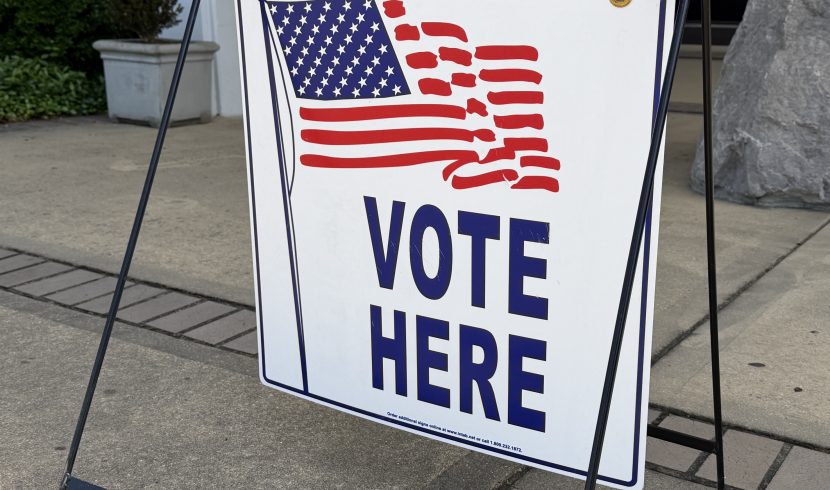
WASHINGTON AND MONTGOMERY, Ala. — After months of confusion and changing district lines, Alabama’s coastal communities will finally head to the polls next week to fill the state’s only open congressional seat this year.
Three Republican candidates, former U.S. Rep. Jerry Carl, former Navy pilot John Mills and former Air Force officer Austin Sidwell, will face each other on Aug. 11 as they vie for the nomination for the newly redrawn 1st District. The special primary winner will face the sole Democrat in the race, Cyde W. Jones Jr., in the general election.
The district, which encompasses Mobile, Baldwin, Escambia and most of Covington County, is solidly Republican. The Supreme Court allowed Alabama to use its 2023 congressional map in this year’s elections after conservative justices gutted the Voting Rights Act. Trump would have won the redrawn 1st District in 2024 by 36 points.
Carl, who is the likely frontrunner with endorsements from President Donald Trump and U.S. Sen. Katie Britt, R-Ala, is eager to return to Washington.
“I really enjoyed being in Congress,” the Mobile Republican, who served two terms, told Alabama Daily News. “Now I get a chance to run for it again and get to get back in there and finish things that I haven’t finished.”
Though the results were void, the AL-1 race using the old district lines was on the ballot during the May 19 primary. That seven-man race included three candidates who are now running against incumbent Democrat U.S. Rep. Shomari Figures to represent Alabama’s new 2nd Congressional District.
Carl took 32,714, or 40.29%, of that voided vote. AL-2 frontrunner State Rep. Rhett Marques came in second with 25,235, or 31.08%, of the vote. Sidwell and Mills finished in 4th and 6th places, respectively.
The former congressman lost his seat to the current representative, Barry Moore, in a bitter Republican primary in 2024. Moore is the GOP nominee to fill U.S. Sen. Tommy Tuberville’s seat. Before he was a member of Congress, Carl served on the Mobile County Commission.
While Carl leans on his political experience and the fact that he would not have to face a “learning curve,” Mills has touted his military background and his oath to the Constitution to propel his candidacy.
“In the Navy, dealing with in-flight emergencies to emergency management and the Navy giving me command twice, I know what crisis is,” Mills told ADN. “I know how to manage it, and…America is in crisis, and we need to do something before we lose our constitutional republic.”
Sidwell, who lives in Fairhope, said that being a political outsider gives him a fresh perspective he views as badly needed to improve Alabamians’ trust in government. He served for 12 years as a major in the U.S. Air Force and now serves as vice president of his family’s business.
Sidwell said he decided to run because he doesn’t believe politicians represent the will of the people, which concerns him about the country’s future his children will inherit.
“I have a broad range of experiences and skill sets outside of politics,” Sidwell said. “The other thing is, maybe the most obvious thing, is I’m 36. I’m bringing a different perspective, a perspective of a guy that still has a family in the home, that has a different view of where we’re going. Not necessarily looking at just problems that are facing us right this second, but also the problems facing us in the future.”
I-10 Bridge
Much of what Carl wants to finish legislatively in the House if he’s elected revolves around infrastructure. The marquee infrastructure project in the district, and the state for that matter, is the 1-10 Mobile River Bridge and Bayway project.
In July, Britt and Tuberville announced construction was slated to start this year and the Alabama Department of Transportation has since confirmed work could begin on the bridge in October.
Carl said finally starting to construct the bridge is a step in the right direction after years of delays, but he wants to focus on ways to bring down the project’s costs to avoid having to implement tolls. The cost of the bridge alone is projected to be $3.2 billion.
“Now we’ve got to figure out how we can either a save money and get the price down where it’s a little more affordable, or b figure out how to come up with the money,” he told ADN.
ALDOT expects to implement tolls once the new I-10 bridge is complete to help pay for the second phase, the Bayway project.
All three Republican candidates agreed that completing the bridge is a vital project, calling it a “national security issue” and highlighting the importance of collaboration on the federal, state and local level. They all found common ground in their disdain for tolls to fund the next phase.
“The first phase is laid out. But what about the second phase?,” Mills said. “Let’s talk about who pays for it. To put tolls up and putting more on the backs of people trying to commute across to work is not a solution to me.”
Sidwell is vehemently opposed to any toll, saying that there’s enough money from the state and federal governments to fund the project.
“I think it’s absurd that an interstate that should be funded wholly by the federal government is being forced down not only through the state and local governments, but also to the taxpayers,” Sidwell said. “Taxpayers are paying federal taxes that are going into this, state taxes and local taxes that are all going into this, and then they’re going to have to pay a toll on top of that. I don’t believe in that.”
Data centers
Another hot-button issue gaining steam is data centers, which fuel online consumption.
In the redrawn district, residents are facing planned facilities in northern Mobile County and Prichard, according to local media reports.
Sidwell said he opposes data centers “without transparency” and believes that Alabamians should have a say about their development.
“We shouldn’t have any level of government forcing things that our communities don’t want,” he told ADN. “So, from that perspective, and from what I’m hearing from people here in the district, I’m opposed to forcing data centers on them.”
Sidwell said the federal government does have a role in regulating them because of the environmental consequences, with their high water usage and the stress they place on the electrical grid.
Mills also wants companies building new data centers to be transparent with the community about the project, who is paying for it and the potential implications of having a massive facility in a neighborhood.
“I’m not saying we shouldn’t have new technology, but I think it needs to be we, all of us, decide what’s best for us, not just somebody take backroom deals, cronyism, and all of a sudden, there’s a data center being crammed down your throat, and you find out the hard way what it really costs you,” Mills said.
Carl said he’s not ready to announce a firm commitment on whether he’s all for or against data centers. He’s hoping to gain more clarity on them with an upcoming planned visit to an existing facility in the state.
“I want to go before I make my mind up one way or the other, and I want to see one. I want to hear one,” Carl said. “I want to talk to the people actually running it.”
He added that he understands the need to compete with China in the artificial intelligence race but also the need to protect a community’s water and electricity supply.
Getting voters to the polls
After a campaign season full of changing maps and court rulings, all three candidates said encouraging voters to head to the polls next week has been a huge part of their outreach.
“I can give you a half a dozen negative reasons why people aren’t going to come to the polls,” Carl told ADN, referencing the start of the school year. “But when I talk to people, I try to make people understand. To me, voting is… something as Americans we should do. And I challenge everybody to vote.”
Carl has focused on spending some of his campaign funds on informing and encouraging people to cast their ballots on Aug. 11, he said.
Throughout the campaign, Mills said he’s encountered a lot of voters who don’t even know that an election is coming up.
“It seems to be a big mystery to them,” he said. “That’s the biggest hurdle to overcome is to make sure they know there is an election and how important it is.”
Sidwell said it’s the candidates’ job to give people a reason to get out and vote. He said he’s talked to voters looking for something different who are eager to turn out on Aug. 11 and cast a ballot.
“One of the overwhelming, positive responses we’ve got on the campaign trail is people are ready for a change,” Sidwell said. “They’re ready for someone that’s outside of the establishment, someone that they feel like they can trust, and that’s what we’re offering. We’re offering someone that’s not backed by super PACs and all these connected (venture capital) interests.”
The polls are open from 7 a.m. to 7 p.m. on Aug. 11.