
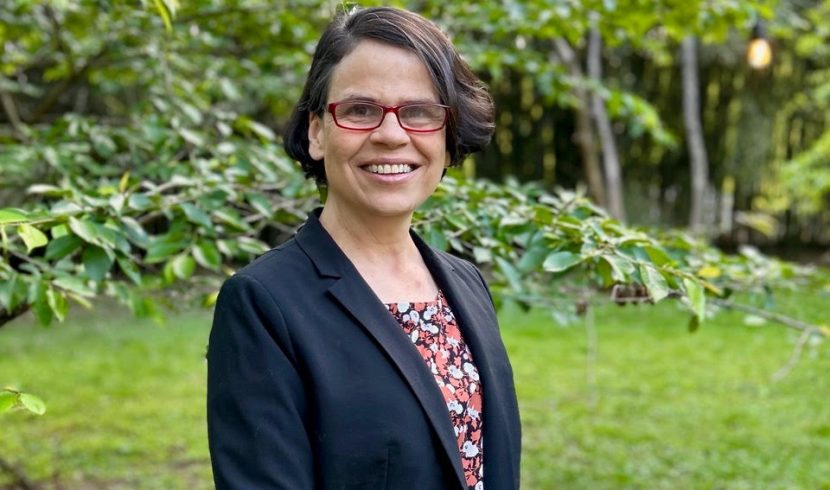
MONTGOMERY, Ala. – Laura Lester, the founding CEO of Feeding Alabama, will retire later this year after 13 years leading the nonprofit and 20 years working in food banking.
Lester helped launch Feeding Alabama, the state association representing Alabama’s eight Feeding America food banks, as its first staffer and CEO in 2013. She started out as a part-time employee but over the last 13 years, the state association has grown to be a fully staffed nonprofit with a $5 million annual budget and three full-time employees.
When Lester started, Feeding Alabama food banks were distributing around 40 million pounds of food per year, she said. Now, the network partners with 1,200 local agencies to distribute more than 90 million pounds of food, the equivalent of around 75 million meals, annually.
Lester attributes this growth and success to the teamwork between Alabama’s food banks, state agencies and partners. She said that Feeding Alabama began as a handful of people who believed that food banks were stronger working together than apart.
“It’s really a question of being collaborative, and it’s even extending beyond the food banks,” Lester said. “There’s a lot of great organizations and groups in Alabama who are doing anti-hunger work in the community, but we didn’t always know what other folks were doing, both within the state association and outside of it. There’s just been a slow and steady growth of realizing how much more we can accomplish when we are intentional and we collaborate.”
Lester, who grew up in Huntsville, was no stranger to the world of food banks when she joined Feeding Alabama.
She started her career in Atlanta as a legal aid attorney focusing on the Supplemental Nutrition Assistance Program, also known as food stamps, and other nutrition programs. When her husband’s work brought her family back to Huntsville, Lester caught wind that some of the directors were looking to staff the state food bank association.
“It all just came together perfectly,” Lester said about the opportunity.
Growing from modest beginnings, Lester led Feeding Alabama through challenging times in food banking, including the COVID-19 pandemic and the longest partial government shutdown in American history.
Food insecurity affects Alabamians from all corners of the state. One in six people, or around 900,000 Alabamians experience food insecurity, according to data from Feeding America. That includes one in five children, or more than 250,000 kids.
Looking back at COVID-19
Reflecting on her time at the helm, Lester said the pandemic stuck out to her as a time “when the real leap happened.” Food banks, state agencies like the Alabama Department of Human Resources, Alabama State Department of Education and federal nutrition programs pulled together to support a level of need they’d never seen before, she said.
“In distribution food banks, we were working around the clock, trying to keep up with the need, watching the food banks do so much more without volunteers, without the normal processes,” Lester said. “In the midst of just global chaos, they were coming in quietly every day, and they were serving more people than anyone could ever imagine.”
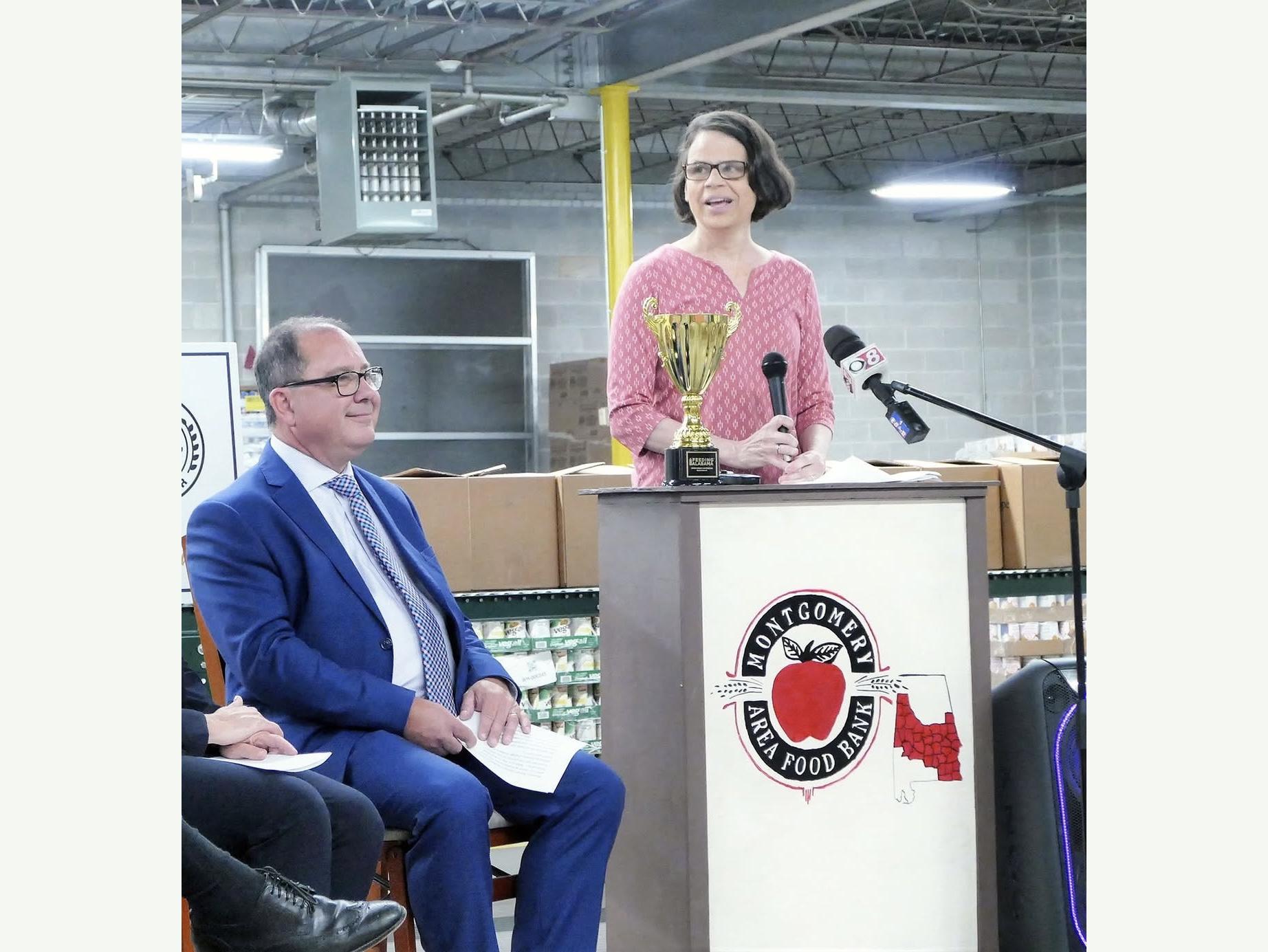
Lester also pointed to the two most recent government shutdowns as examples of the food banking community being stronger by working together. She said that people were working around the clock to provide relief to Alabamians whose SNAP benefits were delayed last fall as well as TSA and Coast Guard employees who weren’t receiving paychecks earlier this year.
Through all these experiences, Lester said she has felt the teamwork in the state of Alabama that makes it unique.
“There’s a real sense of community around working together to solve the problem, and it’s often in a quiet way again,” Lester said. “There’s not a lot of attention paid to it, but it’s happening, and again whether it’s the food banks, the other nonprofit organizations, advocates or state agencies, we all coordinate together, and I think it’s a really amazing thing.”
Part of making it through these crises also came from direct advocacy with state lawmakers and Alabama’s federal delegation. Feeding Alabama brought in more than $40 million in overall funding for the food banks during Lester’s tenure.
Communicating to those leaders the human impact and story of affected individuals in addition to the data is one of Lester’s strengths as a leader, said Nicole Williams, CEO of the Community Food Bank of Central Alabama and board chair for Feeding Alabama.
Williams said that beyond securing funding from lawmakers, Lester always worked hard to make sure that politicians understood the realities of food insecurity in Alabama.
“Unfortunately, after the pandemic, our food insecurity rates didn’t really go down all that much, and they continue to rise here in our state, so continuing to keep food insecurity top of mind for many of our legislators and in those programs has been really important,” Williams said. “Laura has been at the forefront of making sure that food insecurity is something that people are educated about and continue to care about.”
It was through this kind of advocacy that Lester, Feeding Alabama and other advocates were able to secure funding for Summer EBT, Williams said. The program provides extra food assistance funds for families with school-aged children during the summer to help compensate for meals students would have received at school.
Lester said this was one of her proudest moments and an example of how state-level policymaking can effect change.
“There was a real collective effort by everyone who works in this area to really highlight the difference this modest amount of money could make in children’s lives,” Lester said. “We were really happy to see the legislators respond to this, recognize how important it is and bring this to the state again when most of our sister states were not willing to do it.”
SNAP challenges loom
But changes to the SNAP program mandated by the One Big Beautiful Bill Act are clouding the world of food assistance and food banks with uncertainty.
The federal government is now shifting up to 15% of SNAP benefit costs to states, depending on how accurately they administer the program.
In fiscal year 2025, Alabama’s SNAP error rate was 9.52%, placing it in the 10% cost-share bracket. Based on that rate and Alabama’s $1.77 billion in SNAP benefits paid out last year, the state would be responsible for about $177 million in additional costs in fiscal year 2028.
But if the state lowers its rate below 6% during the current fiscal year, it will not have to pay any additional costs. Or if the state reduces it to between 6%-7.99%, it would only have to pay 5% of benefit costs.
Under a separate change in the law, the federal government’s share of SNAP administrative costs will drop from 50% to 25% beginning in fiscal year 2027, meaning Alabama must also cover an additional $39 million in administrative spending annually. That cost is coming regardless of what happens with the error rate.
Lester said these “massive” changes are making advocates worried about food assistance programs going forward. She explained that for every one meal a food bank provides, SNAP provides nine, leaving a gap that food banks won’t be able to fill as funding changes.
“We’re deeply concerned about the future of the (SNAP) program,” Lester said. “Every day we work with this network of people, and we believe that the network of advocates and the state offices and the federal delegation can come together to make sure that we can strengthen this program instead of threatening it.”
Lester recently published an op-ed calling on Alabama’s federal delegation to ask for a waiver to allow Alabama more time to prepare for the cost sharing. The federal government gave states with higher error rates a two-year waiver before it shifts any costs to them.
Though these changes mean there are certain challenges ahead, Lester said now was the right moment to step down because it means the organization can have a thoughtful transition. She said she hopes to stay involved in some way because “there’s still progress to be made.”
Current COO Kim Lawkis will take over as Feeding Alabama’s CEO beginning on Sept. 1. Lester and Lawkis will work alongside each other before Lester departs on Sept. 24.
Williams, the board chair, said that Lester has built the state association to be a strong and well-respected organization in the food banking space that brings everyone together.
“We’re so grateful to where she’s brought us all these years, and I think there will be some new and different changes happening in our state coming soon, but I think we’re poised to weather all of that together and excited Kim Lawkis is moving into that position as she has learned from Laura,” Williams said.
Lester expressed gratitude for all of the partners, employees and state agencies that have supported Feeding Alabama and have worked to make it what it is today.
She said that one of her biggest takeaways from her time with Feeding Alabama is how important advocacy work actually is in achieving policy change.
“When I came into doing advocacy work, I think I wasn’t that sure or confident about how much individual or group advocacy can affect change…” Lawson said. “What I didn’t know is how much that matters and how much that can impact policy, and we’ve seen it over and over again, whether it’s testifying in Montgomery over a negative bill or meeting relentlessly with our federal delegation, it doesn’t always work right away, but it works more than people know.”
To find more information about a food bank near you, visit Feeding Alabama’s website.