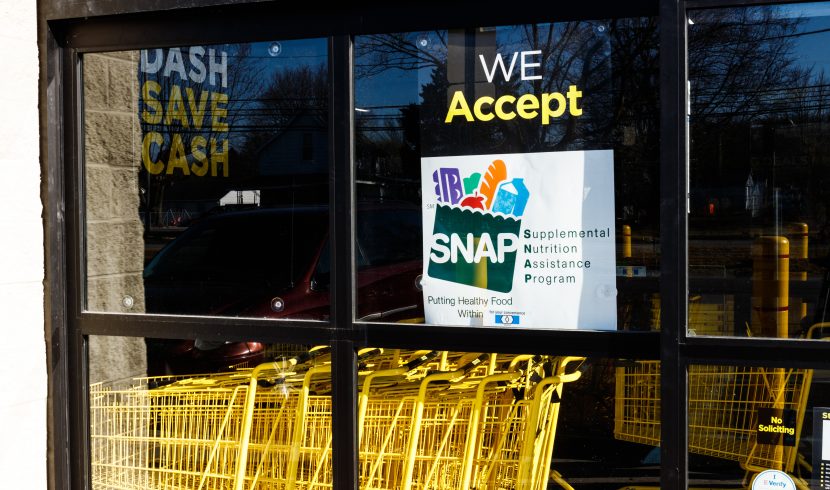
Last week, the federal government published “scores” that will determine how much each state will have to pay toward its SNAP program starting in 2027. These scores measure one thing: whether households received the exact benefit amount they were eligible for under SNAP’s complex eligibility rules. These scores are not a measure of fraud. They are not a measure of waste. They are, simply put, a measure of administrative accuracy. And yet, some states with better accuracy will soon be required to pay more costs.
The newly released USDA data confirms that Alabama, along with 35 other states, will face massive new costs to continue their SNAP programs, while the 6 states with the highest rates were given two years to bring their rates down. Under a federal law called the One Big Beautiful Bill signed last summer, Alabama will now be required to contribute approximately $174 million toward SNAP benefit costs that were previously fully federally funded, or potentially lose the SNAP program altogether. That money has to come out of an already shrinking state budget. This penalty is unfair to our state and harmful to our economy and to families struggling with hunger. In 2025 alone, SNAP provided nearly $1.8 billion in food assistance to Alabama families.
Alabama’s score has historically been one of the best in the country, and has always been below the national average. Our Department of Human Resources runs one of the most efficient SNAP programs in the nation. The state employees who do this work – many of them in small offices in small towns across Alabama – deserve plaudits, not penalties.
Here is the part that should bother every Alabamian, regardless of politics:
States with the worst paperwork accuracy scores, the states that struggled most to get this right, were given a two-year delay before they have to pay anything. Georgia, for example, with a significantly higher error score than Alabama, will not be required to contribute a single dollar until 2030.
Alabama, which consistently performs better than Georgia, did not get that grace.
This is not a request to repeal the law. The law passed. What we are asking Senators Britt and Tuberville is simple: give every state the same two-year extension that high-error states already received. Equal treatment. Nothing more.
Why does this matter to Alabamians who do not use SNAP? Three reasons.
First, the people on the SNAP program are not who you may think. Currently, 87% of Alabama’s SNAP benefits go to households with children, seniors, or people with disabilities. And, 23,000 Alabama veterans depend on this program. When SNAP gets cut, the first people to go hungry are the most vulnerable.
Second, this is an Alabama economic issue. Nearly 5,000 Alabama businesses redeemed $2 billion in SNAP benefits in 2023. In rural communities across our state, many small grocery stores depend on SNAP customers for 40 to 60 percent of their sales. When those stores close, local governments lose tax revenue and jobs, and the entire communities lose their only access to fresh food. The food deserts that result are often permanent.
Third, the food banks cannot fill the gap. For every meal the Feeding Alabama network provides through our eight member food banks and 1,200 partner pantries, SNAP provides nine. The charitable sector was not designed to feed 678,000 Alabamians on its own. We will do everything we can. We always do. But there is no backup plan that replaces $1.7 billion in annual food assistance.
Our congressional delegation has the ability to make this right: A two-year extension for every state is a straightforward, achievable solution. It does not undo the law. It does not change who pays what. It simply gives Alabama, a state that has done its job well, the same opportunity given to states that have not.
Alabama should not be penalized for running an exceptional program. We are asking our federal delegation to act, and we are asking Alabamians to call on their members of Congress to support equal treatment.
This is not partisan. It is about protecting Alabama families, businesses, and communities from bearing the cost of an unfair policy. Alabama did its job well. It should not be punished for it.
Laura Lester is CEO of Feeding Alabama, the statewide network of Alabama’s eight Feeding America food banks.