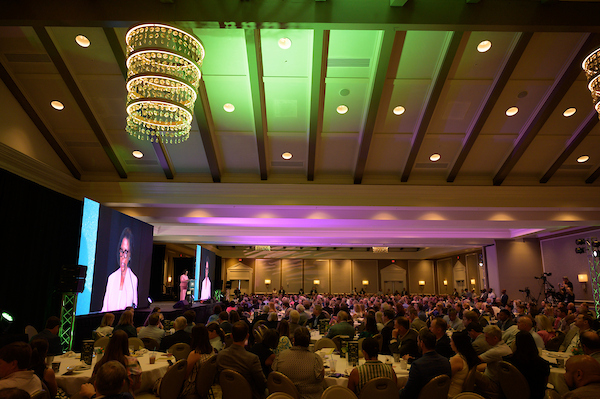
POINT CLEAR, Ala. – When Eli Lilly announced it would invest $60 billion in pharmaceutical manufacturing facilities in the United States, nearly every governor in the country called with interest, said Dan Wahby, Eli Lilly’s director of state government affairs.
That led to 300 applications. But just four states were chosen for sites, including Alabama.
The smallest of those four states, Alabama made the cut because of its collaboration across agencies and party lines, Wahby told a crowd of hundreds of business owners, lawmakers and lobbyists on Saturday. The company announced the more than $6 billion manufacturing facility in December.
“That’s why we came here. The people in this room were instrumental in Eli Lilly and Company making the decision to come to Huntsville, Alabama,” Wahby said. “Huntsville just happened to have 260 acres that they wanted developed, and working with the Commerce Department, the Governor’s Office, her staff, the workforce development, the educational pipeline, the infrastructure, all of the moving parts that you all know very well about Alabama, is what Eli Lilly and Company learned and loved,” he continued.
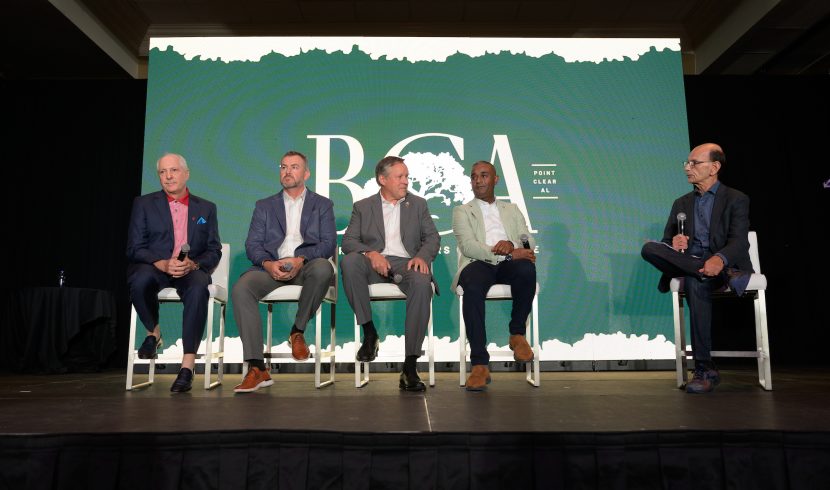
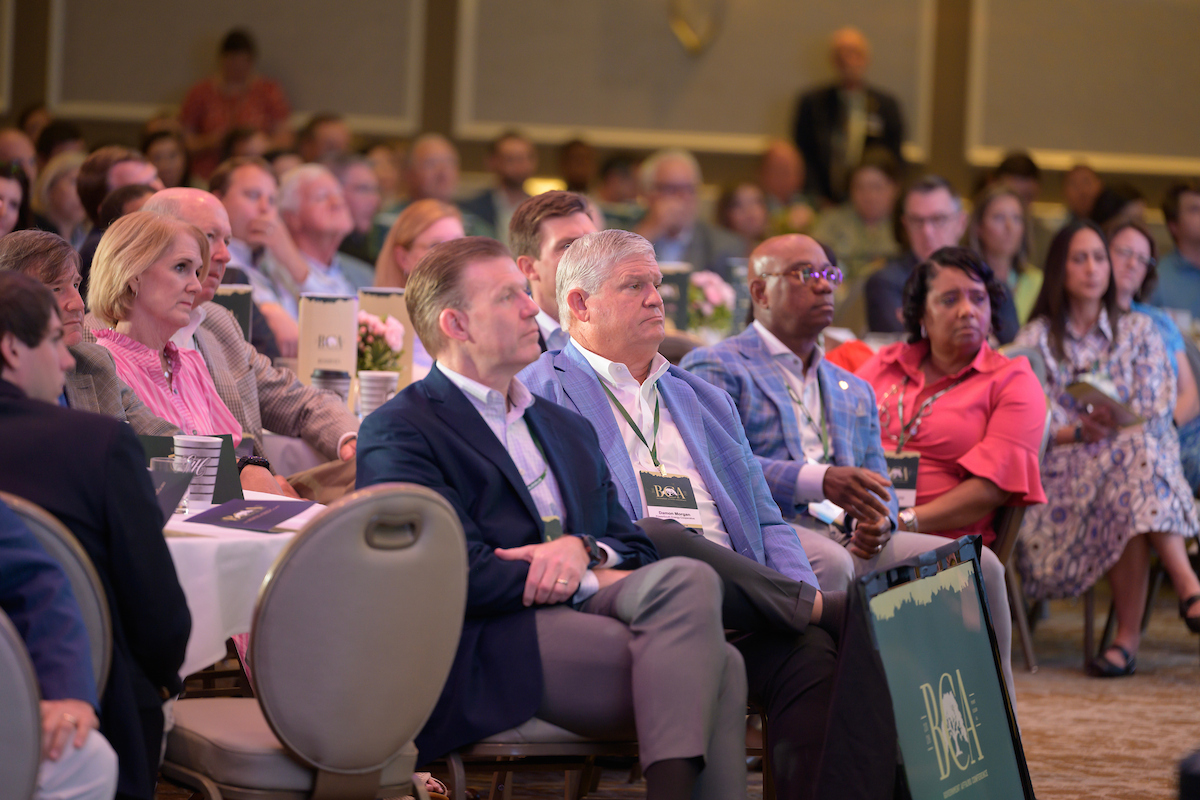
Wahby and three other business executives whose companies have made large investments in Alabama sat on a panel about business recruitment at the Business Council of Alabama’s 2026 Governmental Affairs Conference on Saturday morning at the Grand Hotel in Point Clear.
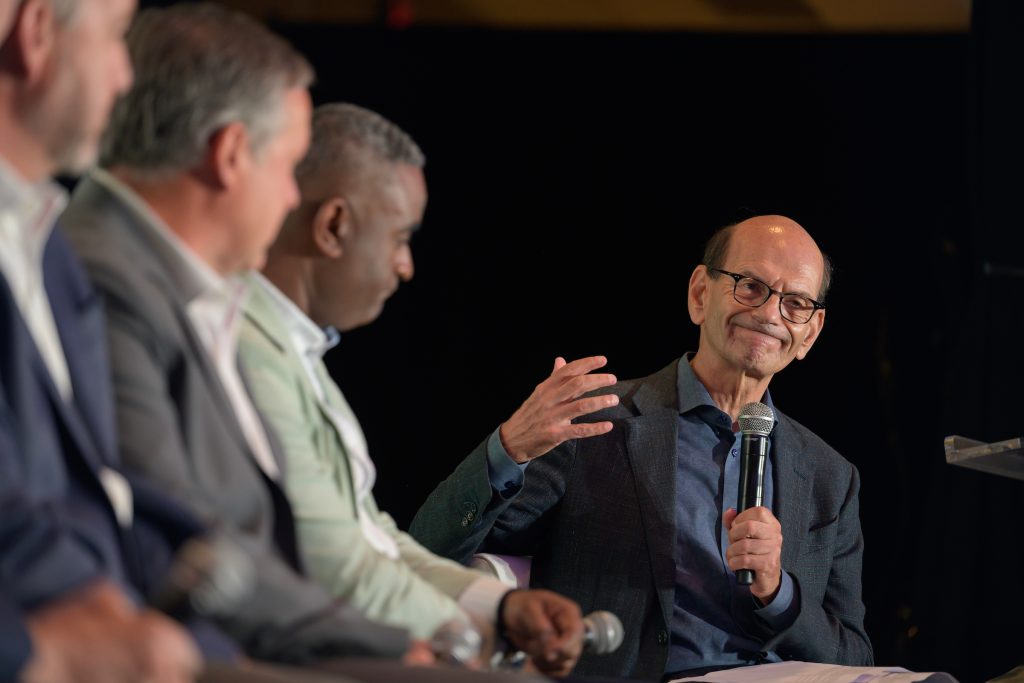
Questioned by sports radio legend and moderator Paul Finebaum, the four men told the crowd what made their companies choose Alabama, why they stay and how Alabama could better pitch itself as a business-friendly state.
The panel combined new and old players in Alabama’s manufacturing scene, with representatives from Mercedes-Benz, Airbus, Marzetti and Eli Lilly.
Mercedes-Benz opened its plant in Vance 30 years ago. Marzetti acquired Luverne-based bread company Sister Schubert in 2000. Airbus opened its final assembly plant in Mobile in 2015. Eli Lilly plans to break ground on the Huntsville facility this year.
The four companies decided on Alabama over the course of three decades, but several common themes emerged as to why they landed in Alabama.
The state of Alabama offered competitive tax incentives, showed collaboration between both government and business and provided unrivaled hospitality, panelists said.
“The footprint was here, the logistics were here, the people were here, but in the end of the day, the alignment from government and business to support, when they all walk into the office with our decision makers, Alabama was the only state that was shoulder to shoulder without a gap,” Airbus Senior Vice President of U.S. Commercial Aircraft Operations Daryl Taylor said.
Clarence Mingo, food manufacturer Marzetti’s vice president of corporate affairs and government relations, said it’s easy to be in Alabama and hard to leave, a business environment that “deserves a lot of national recognition.”
“When I say it’s easy to be here, I simply mean the ability to have partnerships and relationships that allow businesses to grow and prosper,” Mingo said. “The consideration given to employees flocking here from all parts of the country, and that those employees are able to establish their roots, set up their families and help your organization and the communities in which they’re now planted and grow. That is simply remarkable.”
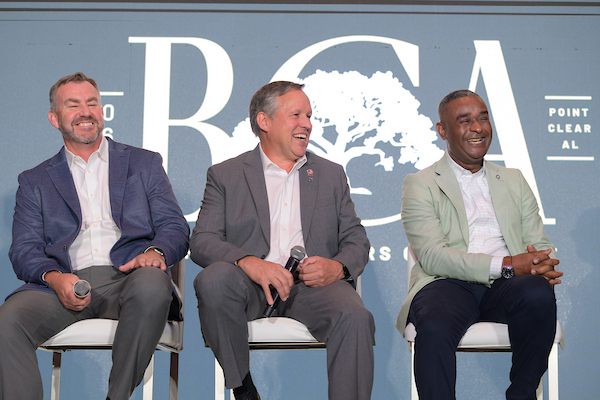 The panelists also offered suggestions as to what Alabama can do to become even friendlier to business. They mentioned improving childcare options, access to healthcare and educational opportunities.
Federico Kochlowski, president and CEO of Mercedes-Benz U.S. International, said it’s important to communicate to the young population that these manufacturing jobs are valuable and stable in the long term.
“Anything that will enable them to access education… to know what is out there, what are the possibilities, and basically through the companies which are here and the ones coming, there is a lot to offer, and there’s a lot to further advertise and get more people on board,” Kochlowski said. “That’s the challenge we have. Our main thing is to get the people to stay and for them also to see what is the value in staying in a long career.”
Part of continuing to have successful manufacturing plants is having a qualified workforce, panelists said.
Alabama has invested millions of dollars in career and technical education and workforce initiatives in the last quadrennium, at times teaching students specific skills needed for these companies’ manufacturing processes. These programs are vital to the companies’ workforce, the panelists said.
Continuing to build STEM knowledge and being ahead of the artificial intelligence curve will be critical for Airbus in the next five years, Taylor said.
“We need to continue to see the investment in workforce development,” Taylor said. “We need to continue to see the investment in the two-year college. We need to continue improvement in STEM in the schools. I think all of those things are on the way, and we need to continue those. That will be what we’ll see Airbus continue to be successful, because we have seen the success for us is when we can hire local.”
Even though there’s room for improvement, panelists said Alabama is building its reputation in the national business community as a business-friendly state open to new ideas.
Mingo called Alabama’s growth over the past decade “remarkable” and said that Alabama increasingly comes up in conversations about good states to do business in.
“The national narrative that people look at state growth and development and attracting businesses, Alabama has a story that is so rich and real and ongoing, and my hope would be that the rest of the nation increasingly would realize what is happening here…” Mingo of Marzetti said. “When businesses think about where can I grow, where do employees exist, where can I partner effectively with state government to ensure that growth, Alabama is one of the places people think about.”
BCA President and CEO Helena Duncan said free markets and free people have led to Alabama’s economic growth.
Alabama grew faster than both New York and California in the third quarter of 2025, she said.
“Come to Alabama. Bring the plants. Bring the factories, and the ideas that everyone else says are impossible,” Duncan said. “Here you will find a state that says yes instead of no. Here you will find people who still know how to get things done.”