
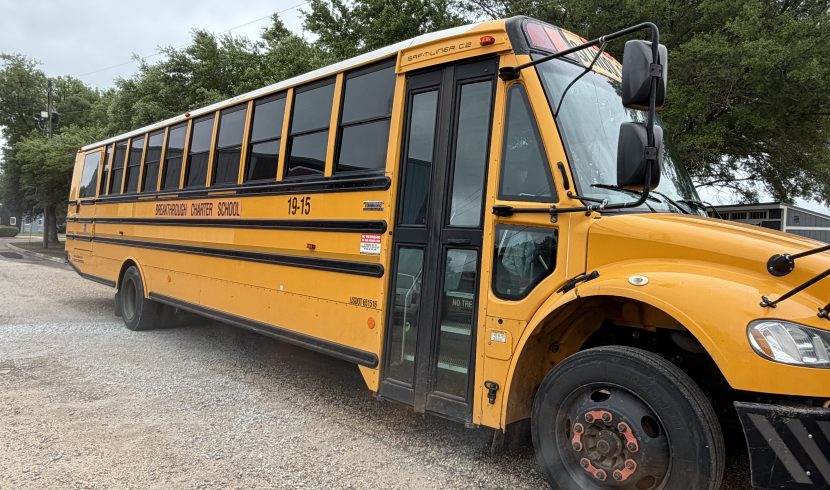
BIRMINGHAM, Ala. – Alabama lawmakers have fully funded the state’s projected cost of operating public school buses for the coming year, providing school systems with a historic increase that could free millions of local dollars for classrooms, technology, school security and aging facilities.
Lawmakers provided $532 million for transportation operations in the fiscal year 2027 education budget, an increase of $107 million, or about 25%, from the current year’s $425 million allocation.
“Fully funded” is how State Superintendent Eric Mackey described the transportation operating-cost request during a State Board of Education work session in March. The amount ultimately approved by lawmakers did not change.
Transportation operations funding covers the day-to-day cost of running school buses, including fuel, driver salaries, mechanics, repairs and maintenance. It does not pay for the buses themselves.
In a statement Tuesday, Mackey praised lawmakers for funding “a large portion” of the department’s transportation request for the coming school year. That broader request included both operating costs and money to help school systems purchase buses.
Lawmakers fully funded projected operating costs and also provided additional money for bus purchases, though less than the amount originally proposed.
Gov. Kay Ivey included $66 million in the supplemental education budget to help school systems purchase buses. Lawmakers approved $25 million.
“Transportation funding has been a top priority for the department and the board for a few years due to the increasing costs to purchase, operate and maintain a fleet,” Mackey said.
The cost is especially high in large, sparsely populated school districts, he said, where buses must travel long distances to serve relatively few students and local tax revenue is often limited.
“A child who lives on a single road 30 miles from the nearest school must be provided with the same educational opportunities as the child who can walk across the street,” Mackey said. “This is a foundational principle to public schools.”
Alabama Daily News reviewed more than a decade of transportation allocations and found that this year’s $107 million increase dwarfs previous year-over-year gains. It is more than twice the largest annual dollar increase during that period.
House Education Trust Fund Budget Chair Danny Garrett, R-Trussville, said lawmakers recognized the magnitude of the need, particularly in rural systems that cover entire counties.
“Transportation is a huge need for the systems,” Garrett said. “Particularly in rural areas and some of the urban areas, it’s a huge requirement, and it’s very expensive.”
Rural systems have filled the gap with local money
Geneva County Superintendent Becky Birdsong knows that challenge well.
The county covers about 575 square miles and has more miles of dirt roads than paved roads, she said. The district operates about 30 buses to serve approximately 2,700 students.
Traveling those roads takes a toll on the buses.
“Going up and down the dirt roads just really beats the buses to death,” Birdsong said.
At least a few times each year, buses get stuck and must be towed, usually after heavy rains, she said.
Geneva County’s transportation operations allocation will increase by about 28%, from $1.6 million to a little over $2 million, for the coming year.
In fiscal year 2024, Birdsong said, the district received about $1.48 million from the state for transportation operations but had to add approximately $425,000 in local money. State funding covered about 78% of the district’s cost.
The previous year, the state covered about 71%, leaving Geneva County to contribute nearly $571,000 locally.
If the new allocation covers the district’s projected expenses, Birdsong said the money previously used to fill the transportation gap can instead be spent on teachers, instructional needs and repairs to aging school buildings.
“Oh my gosh, I could do so many things with that,” she said.
The district has experienced enrollment growth in some schools and could use the money to add a teacher where needed, she said. It also has several buildings that need new roofs.
“You kind of put it off and say, ‘How long can I go before I have to do something with this roof?’” Birdsong said. “It’s going to make a big difference for us.”
The relief is particularly important as growth in local sales-tax revenue slows and other funding sources become less dependable, she said.
City systems also gain flexibility
Alabama law requires county school systems to provide transportation but does not impose the same requirement on city systems.
Even so, city districts that operate only a few routes will benefit from the increase because they will no longer have to use as much money from other sources to cover transportation expenses.
Cullman City Schools does not operate general bus routes. It provides transportation for students with disabilities and some students experiencing homelessness – a federal requirement. For that, it will receive $193,000, up from $117,000 for the current year.
Superintendent Kyle Kallhoff said the district has used Advancement and Technology Fund money to cover previous shortfalls in its transportation allocation.
The additional operating money will allow Cullman City to redirect more of that funding toward technology, safety and security, including additional cameras and automated external defibrillators.
“By having the increase, it frees up other sources,” Kallhoff said.
Buying buses remains a challenge
Although lawmakers fully funded projected operating expenses, districts still face a substantial gap when they need to replace buses.
Under the state’s regular fleet-renewal formula, school systems receive $7,581 annually for each eligible bus that is less than 10 years old. Over 10 years, that amounts to $75,810 toward the replacement of a bus.
The annual amount has not increased since 2022.
Birdsong said a new bus now costs roughly $130,000 to $140,000, meaning the regular state allocation covers only a little more than half of the purchase price.
“It’s just a struggle to keep up,” she said.
Geneva County recently received nine air-conditioned buses purchased with the help of an additional state allocation approved about two years earlier. Even after buses are ordered, Birdsong said, it can take more than a year for them to arrive.
Garrett said he also wants the State Department of Education to examine whether the regular fleet-renewal formula should continue to stop funding a bus once it reaches 10 years old.
The mileage and condition of 10-year-old buses vary considerably among districts, he said, and some remain useful beyond the period recognized in the state formula.
“Theoretically, we could be retiring buses sooner, when they’re still usable, and that might impact funding,” Garrett said.
He has asked the department to study the actual useful life of Alabama school buses and whether the state could distribute its fleet money more efficiently. He said he has not yet received the results of that review.
The operating increase nevertheless represents substantial relief for districts that for years have used local dollars and other state funds to keep buses running.
“I am so proud that the Legislature followed through with funding a large portion of our transportation request for this upcoming school year,” Mackey said.
The table below shows the amount of state funding each school district will receive for transportation operations for the 2027 fiscal year, which starts Oct. 1, compared to the current budget year. Click here if you’re unable to see the table.