
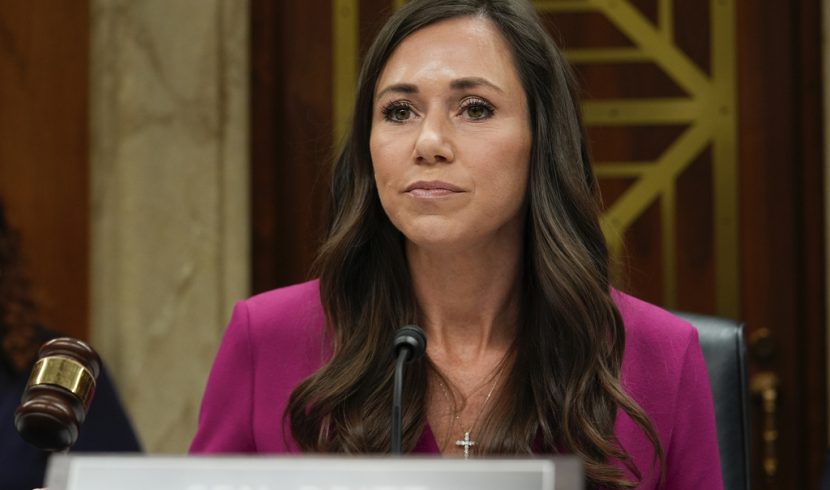
WASHINGTON — A couple of Alabama lawmakers are hopeful about provisions focused on children and families’ tax breaks as Republicans move forward with President Donald Trump’s “big, beautiful bill” this week.
The legislation includes a slew of tax breaks for Americans, including some focused on child care and adoption, which U.S. Sen. Katie Britt, R-Ala., and U.S. Rep. Robert Aderholt, R-Haleyville, are each championing as part of the larger bill. The tax breaks will be offset by cutting federal spending on programs like Medicaid and the Supplemental Nutrition Assistance Program.
Britt, a fierce advocate for child care affordability, said she’s excited about the provision in the tax portion of the bill that expands the employer-provided credit for child care, known as section 45F.
“We’re the party of hardworking Americans,” Britt told Alabama Daily News last week. “I can think of no better way than (for) us to tackle the affordability and accessibility issue of child care and this is the best way to do it. To put parents back in the driver’s seat and empower businesses to be a part of the solution.”
The tax credit provides businesses a nonrefundable tax credit for qualified child care expenses provided to employees.
Under the proposed legislation, the credit would increase the maximum credit to $500,000 from $150,000. It would also increase the percentage of qualified child care expenses covered from 25% to 40%.
The Employer-Provided Child Care Credit would also expand for small businesses, increasing the maximum credit to $600,000 and 50% of qualified child care expenses.
Britt said she even wants to add to the tax credits when the legislation makes it to the Senate.
“I look forward to expanding that in the Senate,” Britt told ADN.
The budget bill also increases the child tax credit to $2,500 per child for tax years 2025 through 2028, up from the current level of $2,000. It makes the $2,000 credit permanent, indexed for inflation after 2028. The credit was set to revert back to $1,000 by the end of the year under current law. The credit will be restricted to children and parents who both have a Social Security number.
The child care provisions in reconciliation do not tackle broadening the Child and Dependent Care Tax Credit, which helps families with children who pay for child care. It is part of legislation sponsored by Britt and Sen. Tim Kaine, D-VA, aimed at tackling child care affordability.
Policy experts at the Center on Budget and Policy Priorities, a left-leaning think tank, argue that raising the child tax credit won’t help the 17 million children, including 338,000 in Alabama, who don’t receive the full credit because their family’s income is too low.
Aderholt, who chairs the House Values Action Team, praised the inclusion of the Adoption Tax Credit refundability in the tax portion of the budget bill. The provision would make the credit partially refundable up to $5,000 indexed for inflation.
“For too long, the nonrefundable nature of the credit has limited its reach, particularly for working- and middle-class families who may not owe enough in taxes to use the full amount,” Aderholt said in a statement.
“Refundability means more children can be welcomed into permanent homes, and more families can say yes to adoption without being held back by financial constraints. I’m proud to see Republicans put families first in this year’s Budget Reconciliation.”
The congressman said he remains committed to ensuring the partial refundability of the credit remains in the final version.
The House is expected to vote on the budget bill this week before it heads to the Senate, where the upper chamber can make changes to the legislation.