
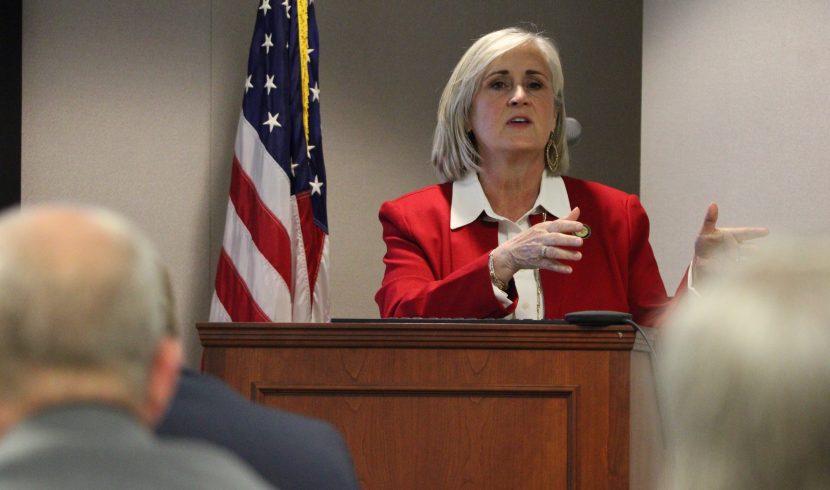
MONTGOMERY, Ala. — A new task force charged with reforming Alabama’s “inefficient” court fee system held its inaugural meeting Monday, where members discussed ways to improve fee collection and more effectively allocate revenue to support the state’s courts.
“In 2014, we did a court cost study just to try to get an understanding of all the different court costs across the state and what they looked like,” said Alabama Supreme Court Chief Justice Sarah Stewart, who’s been charged with leading the task force made up of members of all three branches of state government. “It was a patchwork. It’s very unwieldy and it’s difficult to work with.”
Recent studies have shown the inefficiencies of Alabama’s antiquated court fee system, with the vast majority of court fees and fines going uncollected, around 78%. The state’s 30% late fee for unpaid court costs, known as a D999 collections fee, was found to exacerbate the issue and contribute to delinquent payments.
As a primary funding mechanism for both district attorney offices and sheriffs offices, the 22% collection rate for court costs has also led to budget shortfalls, which in the case of Limestone County, had seen county leadership push for increased court costs and fines to make up the difference.
“We’re only collecting about 22% of the criminal court costs and fines that are out there,” Stewart said. “The problem with that is that so much of our two major law enforcement arms – the district attorneys and the sheriffs offices – are counting on that funding to run their offices, and when we can only collect 22% of it, it puts them in a shortfall that they’re not able to recover from.”
Another issue raised during the meeting was the allocation of court revenue. Of the nearly $465 million collected by Alabama courts in 2024, nearly $126 million of it went to what Stewart described as “non-court entities.” Examples include the departments of education, public health and conservation, forestry and water safety, as well as private entities like Shelby County’s American Village.
“It would be ideal for all of these non-court related entities to longer be getting court costs, like the American Village,” Stewart said. “The problem is that all of those people are reliant on that money, that $125 million, so if we’re going to take that away, then we’ve got to come up with some replacement in the General Fund for it.”
Rep. Chris Blackshear, R-Smiths Station, was among three lawmakers attending the meeting, and had come in the stead of Rep. Rex Reynolds, R-Hazel Green, as a representative from the House Ways and Means General Fund Committee. On the matter of diverting money away from non-court entities and back into the court system, he said it would be imperative that lawmakers take great care as to not strip funding without first identifying a replacement revenue source.
“There are people at every level that are dependent, whether it’s right or wrong, on getting that,” Blackshear said. “Just know, whatever we come up with, there’s got to really be some due diligence done on it in how do you replace what’s lost.”
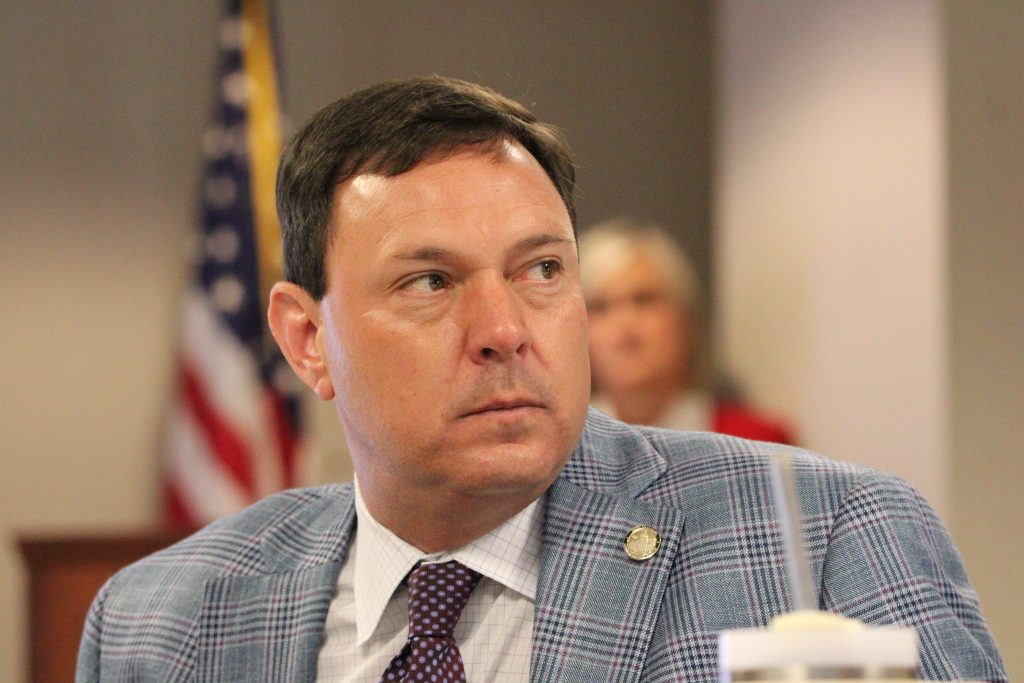
Alabama Daily News later asked Blackshear whether he and his legislative colleagues would be open to shifting court revenue away from non-court entities and back into the court system.
“I think all options would be on the table,” he said.
Another potential contributor to the state’s flawed court fee system discussed during the meeting was the sheer amount of Alabamians entering the criminal justice system. As of March, the Alabama Department of Corrections had an inmate population of 21,435, and a jurisdictional population, which includes Alabamians released on probation, of 27,457. At around 900 inmates per 100,000 people, Alabama has among the highest incarceration rates in the nation.
As ADOC’s population grows, so too do the financial burdens of the court system, and with the bulk of fines going unpaid, resources continue to be spread thinner and thinner. This issue was exacerbated, suggested Sonny Brasfield, executive director of the Association of County Commissions of Alabama, as state lawmakers continue to file and adopt bills creating new crimes.
“When the session’s over, and these guys take care of me so I’m not being critical of them, but the biggest group of legislation that passes every year is creating new crimes,” Brasfield said. “I mean literally, there were about 15 that passed this last session creating new crimes, which just makes this much more difficult, much more expensive.”
Stewart later told ADN that she anticipated the process of overhauling Alabama’s court fee system to take between two and three years, but spoke optimistically of achieving solutions given a newfound sense of cooperation across all three branches of government.
“We have such a great relationship now between the judicial branch, the Legislature and the executive branch, (that) we really have some opportunities to do some things that we couldn’t ordinarily get done in the past,” she told ADN.
The next meeting of the task force is 11 a.m. June 24 in Montgomery.