
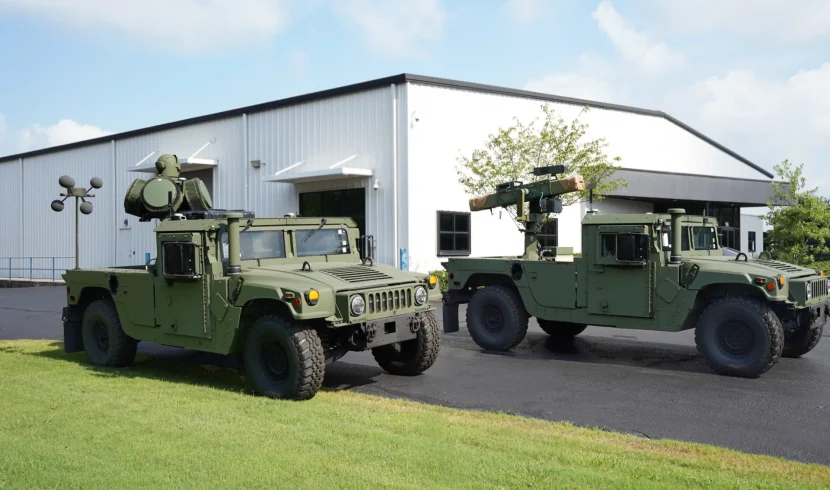
WASHINGTON — Huntsville defense contractor Invariant announced Wednesday that it has integrated its technologies to track and defeat drones that could prove critical as drones transform modern warfare.
The news of the integration advancement was first shared with Alabama Daily News.
Invariant Corporation integrated its FireFLY passive acoustic sensor with Surface to Air Kinetic Engagement, or STAKE, its counter-drone hunter-killer weapon system, to detect a drone by sound alone, confirm that it’s a threat and pass that detection to the weapon system to cue a laser-guided rocket to attack it.
The Huntsville-based, employee-owned company with just over 200 people saw a U.S. Department of Defense need for a layered counter-drone defense system and it found a way to meet that need with its technology.
“Anything that you can do to detect and track targets without being seen yourself, that’s the huge technological advancement for the battlefield,” Danny Levis, president of Invariant, told Alabama Daily News. “And then being able to do that with such a precision that I can then cue a weapon to go engage that target without having to emit is a massive leap forward.”
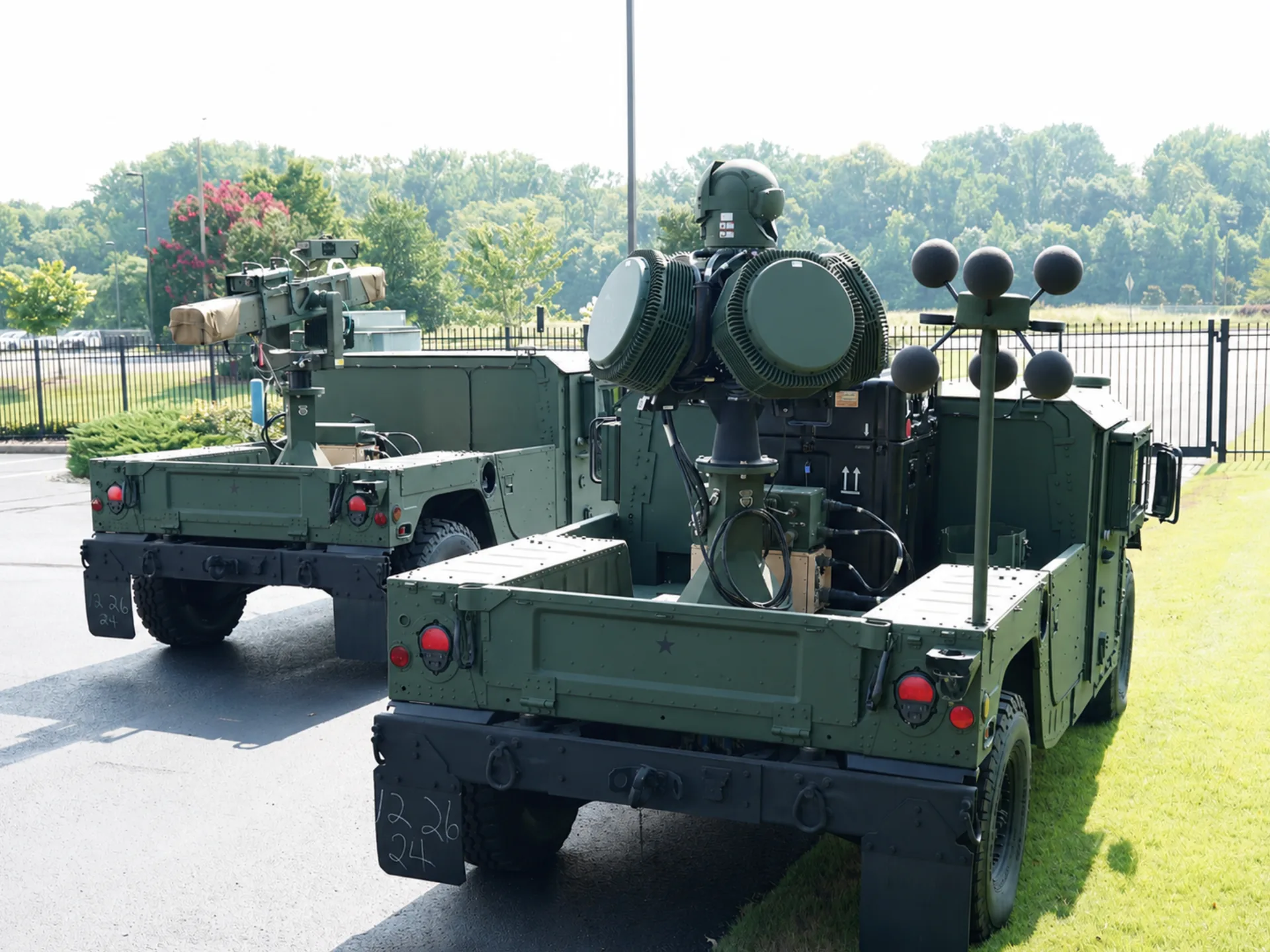
The process does not emit any signal, such as radio, which enemy forces can detect. Instead, the sensor uses acoustic signatures to determine the location and altitude of an approaching drone, enabling a connected weapon system to destroy the threat.
Levis said the layered technology could be especially beneficial for soldiers deployed in austere environments who lack the equipment to generate their own power.
“This gives them a sensor where they’re completely passive and they can keep themselves hidden while keeping… situational awareness as well,” he told ADN.
Joint Interagency Task Force 401 – the Defense Department’s task force dedicated to countering small unmanned aircraft systems – published a handbook in July emphasizing that a layered approach is the “most effective defense against illicit drones.”
“While there is no silver bullet to protect against drones, the threat can be mitigated if we are proactive, work with partners across the government and build a layered defense,” Army Brig. Gen. Matt Ross, task force director, said upon the handbook’s release.
Invariant believes it is the first to integrate an acoustic sensor with a kinetic weapon system for counter-drone defense.
Compared to massive defense contractors, Levis said being a smaller employee-owned company allows its workers to feel empowered to find solutions to technological problems facing the U.S. military on the battlefield without waiting for a customer to ask for something.
“It’s a mentality of let’s move fast and get to yes, and have a certain level of faith that this technology is needed by the warfighters,” he said. “Let’s lean forward and develop it, and then bring solutions to those test events, and get it into the hands of a warfighter as soon as possible.”
Invariant plans to continue system testing and interoperability demonstrations with U.S. government and industry partners. It also hopes to get the technology to an end user to deploy and operate the capability in the future.