
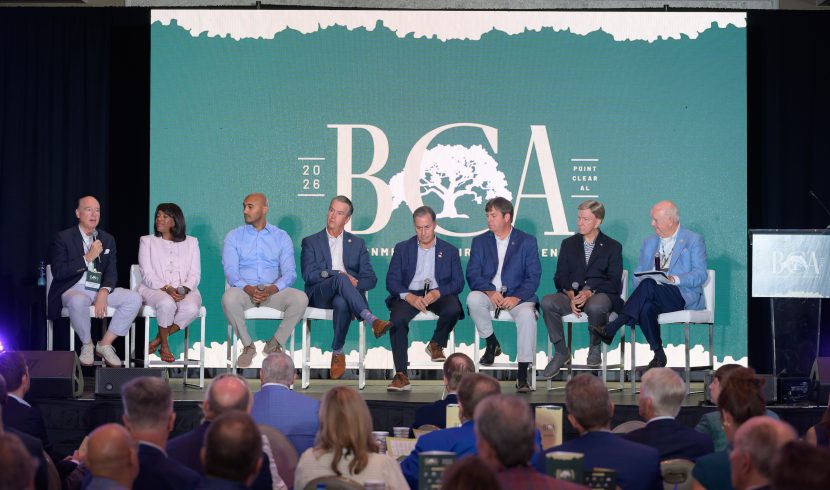
POINT CLEAR, Ala. — All seven of Alabama’s U.S. House members joined forces Saturday at the Business Council of Alabama’s annual conference to discuss the bills they wish to see passed before the end of the year and their collaborative efforts with bipartisan lawmakers in Congress.
Sharing mics on stage, like they share a mutual dedication to Alabama, the state’s federal lawmakers laid out their ideal legislative agenda as the 119th Congress comes to a close in a few months.
House Armed Services Chairman Mike Rogers said besides the annual defense policy bill, which he oversees, he wants to tackle “comprehensive immigration reform.”
“To take the folks who are here illegally, who have a job, stay out of trouble, and they’ll stay and work, give them legal status,” Rogers, R-Saks, said during the federal panel. “They wouldn’t be citizens, and (would) have to renew it. But I think that’s very doable now that the border is secure.”
The lawmakers convened on a federal panel at the BCA’s Government Affairs Conference, speaking in front of a crowd of hundreds of Alabama business owners, lawmakers and lobbyists in Point Clear.
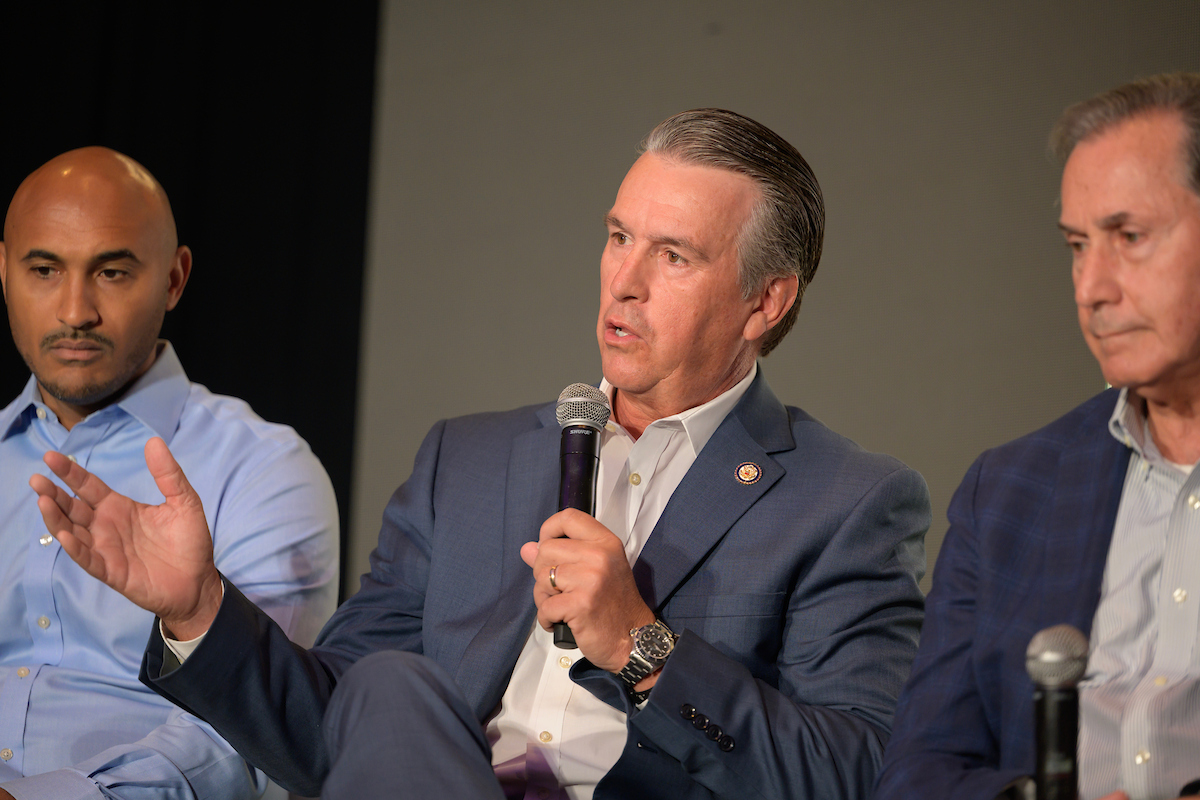
Reps. Barry Moore, R-Enterprise, and Terri Sewell, D-Birmingham, both focused on securing elections but diverged on the best path to achieve that goal.
Moore said his number one priority is passing the SAVE America Act, a bill that would require proof of citizenship to vote in federal elections. But the legislation has little chance of becoming law this year.
“For me, that’s certainly going to be on the top of the list for things I’d like to see across the finish line,” Moore said.
Before its August recess, the Senate didn’t even have the votes to take up a budget resolution that contained part of the elections overhaul bill. Instead, Senate Republicans failed to advance a simple voter ID bill last week.
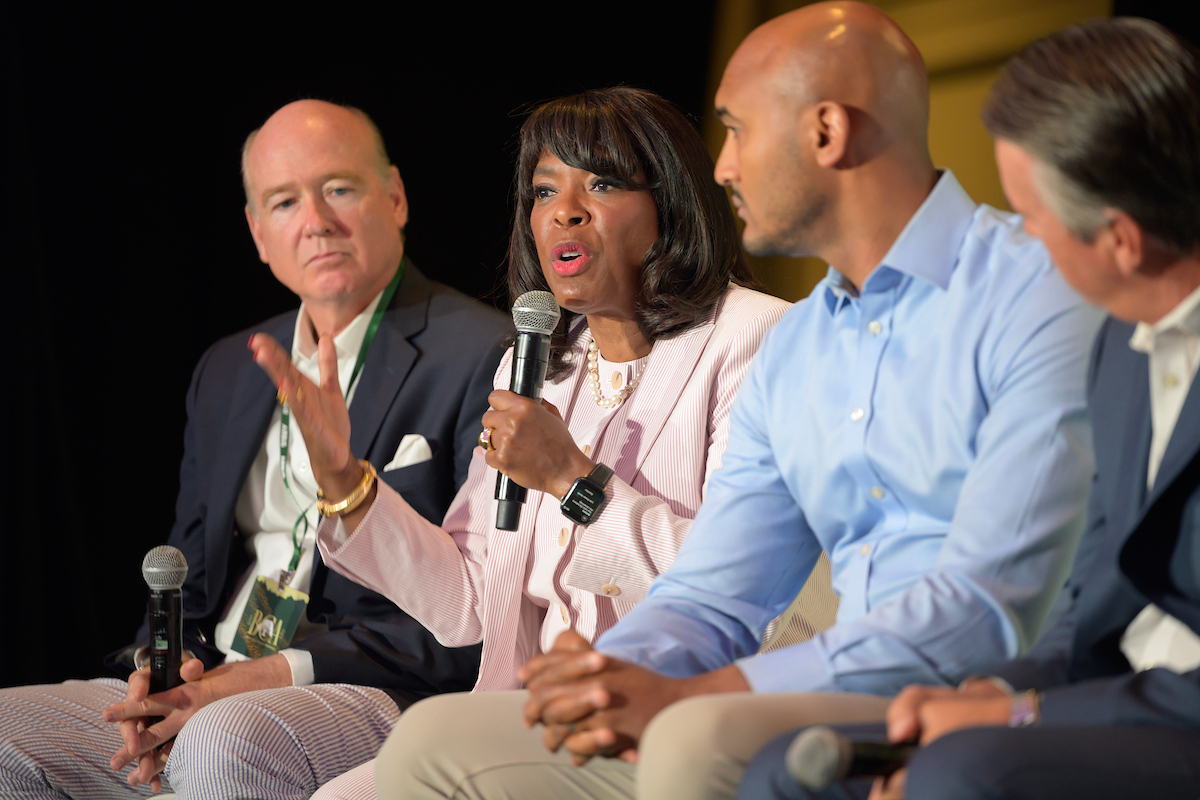
Sewell agreed that she supports “safe, fair, and secure elections” but wants to ensure that through the John Lewis Voting Rights Advancement Act, which would reinstate federal preclearance for areas with a history of voter discrimination.
“I’m all about making sure that we identify who we are in order to get a ballot,” Sewell said. “What I am saying, though, is that we can’t disenfranchise Americans who are eligible and have registered to vote. We should not be in the business of doing that.”
She also touched on pushing for Congress to extend the Affordable Care Act enhanced premium subsidies, which expired at the end of last year.
During the congressional panel, Rep. Gary Palmer, R-Birmingham, said comprehensive permitting reform is a top legislative issue for him.
“I think it moves us into small modular nuclear reactors,” Palmer said. “It’s going to give us opportunities here in Alabama to open up Bellefonte and the Tennessee Valley. I really think that that could be a game changer not only for the economy but, from a national security perspective, our relationship with China.”
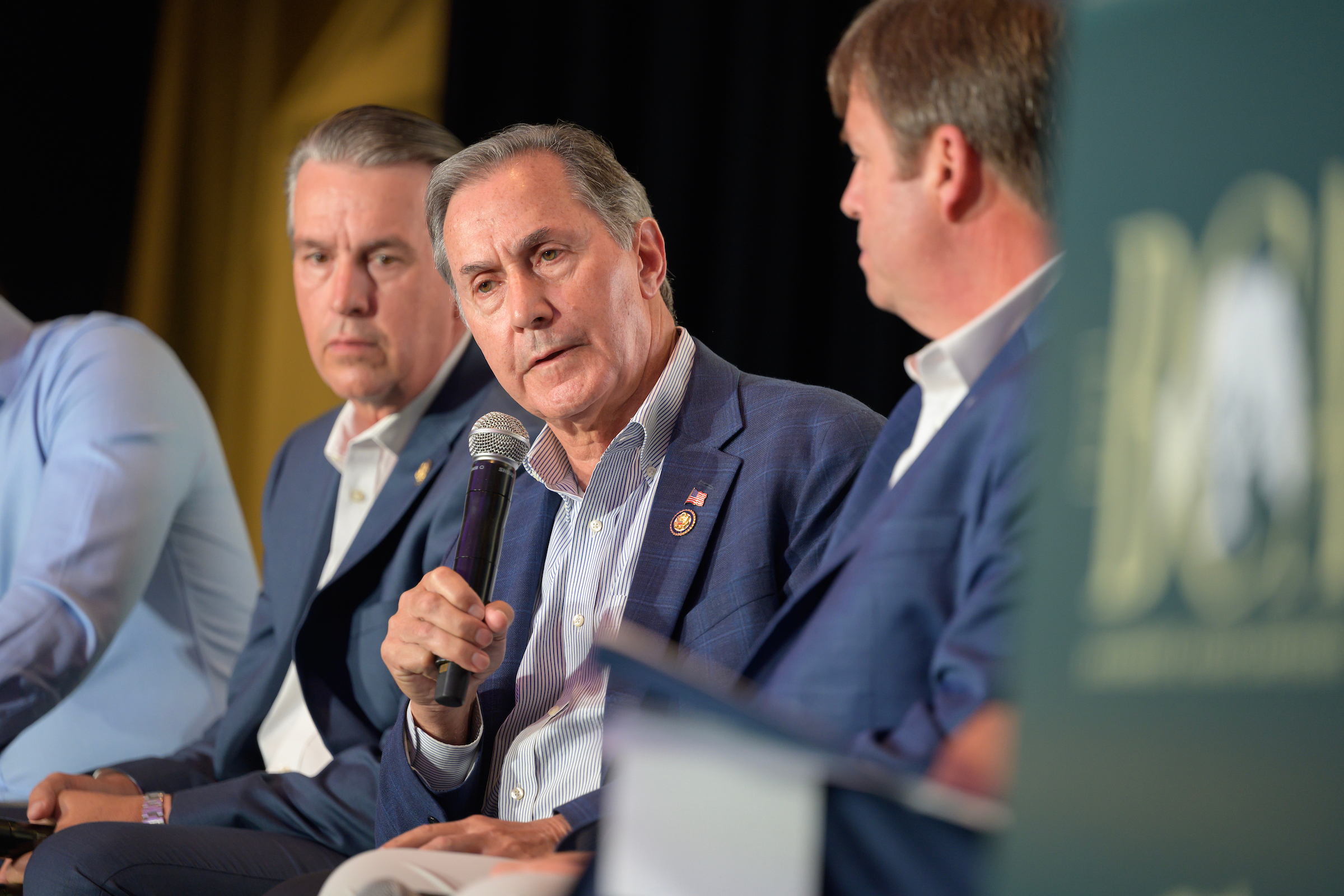
A member of the Appropriations Subcommittee on Defense, Rep. Robert Aderholt, R-Haleyville, emphasized the need to address the diminishing stockpile of U.S. munitions in the wake of the Iran war.
“I believe in peace through strength, like Ronald Reagan said,” the dean of the delegation said. “And as long as you have a strong defense and it doesn’t matter if you don’t have a strong defense, then everything else falls by the wayside.”
Bipartisanship still exists
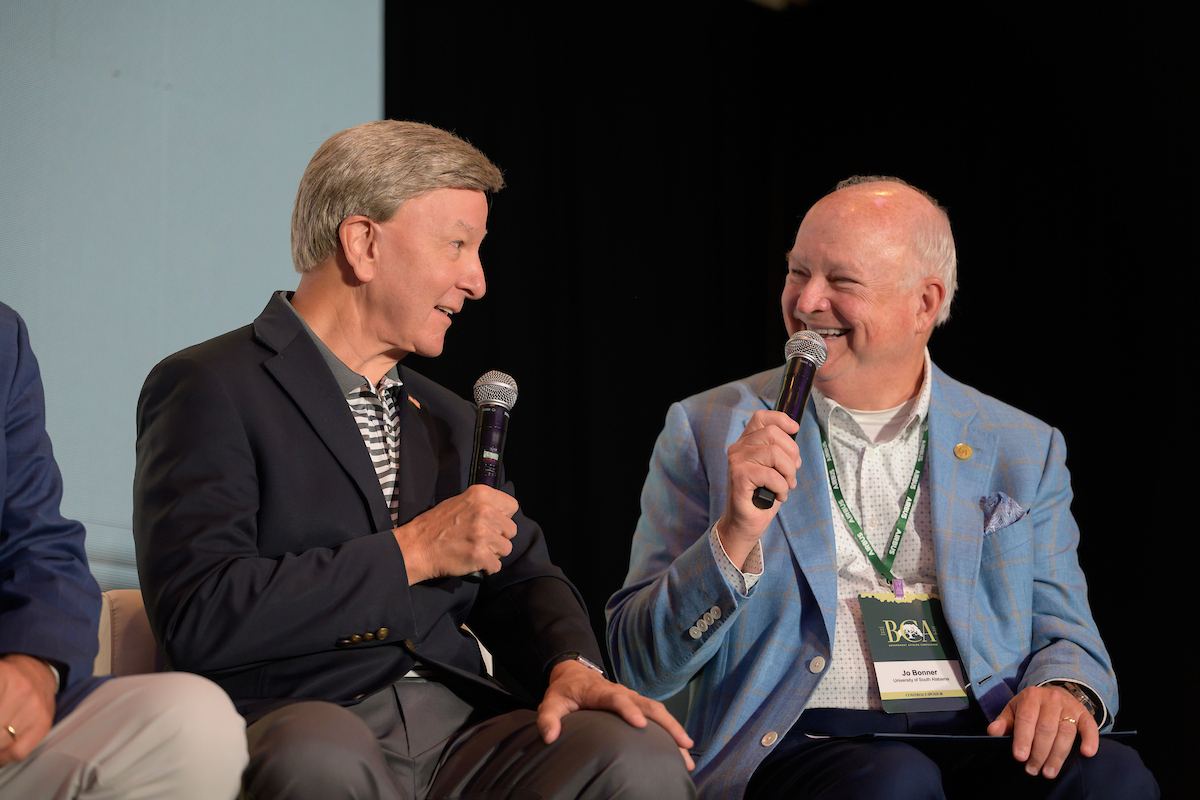
Moderator and former Congressman Jo Bonner asked the panelists if any bipartisan legislation might reach the president’s desk before year-end.
Sewell said she was proud to have already seen a transformational, bipartisan piece of legislation become law this year, the 21st Century Road to Housing Act.
Rep. Dale Strong, R-Huntsville, said he hopes his bill to steer air travel security fees toward boosting airport screening capabilities passes the Senate soon, as it passed the House last month by voice vote.
The Surface Highway Reauthorization Act and the Water Resources Development Act are two bills that are essential for Alabama to get passed into law this year, Rep. Shomari Figures, D-Mobile, said.
“That’s money that the port needs,” he said.
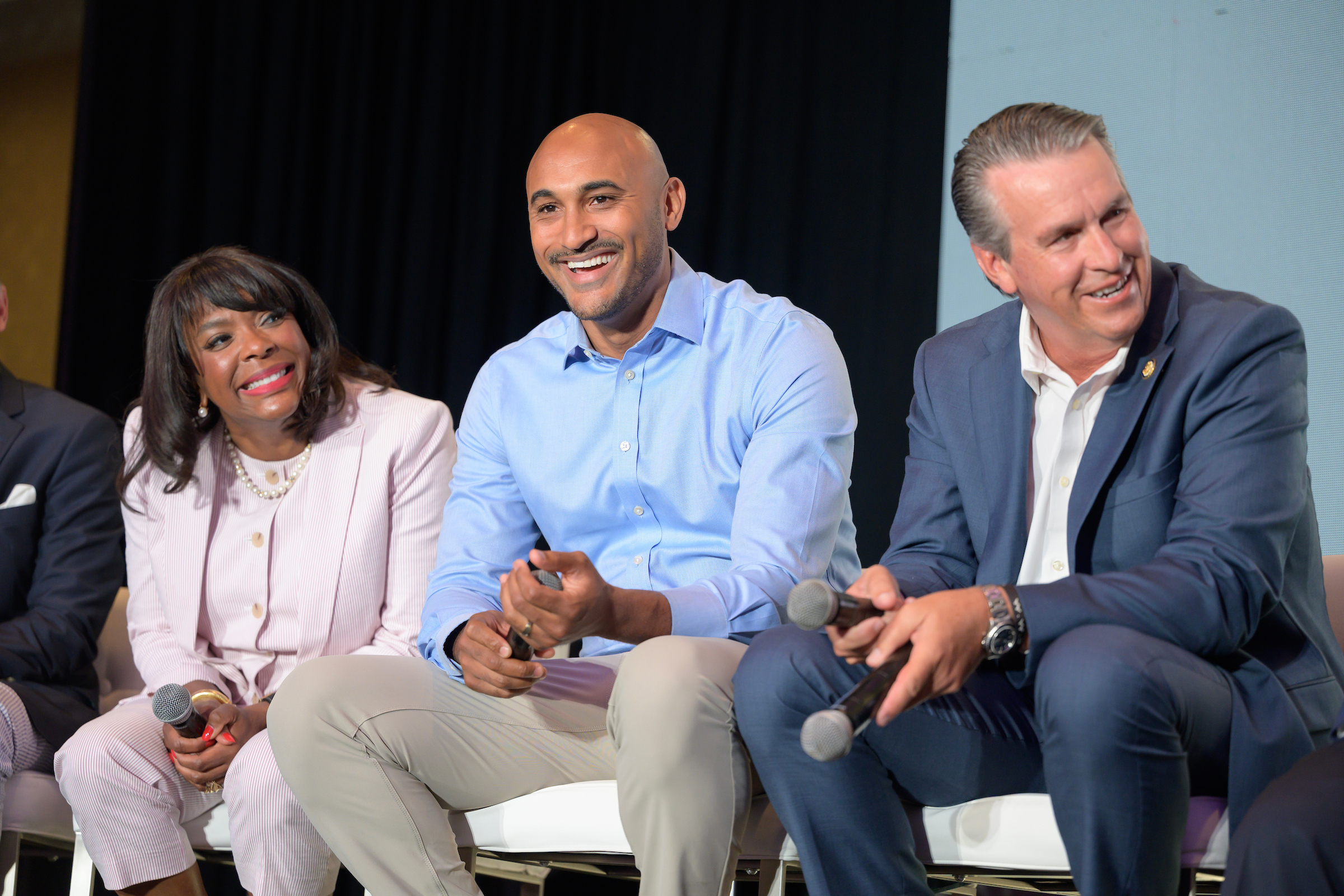
Each lawmaker also shared a positive working relationship they have with someone on the other side of the aisle that others might not otherwise know about.
Strong recounted a story in which he thought he achieved “world peace” during his collaboration with the top Democrat on the House Appropriations Committee, Rep. Rosa DeLauro, D-Ct., to secure more Black Hawk helicopters in a spending bill.
“She looked at me and she said, ‘Call me Rosa,'” Strong said about their conversation on the House floor. “I didn’t realize they manufacture Black Hawk helicopters in her district, so that’s why she was all for it,” Strong said. “But we did get those numbers up, and I thought I had done world peace.”
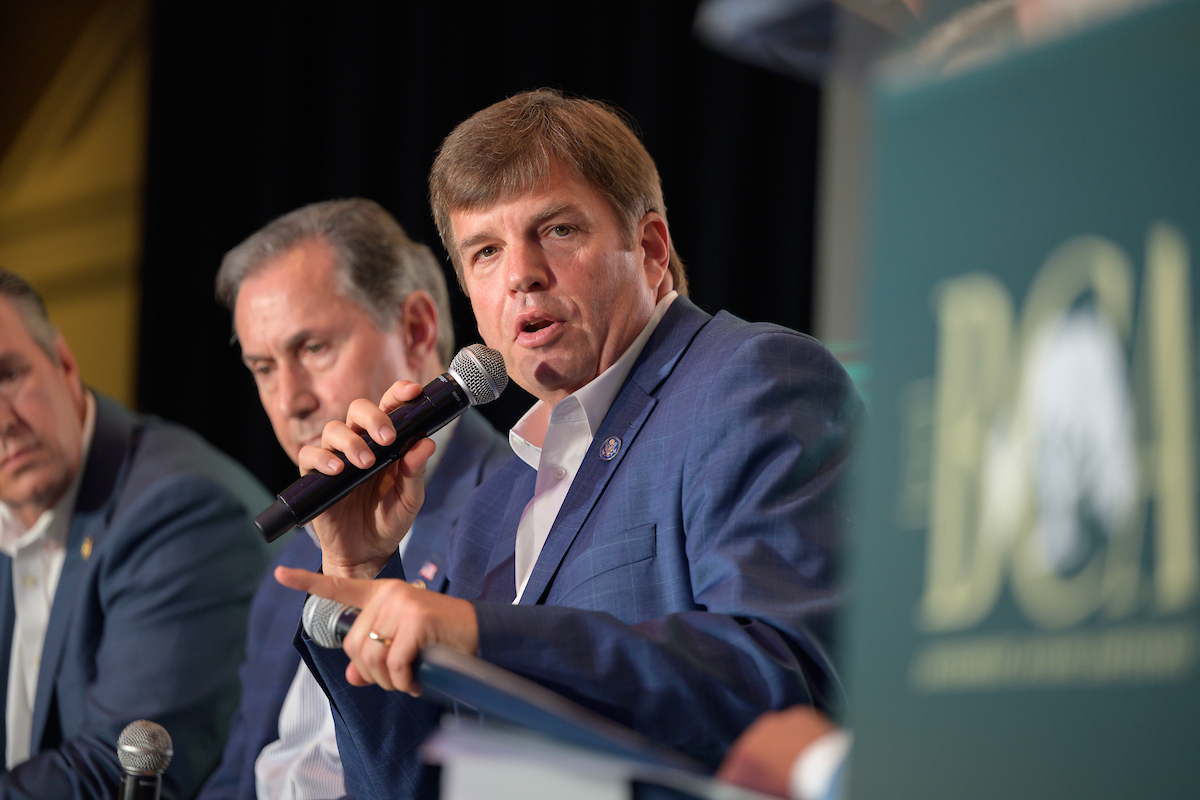
Aderholt detailed his relationship with Democratic Rep. Mark Pocan of Wisconsin, as they worked closely to secure investments in rural broadband.
“Supporting the ability to have internet in rural America was something that we both could get on board, and we’ve become very good friends since then,” Aderholt said.
Figures, who is in a tough reelection fight after the Supreme Court paved the way for Alabama to redistrict to a Republican-friendly map this year, shared how he worked with a GOP state leader at the forefront of those redistricting efforts.
In March, Gov. Kay Ivey granted clemency to a man on death row who did not kill anyone. In response, Alabama Attorney General Steve Marshall posted a scathing rebuke of the decision. But on the same day, Figures, who supported Ivey’s decision, had to personally call Marshall for legal help to keep a hospital open in Bullock County. And the attorney general came through for the congressman and the hospital.
“Steve and I disagree on a lot of stuff, including the district itself,” Figures said. “But at the end of the day, if somebody has a stroke or a heart attack in Union Springs, they do not give a damn about redistricting. They need a hospital, and so it’s our job to make sure that that hospital is there.”