
BIRMINGHAM, Ala. – Five years ago, Charles Daniel began asking Hoover City Schools to install cameras in special education classrooms after learning that a teacher had allegedly made disparaging remarks about children with disabilities.
His twin sons were young then, attending a self-contained classroom at Greystone Elementary School. An aide had alerted another student’s parents to the remarks, Daniel said, and word eventually reached him.
Daniel wanted cameras installed so there would be a record of what happened in classrooms where some children cannot explain what they experience.
He kept asking. The district didn’t install them.
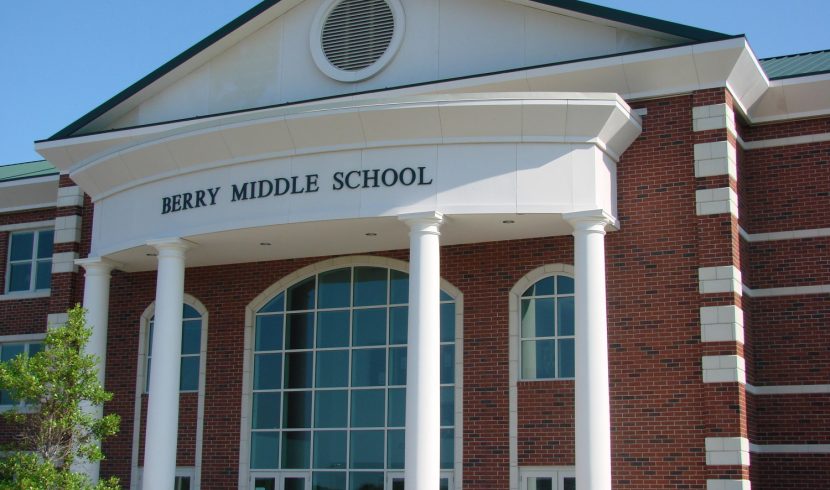
Today, his sons are 13 and attend Berry Middle School. Both have limited verbal communication skills and use assistive devices, but neither could tell their parents if something happened to them at school.
And Daniel is still asking for cameras.
This time, he’s offering to pay for one himself.
On Nov. 10, Daniel delivered a $5,000 check to Hoover City Schools, specifically designated for a camera in his sons’ classroom. A district employee signed an acknowledgment of the donation and issued an official receipt.
Two days later, Hoover Chief School Finance Officer Melynda Buck sent a letter returning the check and voiding the receipt.
“Hoover City Schools cannot accept your earmarked donation,” the letter stated, without further explanation.
On Tuesday, Daniel returned to the district’s central office with television cameras following him. When employees again refused the check, he left it on a receptionist’s desk.
Daniel’s renewed push began earlier this year, when school officials discussed using physical restraint techniques to address one son’s behavioral difficulties.
Daniel said he asked school officials to demonstrate the techniques so he could understand what they intended to do. When they couldn’t show him, he refused to authorize the restraints.
His son’s behavior has since improved, Daniel said, but the episode reinforced his concerns about what could happen in a classroom without a video record.
Neither of his sons could explain to him if something went wrong.
For Daniel, the issue isn’t a lack of confidence in his sons’ current teachers. He describes them as caring educators and said he makes a point of telling them his campaign isn’t directed at them.
He believes cameras could protect those teachers, too, particularly if they were falsely accused of mistreating a student.
Alabama’s Tyler’s Law, enacted in 2023, provides for cameras in self-contained special education classrooms and includes a requirement for installation when a school system receives a donation designated for that purpose.
The law restricts access to recordings and limits how they can be used. The cameras are not intended for routine teacher evaluations or continuous classroom monitoring.
Daniel believes his donation triggers the law’s requirement. Hoover’s refusal to accept it has become the central point of disagreement.
In a Sept. 10 response to Alabama Daily News, prior to Daniel’s $5,000 donation, Hoover City Schools said it had chosen to pursue grants for additional special education teachers, therapists and support personnel rather than apply for state funding to install cameras.
The district said its exceptional education classrooms have multiple adults supporting students and that it believes investments in personnel have a greater impact on students.
“Hoover City Schools believes these investments have the greatest impact on students by helping us maintain low student-to-adult ratios and to recruit, train, and retain trusted teachers and staff who support and care for our students every day,” the district said.
Hoover also cited the changing number and locations of special education classrooms as student enrollment and needs change.
On Tuesday, Alabama Daily News asked Hoover officials whether the district remains firm in its decision to return Daniel’s donation and not install a camera in his sons’ classroom.
The district did not respond to that question before publication.
Other districts installing cameras
Meanwhile, records obtained from the Alabama State Department of Education show that dozens of school systems have received state funding to install cameras in self-contained special education classrooms.
Madison City Schools was the first recipient of funding through Alabama’s Cameras in the Classroom Grant Program, receiving $500,000 in fiscal year 2024.
The money reimbursed the district for cameras it had installed two years earlier following allegations involving the mistreatment of children in self-contained special education classrooms. Since then, the state has expanded funding to other school systems.
The records show the department awarded $500,000 in FY2025 and another $462,910 in FY2026. It has awarded $386,926 so far in FY2027.
Recipients include Huntsville City and Mobile County, two of Alabama’s largest school systems. Mobile County received $260,858 in FY2025, while Huntsville City received $211,985 in FY2026.
Houston County Superintendent Brandy White didn’t wait for the state grant program.
Soon after being elected superintendent six years ago, White recommended installing cameras with audio and video in every classroom in his district, not just classrooms serving students with disabilities.
The decision followed repeated complaints that teachers had said or done something inappropriate in classrooms. Administrators were spending time investigating allegations, often without independent evidence of what had happened.
White believed cameras could help establish the facts.
He presented the idea to the school board, discussed it with administrators and teachers, and moved forward with installation.
The district used state Advancement and Technology funding and federal pandemic relief money to pay for the cameras.
White said some teachers initially had questions, but the district encountered little resistance after explaining the purpose of the recordings.
“I think it has helped the teachers multiple times, and I think it protects the teachers,” White said.
He said complaints involving alleged teacher misconduct dropped sharply after the cameras were installed. He also believes student behavior improved because students knew recordings could establish what happened during disciplinary incidents.
Houston County established a policy requiring at least 10 days in alternative school for students who knowingly make false allegations against teachers when the accusations are disproved by video evidence.
The cameras have also made it easier for administrators to resolve disciplinary disputes, White said.
“I think it saved our administrators’ time. I think it protected our teachers, and I think it protected our students,” he said.
White acknowledged that problems can still arise in classrooms. But he said cameras provide evidence when accounts conflict.
“It’s evidence. It allows you to know the truth,” he said.
The district continues installing cameras in new classrooms as schools expand.
And after several years, White said, the cameras have become such an ordinary part of school life that “nobody even thinks about it anymore.”
Five years of asking
For Daniel, the question is why Hoover won’t take the same step.
He has emailed school officials, spoken at board meetings and urged the district to apply for state funding. He said he has repeatedly sought a conversation with district leaders about installing cameras.
His efforts have drawn television coverage and broader public attention, but Daniel said the underlying concern hasn’t changed since he first raised it five years ago.
Children who cannot communicate what happens to them need protection, he believes, and cameras could provide reassurance to their families while protecting the teachers responsible for their care.
He said he would be among the first to thank Hoover officials if they agreed to install cameras.
“I’ll be the first person to stand up and applaud, and thank them for doing the right thing,” Daniel said.
He also said he regularly offers to help teachers obtain supplies and equipment they need, and doesn’t want his effort to be interpreted as criticism of the educators caring for his sons.
“This is for the greater good of all these kids,” Daniel said.