
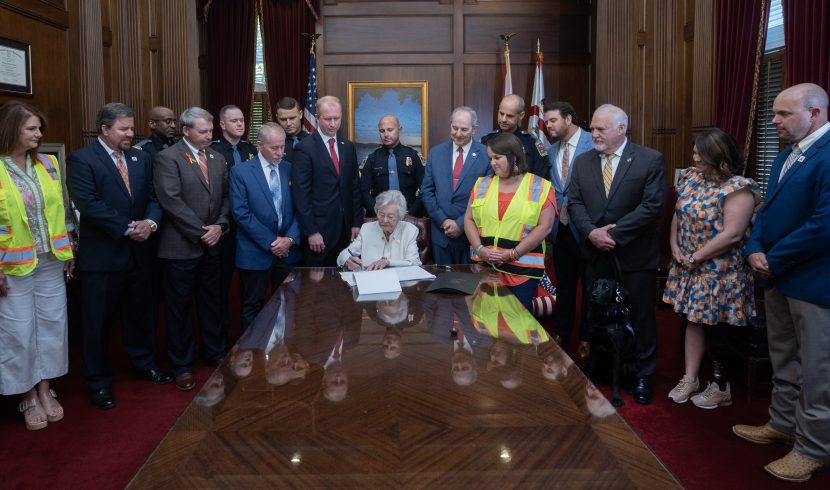
MONTGOMERY, Ala. – After it passed on the last day of session, Gov. Kay Ivey signed the Alabama Work Zone Safety Act into law on Tuesday morning.
Senate Bill 341, sponsored by Sen. Josh Carnley, R-Ino, creates a pilot program for speed enforcement cameras near work zones on interstate highways. The cameras will issue “civil traffic violations” to people driving more than 10 miles per hour over the posted speed limit in active work zones.
The traffic violations will carry a civil fine of $250. The bill specifies that law enforcement can’t assess any points on or revoke a speeder’s license.
It sounds simple enough, but the bill wasn’t supposed to pass this session. In fact, because of the fines and concerns about how the violations would be administered, the bill was met with fierce resistance in the House.
Rep. Mike Kirkland, R-Scottsboro, carried an identical companion bill, but the House killed that version on a procedural motion. It was later awarded the “Shroud Award,” a title given each year to the deadest bill in the house.
But this year it may as well have been named the “Lazarus award,” because on the last day of the session, the Senate bill came down to the House and the issue came back to life.
There were still concerns. Under the bill, law enforcement would mail the notice to the vehicle’s owner, but some lawmakers worried that could lead to the wrong person getting the ticket.
Citing this, Rep. Jim Hill, R-Odenville, introduced an amendment to downgrade the $250 fine to a written warning. Kirkland moved to table the amendment, but the House voted that motion down and ultimately passed the amendment.
The Senate voted not to concur on this amendment. The bill headed to a conference committee with representatives from both chambers, and that committee removed Hill’s amendment so the $250 fine made it into the law.
The Alabama Department of Transportation and the Alabama Law Enforcement Agency will work together to implement the program. The bill requires the program to have a plan for implementation by Oct. 1 and to roll out the program fully no earlier than Nov. 16.
The two agencies also must share a data-driven report about the pilot program’s effectiveness by March 1 of next year.
Ahead of the bill’s signing and the upcoming National Work Zone Awareness Week, representatives from ALDOT, ALEA and the road building industry held a press conference on Tuesday morning.
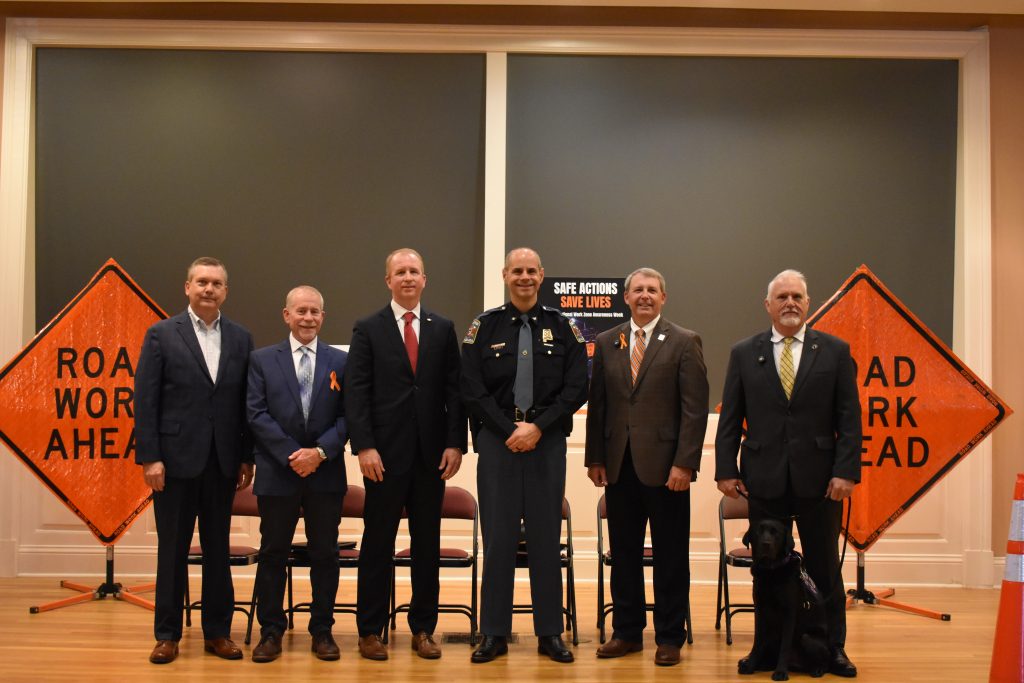
Stacey Glass, ALDOT’s state construction engineer, announced this year’s theme as “safe actions save lives.”
A press release from Ivey’s office said that there were more than 2,500 crashes in highway work zones in 2025, causing 11 fatalities and 709 injuries. With the over 300 ongoing construction projects across the state, Glass encouraged drivers to stay alert.
“If you’re driving 50 miles per hour, that’s equivalent to 73 feet per second,” Glass said. “I know some of our work zones are 50, 45, 55, but you can extrapolate the difference. 73 feet per second, and all it takes is one slip up to cause major harm to one of our workers or to yourself if you’re a motorist.”
He said the bill is a step in the right direction to reduce speeding in work zones.
Carnley said sponsoring the legislation made him think more about workers’ safety and that he found the opposition “interesting.” He said it upset him that some lawmakers supported Beau’s Law but not his bill. Beau’s Law requires minimum care standards for outdoor dogs.
“Once you really start to look at the data, that’s when I really changed my mindset as to how important this is,” Carnley said. “Because for every one of those fatalities, that’s a family that’s changed forever. That person’s not coming home, and those instances are avoidable. We could truly prevent any of these things from happening if people would just obey the law.”
Ivey signed the bill into law shortly after the press conference. The pilot program will expire on Sept. 30, 2028.