
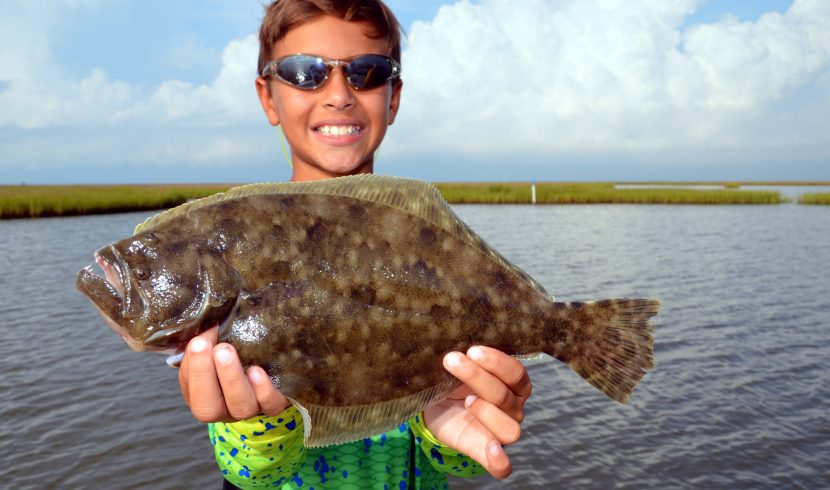
Few people intentionally target flounder, but nobody complains when they land one.
Alabama anglers might catch more than one flounder species. Most people catch southern flounder, the familiar species that spends much of its time in bays, estuaries and coastal marshes. Southern flounder can exceed 20 pounds. The state record weighed 13 pounds, three ounces. Southern flounder appear splotchy with irregular white markings scattered over its dark side with white on the underside.
Anglers might also catch gulf flounder. Both species look very similar. Less familiar than southern flounder, gulf flounder exhibit three oscillated black spots that resemble eyes arranged in a triangular pattern, two on either side of its lateral line and one near the base of its tail.
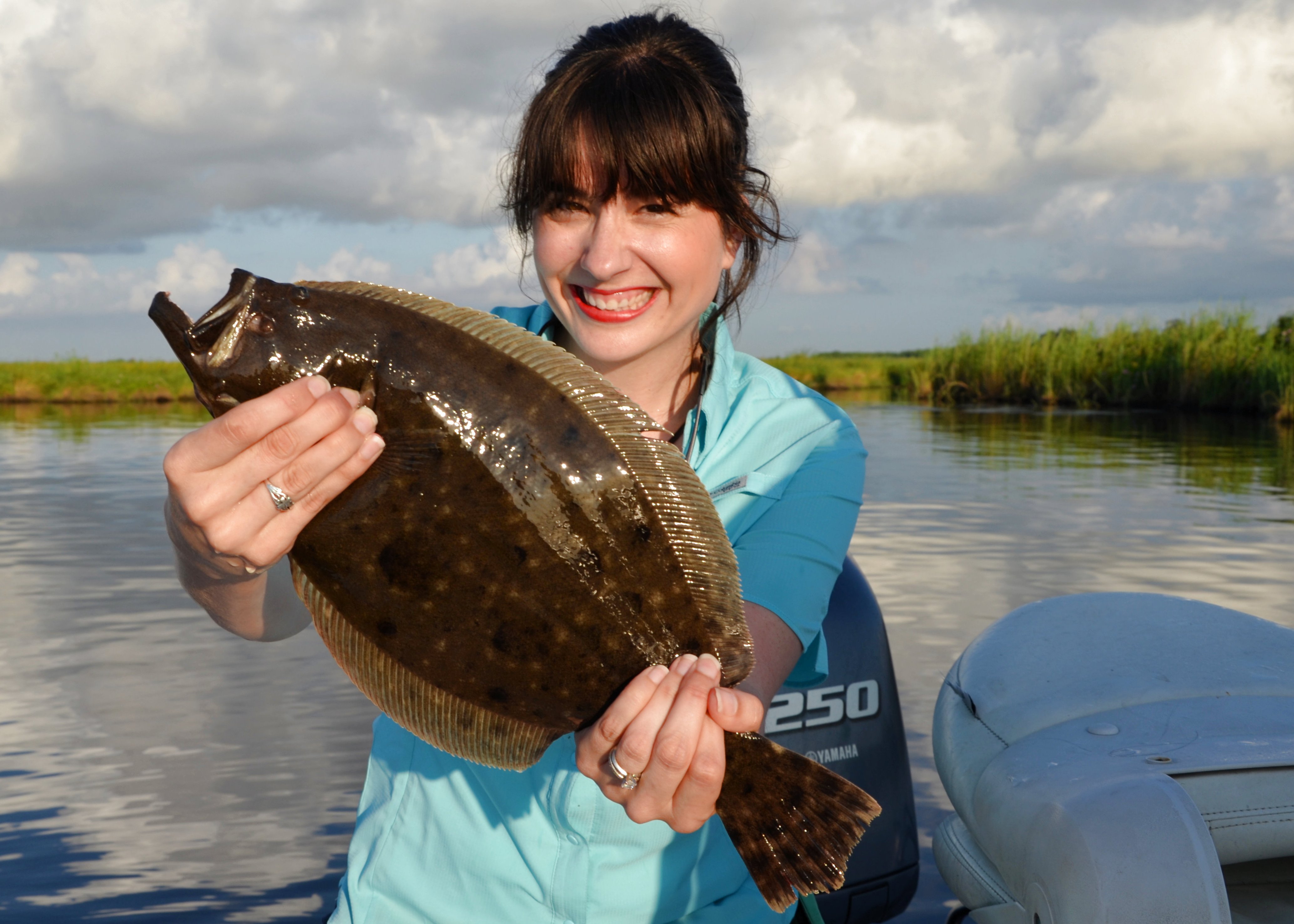
Gulf flounder average less than a pound, but top out at around seven pounds. The Alabama record weighed 5 pounds, 1.28 ounces. Gulf flounder generally stay in deeper water than southern flounder, sometimes out to more than 300 feet deep. However, they do come closer to shore occasionally.
Offshore anglers might also catch a third species. Broad flounder usually stay in water 300 to 700 feet deep. Younger ones sometimes venture into waters less than 25 feet deep. Broad flounder can grow to about 18 inches long.
Southern flounder migrate twice each year, although many stay in the estuaries and marshes all year long. Most flounder leave the bays and estuaries in late October or November to spawn and spend the winter in deep gulf waters. They return to the bays and estuaries in the spring.
Before they migrate offshore, flounder go on a feeding binge to build up energy for their journey and the spawning rigors. When flounder move in the fall, they periodically stage in huge numbers at certain places to rest and feed before continuing their southward journey. Someone lucky enough to discover a staging area might land a bunch quickly.
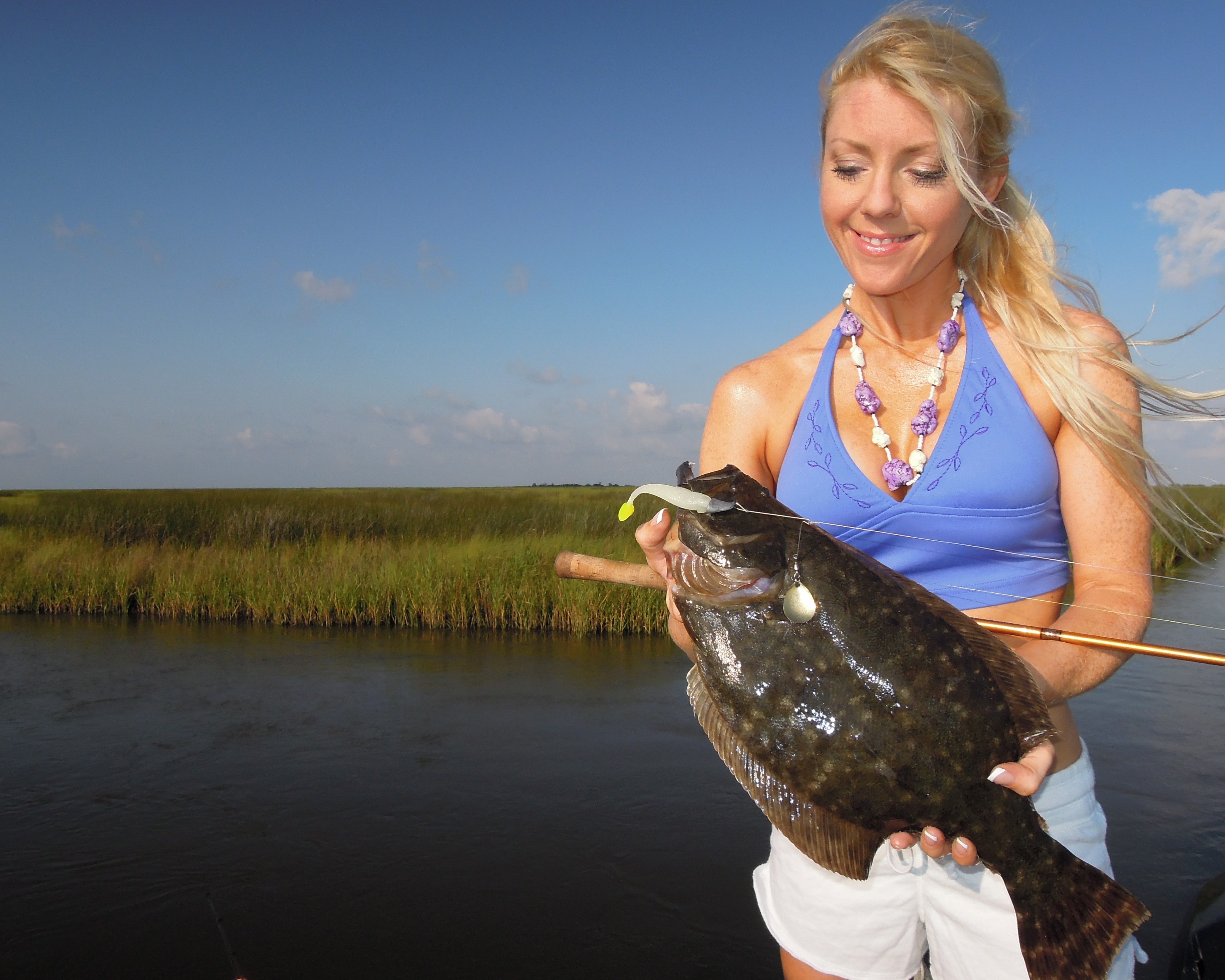
Most anglers use natural baits, such as live shrimp or minnows, to tempt flounder. Flounder also hit some lures, as many bass anglers discovered. Flounder can tolerate fresh water and regularly appear miles from the coast. People caught flounder as far north as the Coffeeville Lock and Dam on the Tombigbee River.
Bass can tolerate some salinity. In brackish marshes like the lower Mobile-Tensaw Delta, bass and flounder both regularly feed upon shrimp, minnows, shad and other small baitfish. Flounder might hit any artificial enticement that would interest a largemouth, even an occasional topwater lure.
Flatfish typically bury themselves in the bottom silt with only their eyes protruding from the muck. They watch and wait for prey to pass over them. When something edible comes temptingly close, flounder erupt in a cloud of silt to snatch their prey.
Sometimes, anglers spot flounder attacking minnows or shrimp on the surface, but they spend most of their lives on the bottom. Consequently, bottom-bouncing lures work the best for them. Flatfish might also gulp sinking or suspending lures.
Flounder particularly love Texas-rigged worms or weedless jigs tipped with craw trailers in natural colors. A craw trailer simulates a crab or a crawfish. Use blue trailers, maybe with a touch of red on the tips, to mimic live crab claws. Just like bass fishing, toss soft-plastic temptations to a grassy shoreline. Pay particular attention to any irregular pockets. Slowly drag the lure along the bottom and over the drop-off edge.
Another bass technique, rig a worm “wacky style” with a hook inserted into the middle of the plastic instead of “down the throat” like in a Texas rig. When the bait sinks the tips quiver. Since flounder rely more on stealth than speed, they normally remain in place even as a boat passes over it. Therefore, anglers can approach incredibly close without spooking flounder.
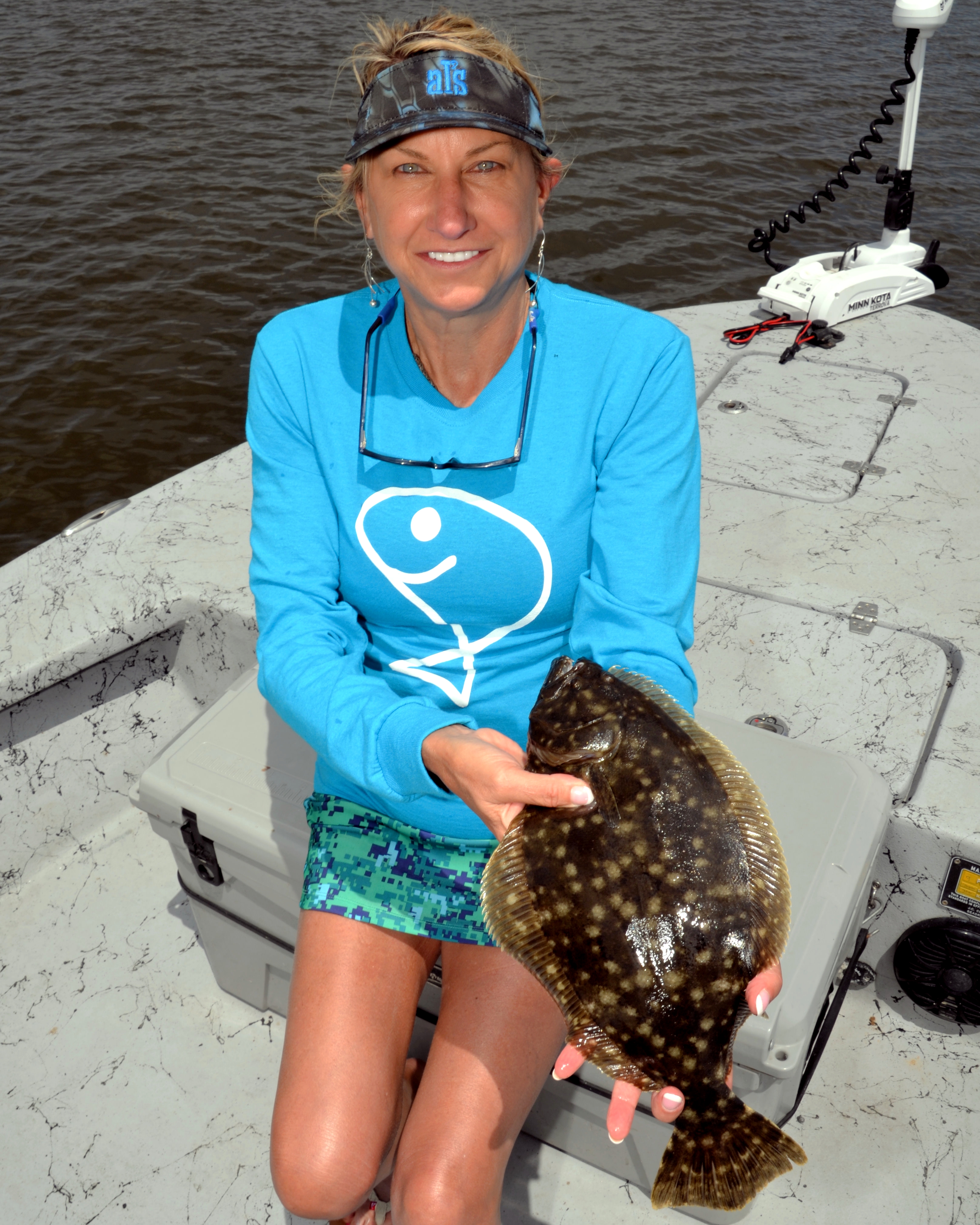
Flip a wacky worm next to cover. Let the bait sink naturally. Looking up, the flounder sees a tantalizing silhouette slowly descending to its hiding spot. This prompts a predatory instinct. If nothing bites, just drop the worm into another pocket, perhaps only inches away. With this technique, anglers can work an entire grassy shoreline that might hold flatfish.
Flounder feed most aggressively when the tide moves. They habitually face into the flow waiting to snatch anything washed to them. When the tide falls, dropping water levels dislodge shrimp, baitfish and other morsels from their hiding places. Flounder congregate at the mouths of drains to ambush prey.
Plastic shrimp, swimbaits and soft-plastic jerk shads also work great for flounder. Cast a soft-plastic shrimp as far upstream into a drain as possible. Let the bait bounce along the bottom as it flows naturally with the current. As necessary, gently raise the rod tip to lift the lure back into the flow. Use the reel only to take up slack.
A jerk shad resembles a minnow. Either weightless or on a weighted hook, insert the point into the plastic. Toss the bait upstream as far as possible and let it sink a few feet. Flounder often attack baits as they sink. If not, jerk the rod a couple times so the lure flicks through the water like a wounded baitfish or shrimp.
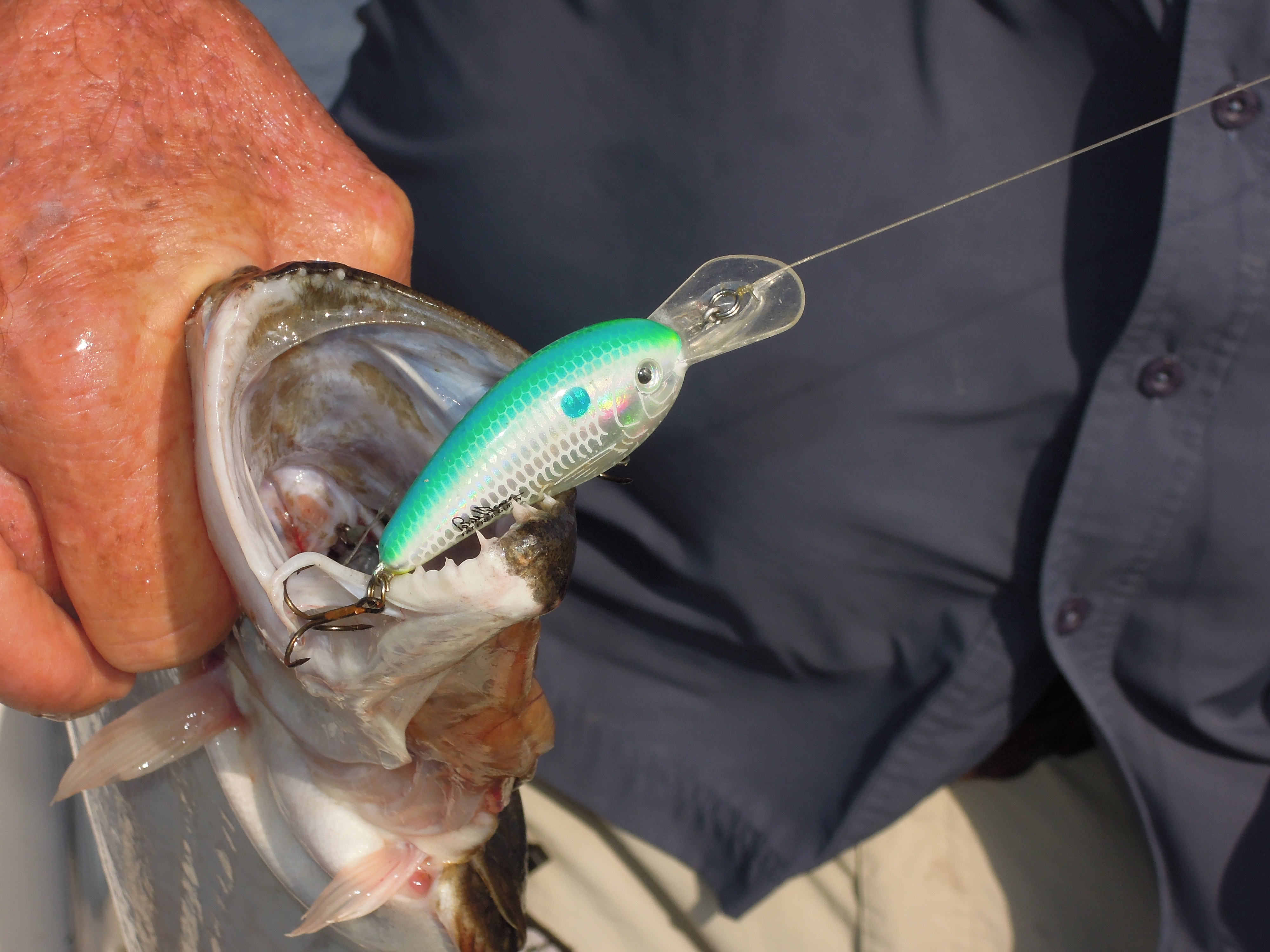
Larger flounder want bigger meals. When big flounder feed more aggressively, throw crankbaits and spinnerbaits in pogie or mullet colors to mimic baitfish. Run these lures parallel to shorelines just over the drop-off edges. Slow-roll spinnerbaits just off the bottom. Periodically let it tick the mud to make a trail like prey scurrying along in the silt.
Flounder love the shallows and can survive in just a couple inches of water as long as they can still breathe. However, many anglers fish the shallows too long. With both eyes on one side of its face, a flounder MUST look toward the sky. As the sun climbs higher, flounder go deeper to avoid constantly looking at the fireball.
Alabama sportsmen can keep up to five flounder per day, each at least 14 inches long. However, since flounder spawn in the fall, anglers cannot keep any during November.
An avid sportsman, Felsher is professional writer, photographer and radio show host who has written thousands of articles for many publications. He’s always looking for ideas or outdoors adventures that will make good stories. Contact Felsh at [email protected] or through Facebook. He also hosts an outdoors tips show for WAVH FM Talk 106.5 radio station in Mobile.