
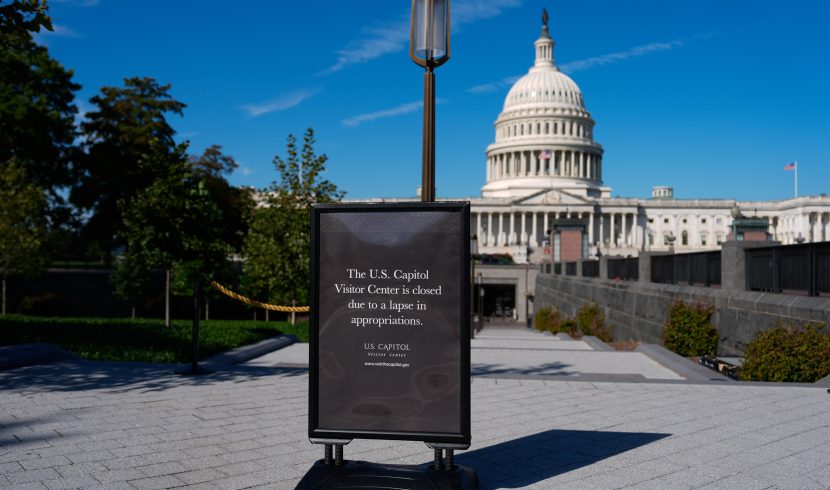
WASHINGTON — Empty hallways, closed doors, and a quiet House chamber have become the norm in the U.S. Capitol for the past eight days as the federal government shutdown drags on with no end in sight.
On Wednesday, U.S. Sen. Tommy Tuberville, R-Ala., called the gridlock between Republicans and Democrats a “logjam” as the Senate failed to advance dueling short-term funding measures for the sixth time.
Sens. Tuberville and Katie Britt voted with fellow Republicans to advance the GOP stopgap funding bill Wednesday, as they have each time the vote has occurred. Democrat Sens. John Fetterman of Pennsylvania and Catherine Cortez Masto of Nevada and independent Sen. Angus King of Maine continue to vote with all but one Republican to support the measure that will fund the government until Nov. 21. All other Senate Democrats remain opposed, falling short of the 60-vote threshold.
“We’re just waiting on the Democrats to come to their senses and quit trying to hold the country hostage, that’s all they’re doing,” Tuberville told Alabama Daily News.
And Democrats continue to push the same message on the opposite party, blaming Republicans for not wanting to negotiate an extension of the Affordable Care Act’s enhanced premium tax credits, which are set to expire at the end of the year.
“Republicans are shutting down the government because they refuse to fix and address the crisis in American healthcare,” Senate Minority Leader Chuck Schumer said on the Senate floor.
While the Senate remains deadlocked, House Republicans like Congressman Robert Aderholt are back home in their districts. The House has not held a vote since Sept. 19.
“Right now, there’s nothing that’s on the table that we have to vote for, and so we are just sort of in a holding pattern waiting on the Senate,” Aderholt, R-Haleyville, told ADN.
As an appropriator, Aderholt said the shutdown is making it more difficult for lawmakers to make progress on full-year spending bills. House and Senate leaders have yet to agree on a topline spending number for all 12 appropriations bills, which is an important step in Congress being able to pass full-year spending measures.
Some conversations are taking place about moving the three spending bills forward that are currently in conference committee, which fund the legislative branch, the U.S. Department of Agriculture and military construction, but no concrete progress can happen during the shutdown, he said.
“The problem is, until we get a resolution on the CR, there’s probably not a lot going to take place, as far as anyone committing anything, because we don’t know the time frame we’re looking at,” Aderholt told ADN.
The appropriations bill Aderholt oversees, which funds the education and health departments, is also on hold during the shutdown.
House Democrats who have been in Washington periodically while the chamber has not taken votes are also back in their districts this week. Their focus remains on championing health care priorities and extending the ACA subsidies.
“All of us, every one of our districts, whether you’re Republican or Democrat, will be dramatically impacted by the expiration of these tax credits,” Rep. Terri Sewell, D-Birmingham, said during a telephone town hall on the shutdown Wednesday. “These tax credits are the reason why it is affordable for people to get health insurance.”
When weighing a potential extension of those tax credits, Aderholt said his thinking is two-fold.
“One of the things, obviously, I’m weighing is the fact that these subsidies were put in place because of COVID,” he told ADN. “Obviously, we are not dealing with COVID right now.”
In 2021, with the passage of the American Rescue Plan Act, the subsidies were expanded to make a larger swath of people eligible for the credits.
“On the other hand, though, I realize that health care costs are very difficult for families, and so I need to make sure that those subsidies would not be going to someone that’s here illegally,” Aderholt said.
Undocumented immigrants aren’t eligible to receive coverage through the ACA marketplace, according to HealthCare.gov.
Aderholt added he’s open to discussing the issue, but not until he sees a concrete proposal that addresses the subsidies. He added that he wants to ensure there are “parameters” around the credits, so they’re going toward those “who are really needing this assistance, as opposed to just a widespread giving away of federal dollars.”
Tuberville said he’s waiting to see numbers from Dr. Mehmet Oz, the Centers for Medicare and Medicaid Services administrator, that could depict the number of people in each state who would be impacted by the loss of credits and how much it would cost to extend them. Alabama’s senior senator said he also wants the subsidies to be reformed.
The Congressional Budget Office estimates that permanently extending the ACA credits would cost $350 billion over 10 years and increase the number of Americans with health insurance by 3.8 million people by 2035.
When asked if he thought lawmakers would be able to potentially reform the premium tax credits by the end of the year, Tuberville said we’re “going to have to.”
“That’s the reason we work up here,” he told ADN. “Hopefully, we can get it done.”
As the shutdown persists, members from both political parties have curated their messaging to target their respective bases, with little time spent negotiating with the other side. There are also fewer moderates in both chambers willing to make a deal, which could make it take much longer for both sides to come to the table and find a suitable end to the shutdown, Benjamin Gross, an associate political science professor at Jacksonville State University, told ADN.
“If there aren’t many of those third-party mediators anymore, becomes a lot harder get these two sides that don’t trust each other, that are entrenched to serve their own bases, to find that compromise to get out of this, because at this point, no one wants to look like a loser,” Gross said.
On Thursday, the Senate will vote again, for the seventh time, on the competing Republican and Democratic short-term funding measures.