
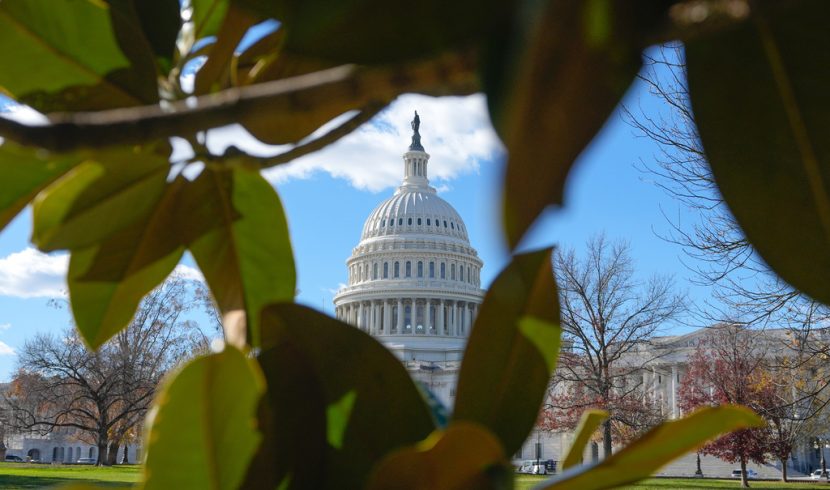
WASHINGTON — Lawmakers return to Washington amid a flurry of new developments with the Iran war, a persisting Department of Homeland Security shutdown and an impending deadline to reauthorize the Foreign Intelligence Surveillance Act.
After a two-week recess, Congress will have to confront how the talks to end the war between the United States and Iran have faltered. Republicans, including Alabama’s members, have so far stood behind President Donald Trump’s military action in Iran. That support could be tested as lawmakers head back to the Capitol amidst a new blockade of the Strait of Hormuz, which has sent oil prices rising.
Iran war
Members of Congress will have to grapple with gas prices in Alabama and across the country remaining high throughout the war against Iran. On Monday, oil prices soared above $100 per barrel. Trump warned over the weekend that the prices could remain high for a while.
Alabama’s congressional Republicans told Alabama Daily News before the recess that some short-term pain related to gas prices is worth it for weakening the world’s largest state sponsor of terrorism.
U.S. Rep. Dale Strong, R-Huntsville, said he is concerned about prices at the pump, but he added that he’s also worried about Iran having a nuclear weapon.
“I want to get those prices down also, but then whenever I saw those bodies come back that lost their life protecting this country, it’s hard for me to complain,” Strong told ADN last month.
In Alabama, the average price for a gallon of gas is $3.85, that’s up from $3.28 a month ago and $2.82 at this time last year, according to AAA.
“That’s all the more reason we gotta support the president, get the war out of the way, so we can get the Strait of Hormuz open, and we get the whole process done,” U.S. Rep. Robert Aderholt, R-Haleyville, told ADN before the recess.
U.S. Rep. Barry Moore, R-Enterprise, expressed full confidence in Trump’s ability to bring down the costs by boosting energy production at home.
“I think that energy prices are gonna come down because we’ve opened up the production in America and we’re working on refinery capacity, but yeah, it’s gonna be hopefully a short blip on the radar screen,” Moore told ADN.
But U.S. Rep. Shomari Figures, D-Mobile, said that his constituents think the prices are “too damn high.”
“We know what’s fueling a lot of that is this war that President Trump has started in Iran and Iran’s subsequent response to it, which this was all predictable,” Figures told ADN before recess. “Which is one of the reasons, I think of many, that we should not have engaged in Iran the way we did without coming to Congress.”
Democrats plan to bring up votes in the House and Senate as early as this week to curb Trump’s war powers. Alabama’s Republicans have repeatedly opposed those efforts while the state’s two Democratic lawmakers have supported them. Democrats have emphasized that the current two-week ceasefire is not sufficient.
DHS shutdown
Nearly 60 days into the DHS stalemate, lawmakers will return to Washington to try again to make headway toward funding the department.
Senate Republicans are prepping a party-line bill to fund immigration enforcement and Border Patrol for three years, bypassing Democrats who refuse to fund those two agencies without significant reforms. On Monday, Senate Majority Leader John Thune, R-S.D., said the reconciliation bill needs to be “tight and focused” to get it done quickly.
House Republicans want to pass the party-line bill to fund ICE and Border Patrol before taking up the Senate-passed bill to fund the rest of the department. Trump hopes to get the funding passed by June 1. The president signed an order to pay all DHS employees until Congress can reach an agreement.
FISA
A key surveillance law, known as Section 702 of the Foreign Intelligence Surveillance Act, is set to expire on April 20, unless it is reauthorized by Congress. The House plans to vote this week to reauthorize the law for the next 18 months.
It allows the U.S. government to conduct warrantless surveillance of foreign persons living abroad for intelligence gathering. Trump has publicly called for a “clean” extension of the law, which he argues is necessary for national security, especially in the wake of the Iran war.
But the law has sparked controversy over concerns that it allows Americans to get swept up in the surveillance efforts, infringing on their civil liberties.
The last time it was renewed in 2024, Moore and Sen. Tommy Tuberville, R-Ala., were the only Alabama members to vote against it. In a statement at the time, Moore said he opposed reauthorizing the law because it had been used “hundreds of thousands of times to violate Americans’ Fourth Amendment rights and spy on them without a warrant.”