
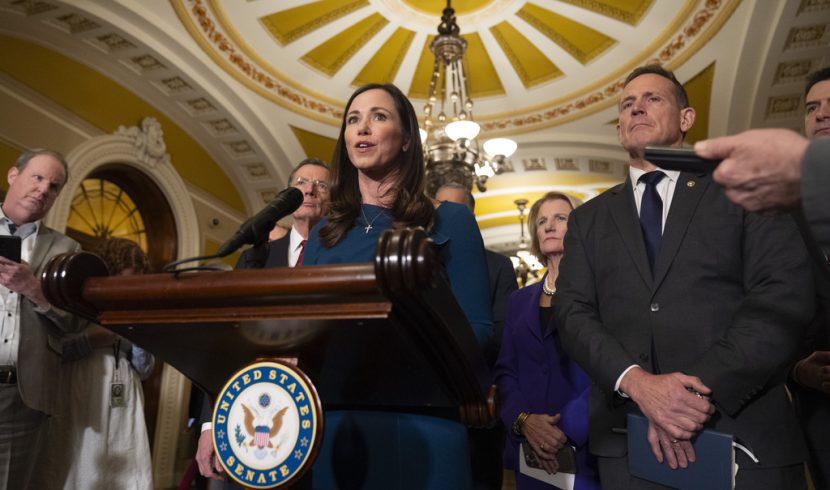
U.S. Senators Katie Britt and Tommy Tuberville, along with 24 Republican colleagues, sponsored the Educational Choice for Children Act. The bill aims to expand school choice nationwide through a federal tax credit program similar to one already in place in Alabama.
“This legislation would put parents back in the driver’s seat to be empowered to make the best possible choice for their child’s education,” Britt said in a news release.
Your zip code shouldn’t determine your opportunities. Proud to introduce the Educational Choice for Children Act with @SenBillCassidy & @SenatorTimScott to expand educational freedom and empower parents to make the best choices for their children’s future.https://t.co/KNJSjf9VR6
— Senator Katie Boyd Britt (@SenKatieBritt) January 31, 2025
Alongside congressional efforts, the Trump administration is following through on campaign promises to expand school choice. President Donald Trump on Jan. 29 issued an executive order directing several federal departments to issue guidance on how to use various federal resources to expand school choice.
The Educational Choice for Children Act
The ECCA would provide $10 billion in dollar-for-dollar federal income tax credits to individuals and corporations that donate to scholarship granting organizations, or SGOs. Those SGOs then distribute those donations to eligible students to pay educational expenses at public and private schools. Homeschoolers are eligible for scholarships, too.
The ECCA caps an individual’s federal income tax credit at the greater of 10% of the donor’s adjusted gross income or $5,000. Corporations’ tax credits are capped at 5% of taxable income.
Tax credits will be given on a first-come, first-serve basis. The bill caps total tax credits at $10 billion for the 2025 tax year, allowing the cap to go up by 5% if at least 90% of the credits are taken. Federal tax credits begin for donations received after Dec. 31, 2025.
The bill, which does not dictate the amount of a student’s scholarship, allows for payment for eligible educational expenses including tuition, instructional materials, tutoring and dual enrollment. Students are eligible if they are a member of a family whose household income is not more than 300% of the area median gross income (AMGI). The AMGI in Birmingham, for example, is $94,200, making the upper limit three times that amount, or $282,600.
The Educational Choice for Children Act was first introduced in 2022 and has been gaining steam since then.
Language in the ECCA allows taxpayers to take a federal tax credit for whatever portion is not taken in a similar state tax credit program.
Alabama’s tax credit scholarship program
The Alabama Accountability Act, created in 2013, allows individuals and corporations to claim up to a combined $40 million in state income tax credits for donations to SGOs.
Alabama students are eligible for up to $10,000 in scholarships if they are a member of a household that earns not more than 250% of the federal poverty level.
About 3,600 Alabama children used tax credit scholarships to attend private schools during the 2023-24 school year.
Separately, state leaders last year approved the Creating Hope and Opportunity for Our Students’ Education Act that takes a more direct approach by providing state-funded education savings accounts, or ESAs.
The CHOOSE Act provides eligible students with a $7,000 education savings account to pay for eligible education expenses at participating public or private schools. Homeschooled students can receive a $2,000 ESA, with a family cap of $4,000, to pay for educational services and offerings.