
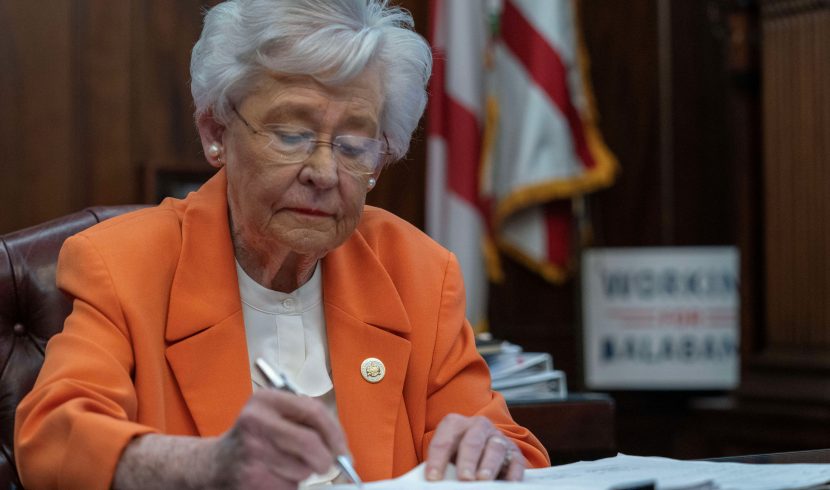
MONTGOMERY, Ala. — Gov. Kay Ivey on Thursday signed the last two of three remaining bills in her anti-crime bill package, House Bills 202 and 199, which expand police immunity and the ability to electronically monitor delinquent juveniles, respectively.
“With HB202 signed into law, I am proud Alabama is now the most pro-law enforcement state in the country,” Ivey said Thursday in a statement.
The last remaining bill in the package, dubbed ‘Safe Alabama,’ was House Bill 188, which would have set up a scholarship program for law enforcement officers and their families, though it failed to come up for a vote in the Senate Wednesday, the last day of the 2025 legislation session.
Police immunity
Carried in the House by Rep. Rex Reynolds, R-Hazel Green, HB202 will significantly expand legal protections for police, granting them broad civil and criminal immunity for actions taken, according to the bill, within their “discretionary authority.” It also limits when a member of law enforcement can be sued or prosecuted, and entitles them to a pre-trial hearing within 45 days of facing charges or litigation to determine immunity.
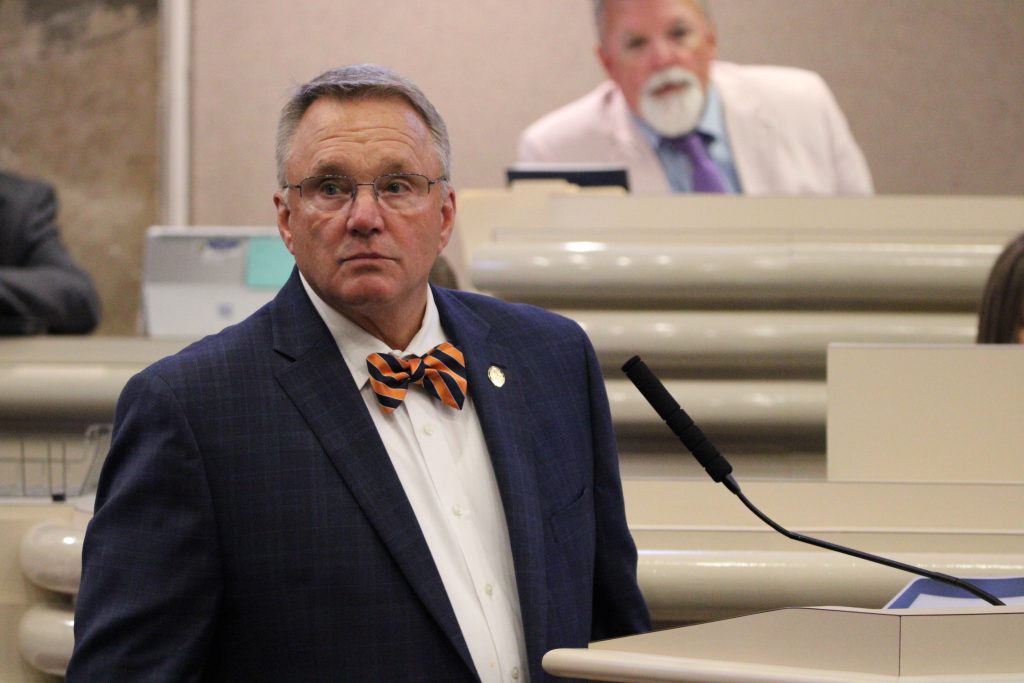
The bill’s supporters have touted the bill as necessary to show support for police, and to help improve police recruitment and retention, something Alabama’s major metro areas have struggled with for years. Sen. Lance Bell, R-Riverside, said on Wednesday that it would help protect police “while they’re protecting us,” a comment Ivey championed after signing the measure into law.
“I was very proud to have two former law enforcement agents sponsoring this important bill in the House and the Senate; Rep. Rex Reynolds, a former police chief in Huntsville, and Sen. Lance Bell, a former deputy sheriff in St. Clair County, both did an excellent job moving the bill through the legislative process,” Ivey said.
“I couldn’t agree more with Senate-sponsor Lance Bell’s remarks from the Senate floor yesterday when he so rightly stated, ‘this is about protecting them while they’re protecting us.’ And as far as Backing the Blue goes, Rep. Reynolds was spot on with his comments yesterday when he said this bill will, ‘restore some faith among our officers and show them that we have their backs in Alabama.’”
For Democrats, however, the bill proved extremely controversial, with members in both chambers pushing back on the proposal every step of the legislative process, from when it came up for a vote in the House, to the session’s final day Wednesday when it was taken up in the Senate.
Democratic lawmakers largely criticized the bill out of fear that it would weaken accountability for police who use excessive force, noting that statistically, it’s extremely rare for a police officer to be charged with a crime after having killed a civilian, and even more rare to be convicted. Data from the Henry A. Wallace Police Crime Database shows that between 2005 and 2016, less than 2% of officers who killed civilians while on duty were charged with a crime, and of those charged, around two-thirds were convicted.
Delinquent juvenile electronic monitoring
The second bill Ivey signed into law Thursday, HB199, was first floated by Alabama Bureau of Pardons and Paroles Director Cam Ward, and unveiled as legislation in January, and would authorize ABPP to manage electronic monitoring for delinquent juveniles, thereby expanding its use in the state, as many towns, cities and municipalities lack the funds or resources to use electronic monitoring.
“In Alabama, unfortunately, juveniles are part of the crime problem, and HB199 is an important step to addressing this very real issue,” Ivey said.
The bill was carried in the House by Rep. Travis Hendrix, D-Birmingham, and in the Senate by Sen. Bobby Singleton, D-Greensboro, and unlike HB202, saw no opposition from lawmakers as it made its way through the legislative process, though it did see its scope reduced when compared to what was originally filed.
In the Senate, lawmakers adopted amendments that would only see electronic monitoring mandated for juveniles should they be charged, were they adults, with Class A and B felonies, and Class C felonies if a dangerous or deadly weapon was used or attempted to be used. As written, the new law will also automatically apply to juveniles with three prior felony-level offenses.
“I am pleased that our Safe Alabama public safety package passed with bipartisan support, and I am confident that each of these bills will help protect communities across our state,” Ivey said.