
MONTGOMERY, Ala. — The Alabama Legislature used its final minutes of the 2025 session to expand the civil and criminal immunity of law enforcement officers, sending Gov. Kay Ivey one of her priority bills a bit before midnight Wednesday.
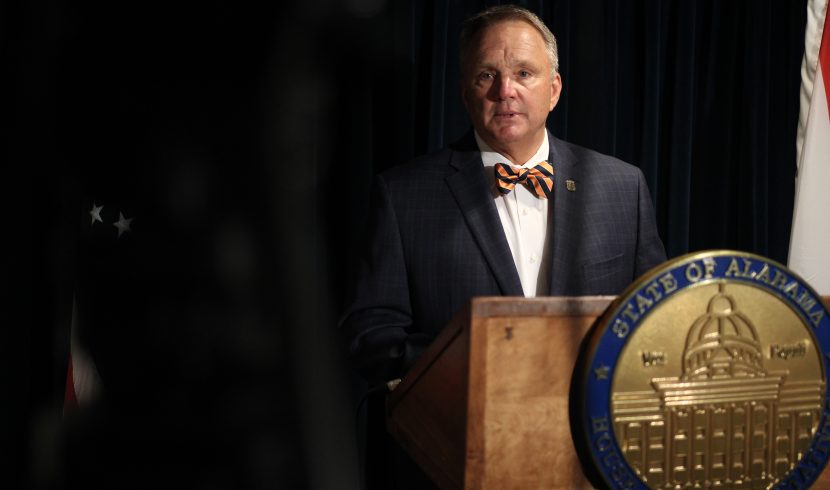
House Bill 202, substituted in the Senate three hours before the 12 p.m. deadline, is a big, and the most contentious, piece of Gov. Kay Ivey’s priority anti-crime bill package. While several other parts of the package passed with bi-partisan support, the proposal to expand the legal immunity of law enforcement officers has drawn concern and criticism from Democrats throughout the session. Supporters, including sponsor Rep. Rex Reynolds, a former police chief in Huntsville, said the “back the blue bill” is needed to give more protections to officers while still holding them accountable.
The bill passed the Senate and House along party lines, 25-6 and 73-28, respectively.
It was an intense day in the Senate as the Republican supermajority had to fight off Democrats’ filibusters on multiple fronts. The Senate entered the day at 1 p.m. with more than 50 local bills, specific to one county or municipality, to approve. The bills are often a priority for the lawmakers sponsoring them. Nearly seven hours later, 11 of the bills had passed amid the slowdown Democrats warned last week was coming.
Several Senate Democrats took turns delaying votes, saying their local bills were not given the same consideration in the House.
To counter, Senate Republicans clotured Democrats, cutting off their ability to kill time talking about bills. The supermajority GOP is often hesitant to cloture, because Democrats can invoke other delay tactics, like requesting bills be read aloud before they’re passed.
“We’re tired of being misused by the legislative process when it comes to our local bills,” Sen. Bobby Singleton, D-Greensboro, said.
Democrats also used time to lament the passage of a bill earlier this month to reorganize the Birmingham Water Works board.
Dozens of local bills died Wednesday, as did the last piece of the eight-bill anti-crime package, House Bill 188, which would have established a scholarship program for law enforcement officers and their families.
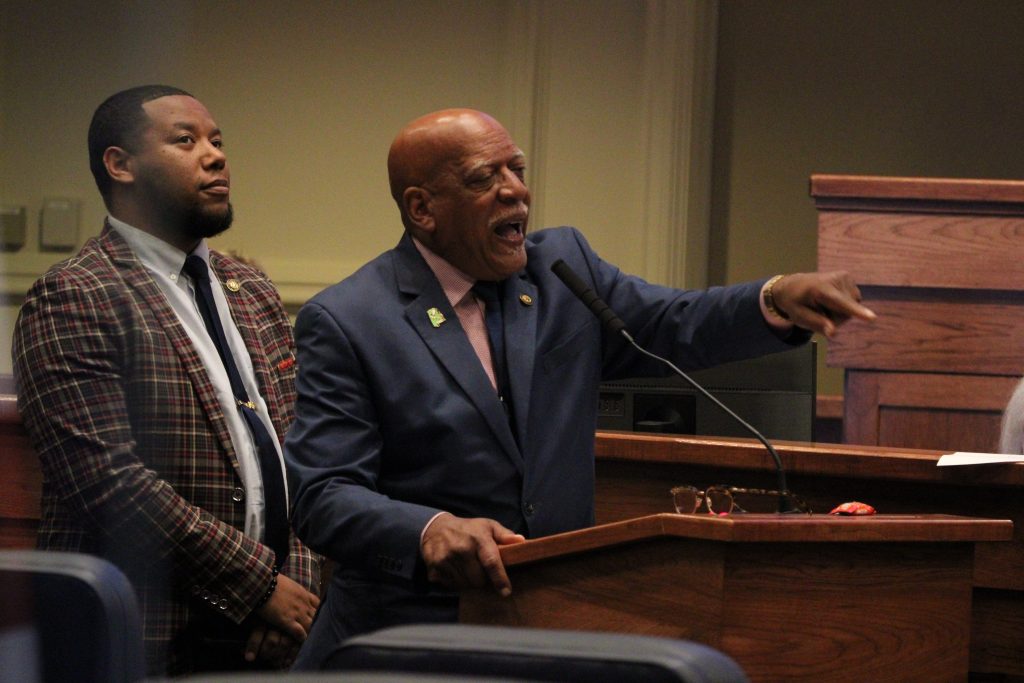
Sen. Rodger Smitherman, D-Birmingham, led the filibuster on the immunity bill, repeating his allegation that more Black Alabamians will be killed by law enforcement because of the bill.
Sen. Lance Bell, R-Riverside, said on the Senate floor the bill’s immunity protection “only applies to reasonable, policy compliant actions,” not officers acting recklessly or violating individuals’ rights.
Once the bill managed to pass out of the Senate, House members quickly reconvened after having gone on recess for several hours. It was challenged on the House floor by several Democrats, sharing similar concerns over police accountability as their Senate counterparts.
“I look at it as a license to kill,” said Rep. Thomas Jackson, D-Thomasville.

Like his Senate Republican counterparts, Reynolds defended the bill as necessary for members of law enforcement who have to make split second decisions in cases where there is an escalation of force.
“We don’t want them to hesitate for one second when they’re standing there trying to make a decision on that escalation of force to pause, and then they may lose their life,” Reynolds said.
After about 30 minutes of debate, House Majority Leader Scott Stadthagen, R-Hartselle, called for discussion to be halted through cloture, and members subsequently passed the bill in a partisan vote, sending it off to Ivey’s desk. Shortly thereafter, Ivey said she looked forward to signing the bill in a social media post.
“As I said at the mic today, I understand some of my colleagues across the aisle had comments — and I respect those — but we’ve got to turn that around and say the same thing about our fallen officers,” Reynolds told reporters after the House adjourned for the session. “I care about their families. With this bill, we hope to restore some faith among our officers, show that we have their backs in Alabama, and improve recruitment and retention.”