
BIRMINGHAM, Ala. – Lawmakers approved a wide range of education bills during the 2026 legislative session, affecting everything from pre-K classrooms to college campuses. Here’s a look at some of the measures passed this year.
Pre-K screen time
Lawmakers also passed a measure aimed at younger children, limiting screen time in certain child-care settings, preschools and public kindergarten classrooms.
House Bill 78, sponsored by Rep. Jeana Ross, R-Guntersville, known as the Healthy Early Development and Screen Time Act, requires education officials to develop standards for appropriate screen time for early childhood settings. It requires all state-licensed early childhood facilities to follow the standards and to ensure adults are trained in how to implement the standards.
It prohibits screen time for students under two years old but stops short of prescribing limits for children of other ages. Public school kindergartens must implement standards before the start of the 2027-28 school year.
K-12 religion, patriotism and parent-rights bills
Lawmakers also passed several K-12 bills related to religion and patriotism in schools.
Senate Bill 99, sponsored by Sen. Keith Kelley, R-Anniston, with a House companion sponsored by Rep. Mark Gidley, R-Hokes Bluff, would require public schools to place a poster of the Ten Commandments in fifth- through 12th-grade classrooms where U.S. history is taught and in a common area such as a cafeteria or lunchroom.
The bill does not require school boards to purchase the display but allows schools to accept donations to cover the cost. It also requires the State Department of Education to identify and post on its website a list of free resources for schools. If approved by voters, the amendment takes effect Jan. 1, 2027. Read more here.
House Bill 511, sponsored by Rep. Reed Ingram, R-Pike Road, places a constitutional amendment on the November ballot, allowing voters to decide whether public schools will be required to recite the Pledge of Allegiance each morning and allow time during the school day for voluntary, student-initiated school prayer. If approved, it becomes effective immediately. Read more here.
House Bill 8, sponsored by Rep. Mark Gidley, R-Hokes Bluff, allows local boards of education to decide whether to allow volunteer chaplains to provide campus support, services and programs at the request of any district teacher. It becomes effective July 1 and could start at the beginning of the 2026-27 school year.
Senate Bill 248, sponsored by Sen. Shay Shelnutt, R-Trussville, codifies a parent’s right to choose to allow their children to attend off-campus religious instruction during the school day. It also adds guardrails to the current state law, giving school boards a clear path to approve a policy to do so. It still leaves the decision of whether to create the policy to local school boards, but provides a more complete list of requirements if a school board wants to do so. It becomes effective July 1. Read more here.
Senate Bill 209, sponsored by Sen. Shay Shelnutt, R-Trussville, requires public schools to implement a sex education course that emphasizes sexual risk avoidance and that abstinence is the only way to prevent pregnancy and sexually transmitted infections. It becomes effective Oct. 1. Read more here.
Senate Bill 5, sponsored by Sen. Gerald Allen, R-Cottondale, places a constitutional amendment before voters requiring all K-12 public schools to “broadcast or sanction the performance” of the first stanza of The Star-Spangled Banner at least once each week during the school day. The amendment will be on the November ballot and would become effective immediately if approved. Read more here.
K-12 teacher pipeline and classroom policy
Also in K-12, many of the bills focused on staffing classrooms, expanding teacher pipelines and making smaller changes to school operations and course requirements.
Senate Bill 149, sponsored by Sen. Matt Woods, R-Jasper, creates a path for military veterans to obtain a temporary teaching certificate. There are requirements, including documenting four years of military service and passing the Praxis test for the subject area the veteran wants to teach. The certificate will be valid for five years. Rep. Rick Rehm, R-Dothan, sponsored the House version of the bill. Effective Oct. 1. Read more here.
House Bill 520, sponsored by Rep. Marcus Paramore, R- creates a streamlined process for qualified individuals to obtain a certificate to teach career and technical education in public schools. It becomes effective June 1. Read more here.
House Bill 517, sponsored by Rep. James Lomax, R-Huntsville, creates the Talent Readiness and Industry Needs (TRAIN) Act which incentivizes public-private partnerships to fill career and technical education teaching positions. It creates a workforce teaching certificate for qualified employees and provides tax credits for employers who loan qualified employees to teach CTE classes in public schools and community colleges. The credit is capped at $10 million statewide and would begin with the 2027 tax year. Read more here.
House Bill 124, sponsored by Rep. Terri Collins, R-Decatur, renames and expands a current loan assistance program that is limited to teachers in math, science and career tech, extending eligibility to educators in all acute shortage subject areas, including special education.
The Loan Assistance in Support of Educators in Alabama, or LASEA, program provides up to $7,500 per year to help repay federal student loans for educators working in public schools, including charter schools, for up to four consecutive years.
Teachers working in acute shortage locations would be eligible for an additional $3,000 annual supplement. It becomes effective Aug. 1. Read more here.
House Bill 122, sponsored by Rep. Terri Collins, R-Decatur, reduces the contract length requirement for eligible math and science teachers from five to three years for teachers who have 25 years or more teaching experience. It becomes effective Oct. 1.
Senate Bill 211, sponsored by Sen. Gerald Allen, R-Cottondale, allows direct donation of sick leave directly to employees, including those in other school systems, “for any reason” beginning with the 2027-28 school year.
House Bill 329, sponsored by Rep. David Faulkner, R-Mountain Brook, requires public school students to complete an approved computer science course before graduating high school. It becomes effective for the class of 2032 and sets standards for those courses.
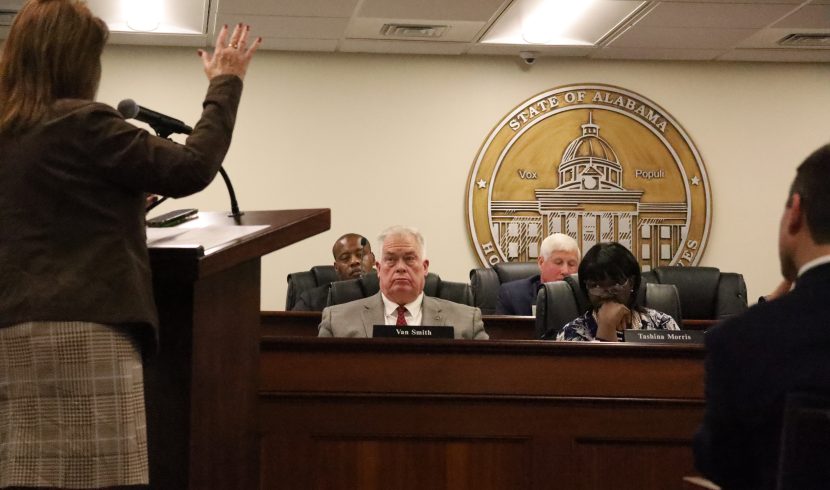
House Bill 225, sponsored by Rep. Van Smith, R-Prattville, reduces the amount of time a vacancy of a supervisory, managerial or newly created position that occurs during the school year must be posted from 14 days to seven days. Smith said education officials requested the change. Effective Oct. 1.
K-12 governance, choice and school operations
Lawmakers also passed several bills affecting how schools are governed, financed and organized, including measures touching charter schools, CHOOSE Act students and school system consolidation.
Senate Bill 342, sponsored by Sen. Clyde Chambliss, R-Prattville, allows a CHOOSE Act participant – a student, parent or participating school – to seek an injunction or damages against an athletic association that restricts a student’s participation based solely on the student’s CHOOSE Act status.
The bill also makes it easier for families to obtain a court order allowing a student to play while a dispute is being resolved. It also allows courts to award attorney fees to a prevailing CHOOSE Act participant. It takes effect immediately.
Senate Bill 62, sponsored by Sen. Arthur Orr, R-Decatur, sets up the Alabama Charter School Finance Authority to allow public charter schools to issue bonds to fund project needs. It becomes effective Oct. 1.
House Bill 178, sponsored by Rep. Danny Garrett, R-Trussville, would allow city boards of education to consolidate their systems into a single system. He said there are multiple school districts with small numbers of students and that schools could put more money into classrooms for education purposes if they combined their resources. It becomes effective Oct.1.
House Bill 380, sponsored by Rep. Terri Collins, R-Decatur, places a constitutional amendment on the November ballot allowing voters to decide whether to allow county boards of education to consolidate. If approved, it becomes effective immediately.
Senate Bill 272, sponsored by Sen. Arthur Orr, R-Decatur, prohibits
Senate Bill 158 requires public high schools to designate a school day for students who choose to take the military entrance exam, called the Armed Services Vocational Aptitude Battery. Sen. Randy Price, R-Opelika, sponsored the Senate version and Rep. Matt Simpson, R-Daphne, sponsored the House version, HB196. It becomes effective Oct. 1.
K-12 school safety
Another group of bills dealt with school safety, student threats and violence prevention.
House Bill 7, sponsored by Rep. James Lomax, R-Huntsville, expands a number of provisions in the state’s school threat law, including upping the classification of a first degree terrorist threat a Class B felony. It creates the term “credible threat” to clarify what type of threat is a crime.
It also expands the definition of terrorist threat in the first degree to include when the threat intends to cause disruption in a school, church, hospital, nursing home or other building housing disabled or immobile individuals.
It also requires a student charged with making a terrorist threat to be suspended from the regular classroom until a due process hearing is held. The student can continue with their education but cannot return to the classroom until all charges have been disposed of and the student has had a mental health evaluation. If the student is found guilty, the student must be expelled from school. It becomes effective July 1.
House Bill 189, sponsored by Rep. Alan Baker, R-Brewton, requires a juvenile court to notify a school official – public or private – if a student is charged with or is being adjudicated for certain crimes or offenses. It becomes effective Oct. 1.
House Bill 420, sponsored by Rep. Mack Butler, R-Rainbow City, increases the penalty for discharging a firearm into an occupied school bus or school building from a Class B to a Class A felony.
Senate Bill 364, sponsored by Sen. Rodger Smitherman, D-Birmingham, requires public school students to complete a course or program in violence prevention, conflict resolution and mediation before graduating from high school. Students could complete the requirement in grades 6 through 12.
Local school boards would decide the course content as long as it meets minimum standards in the bill. The State Department of Education would prepare materials for school boards to consider. The requirement begins with the 2027-28 school year.
Higher education
In higher education, lawmakers approved bills dealing with performance funding, governance, financial oversight and student aid.
House Bill 565, sponsored by Rep. Danny Garrett, R-Trussville, creates the College and Higher Education Excellence and Results (CHEER) Act.Eligible two- and four-year colleges and universities will work with lawmakers to set individualized performance goals, such as graduation rates. The law also creates a CHEER Fund, where a predetermined allocation will be distributed if the goal is achieved. The Education Trust Fund budget allocates $65 million for distribution for FY27 among eligible institutions.
House Bill 580, sponsored by Rep. Troy Stubbs, R-Wetumpka, shifts faculty senates to advisory functions only and grants more authority over tenure policy and curriculum to university boards. The bill also says accrediting agencies could not require institutions to violate state law or penalize them for complying with it. It becomes effective Oct. 1. Read more here.
Senate Bill 59, sponsored by Sen. Arthur Orr, R-Decatur, requires public colleges and universities to submit an annual report on the amount of state and federal funds they receive and spend, along with a plan for operating if funding is reduced by 5% or by 25% or more. Read more here. It becomes effective Oct. 1. Read more here.
House Bill 125, sponsored by Rep. Terri Collins, R-Decatur, lowers the eligibility for the ReEngage Alabama grant program to include adults beginning at age 22. Eligible students can receive up to $3,000 per semester for full-time enrollment at a four-year university and up to $1,500 per semester for two-year colleges. It becomes effective Oct. 1. Read more here.
House Bill 233, sponsored by Rep. Ed Oliver, R-Dadeville, expands the National Guard Educational Assistance Program to include workforce development programs and allows assistance to be paid earlier in the academic term. Lawmakers appropriated $9.8 million for the program in the FY27 budget. It becomes effective Oct. 1.
House Bill 98, sponsored by Rep. Allen Treadaway, R-Morris, creates a scholarship program for dependents of law enforcement officers. It was part of Gov. Kay Ivey’s Safe Alabama package of bills in 2025, but was unable to gain final passage before the session ended. It becomes effective Oct. 1. Read more here.
House Bill 250, sponsored by Rep. Danny Garrett, R-Trussville, excludes amounts paid toward an employee’s student loan from state income tax. It also excludes any amount contributed by an employer to the Trump Account of an employee or dependent. It becomes effective May 1. Read more here.