
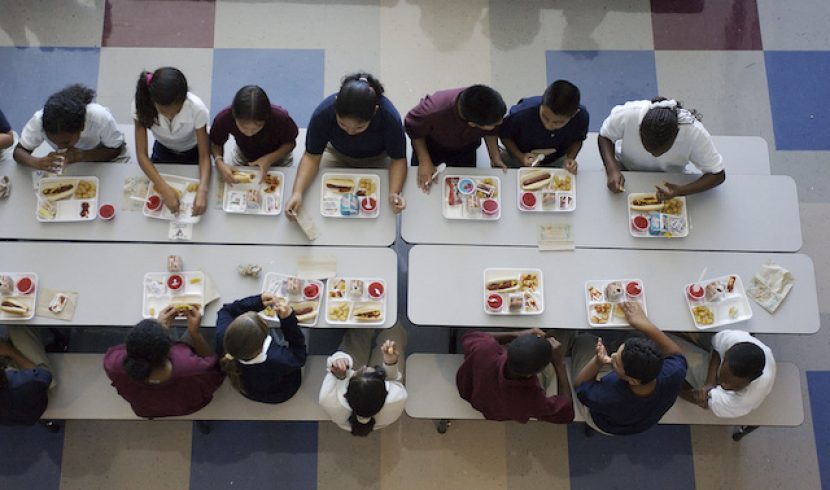
BIRMINGHAM, Ala. – With federal SNAP benefits set to pause starting Saturday for an estimated 750,000 Alabamians – including about 350,000 children – school leaders are watching closely. Educators and child nutrition officials say the loss of food assistance could show up in classrooms as more students arrive hungry and less able to focus.
The SNAP freeze is the latest federal issue to affect local schools and is the result of the now month-long federal shutdown. District leaders say hunger doesn’t stop at the schoolhouse door and worry that the economic setback, should the shutdown continue, could slow Alabama’s hard-won academic progress.
“It’s very, very concerning,” said Caycyce Davis, president of the Alabama School Nutrition Association and Child Nutrition Program director for Elmore County Schools. “You can’t teach a hungry child.”
“For instruction to be effective, basic needs have to be met – and nutrition is the most basic of all.”
A+ Education Partnership Vice President Corinn O’Brien agreed.
“We are deeply concerned for Alabama’s kids and families as this SNAP funding freeze takes effect,” O’Brien said. “Anyone who has worked with children knows it’s hard for a hungry child to focus and learn. We have made so much progress as a state, and we don’t want to backslide.”
Alabama’s recent academic improvement is recognized nationally as part of the “Southern Surge.”
Davis said roughly 60% of Elmore County’s students qualify for free or reduced-price meals, and because the district is a Community Eligibility Provision system, every child receives free breakfast and lunch. Several schools also offer supper before students head home.
Still, she said, there is only so much that schools can do.
“Our hands are kind of tied. We can only serve food within the boundaries of the federal Child Nutrition Program.”
During the pandemic, schools were given permission to send food that would usually be eaten at school home with students. In Elmore County, Davis and her colleagues went all out to make sure students were fed, even stocking school buses with food and delivering it to surrounding communities.
While SNAP benefits will be frozen, school meal programs – also administered through the U.S. Department of Agriculture – are safe for now, according to Alabama Superintendent Eric Mackey.
But that doesn’t mean schools won’t feel the effects of the SNAP freeze.
“We get residual effects,” Mackey said. “Obviously those children are coming to our schools, and if they’re not getting fed properly at home, then we have to deal with it at school.”
Gov. Kay Ivey’s office said the state will not create a replacement program, calling the pause a federal matter.
“Alabama does not have the money to do Congress’ job,” Ivey communications director Gina Maiola said.
“It is absolutely unconscionable that U.S, Senate Democrats refuse to reopen the federal government and let children go hungry.”
Democrats continue to blame Republicans for the shutdown, which is close to becoming the longest in history.
Several states are trying to help families weather the crisis. New York, Louisiana, Virginia, Vermont and Illinois have announced temporary, state-funded efforts ranging from emergency declarations and food bank grants to payments that could carry families for a few weeks.
Most are temporary and fall far short of replacing full SNAP benefits, but they underscore the gap Alabama families will face without similar assistance.
Maiola noted that in September, over 221,000 children under the age of 12 were in families receiving SNAP benefits.
Across Alabama, school districts are sharing what resources they can. Multiple school systems have posted information from Feeding Alabama listing local food pantries and assistance programs. Birmingham City Schools and Shelby County Schools have added information on their websites directing families to community food resources.
Shelby County, which has about 3,000 students living in families who receive SNAP benefits, said it expects more families to apply for free or reduced price meals and is preparing staff to help with those applications.
The pause is already testing food banks and pantries statewide. Feeding Alabama has warned that demand will be “unprecedented,” noting that many families who rely on SNAP to stretch their budgets have no cushion for groceries.
Davis said her staff will keep doing what they’ve always done – feed every child they can.
“If we’ve got the opportunity to do something good for kids, that’s what we’re going to do,” she said.