
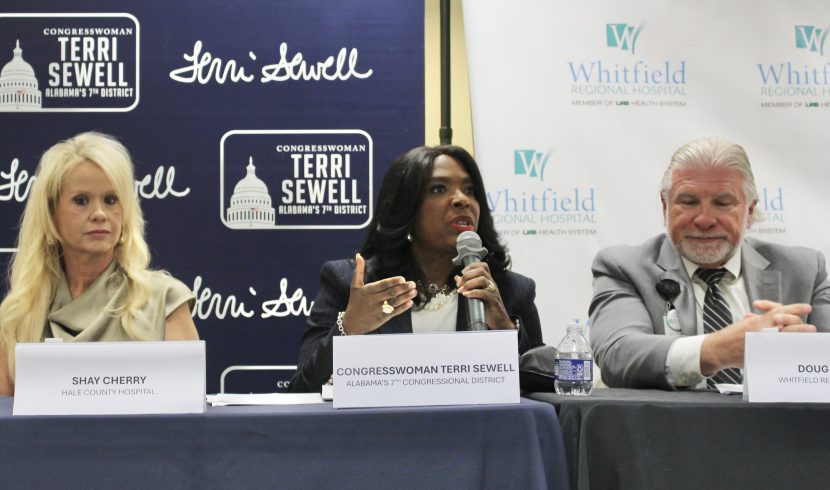
Alabama’s rural hospitals face significant financial hardships, and the federal wage index can exacerbate those challenges.
Recently, U.S. Rep. Terri Sewell, D-Birmingham, introduced legislation aimed at helping to fix the disparity found in the complicated formula used to determine Medicare reimbursement payments for hospitals based on regional labor costs.
“Alabama has endured some of the most devastating hospital closures in the nation,” Sewell said in a statement. “Each one leaves families traveling farther for care, mothers delivering babies without nearby maternity units, and seniors losing access to the doctors they’ve trusted for decades.”
As a rural state, Alabama has the lowest wage index in the continental United States at roughly 0.64, meaning for every $100 in services rendered to a Medicare patient, hospitals in the state are reimbursed $64 by the federal government. A more urban state like California has a rate of 1.23, which allows hospitals to be reimbursed $123 for a $100 worth of services given to Medicare patients.
The bipartisan Save Struggling Hospitals Act would codify the Centers for Medicare & Medicaid Services’ low-wage index hospital policy, which was in place between 2020-2024. The rule increased the wage index for hospitals in the bottom 25th percentile, which in turn helped rural hospitals receive more Medicare payouts.
But a court ruling in 2024 struck down that rule, leaving some Alabama hospitals having to once again grapple with low reimbursements.
“By strengthening the financial foundation of vulnerable hospitals, this bill offers a lifeline to communities that have consistently been asked to do more with less,” Sewell said.
Hospitals must update their wage information each year. As higher wage index hospitals pay their employees more, their reimbursements go up; meanwhile, lower wage index hospitals see their reimbursements decline.
And the wage index must be budget-neutral, so any increase in reimbursements in one area would lead to a decrease in another area. That makes it a hard sell for lawmakers in Congress.
During National Public Health Week, Sewell hosted a rural health event in Demopolis, where she touched on the need to address the wage index issue and discussed challenges facing hospitals in the state. Officials from several hospitals attended the event, including Whitfield Regional Hospital CEO Doug Brewer and Greene County Health System CEO Rodgerick Williams.
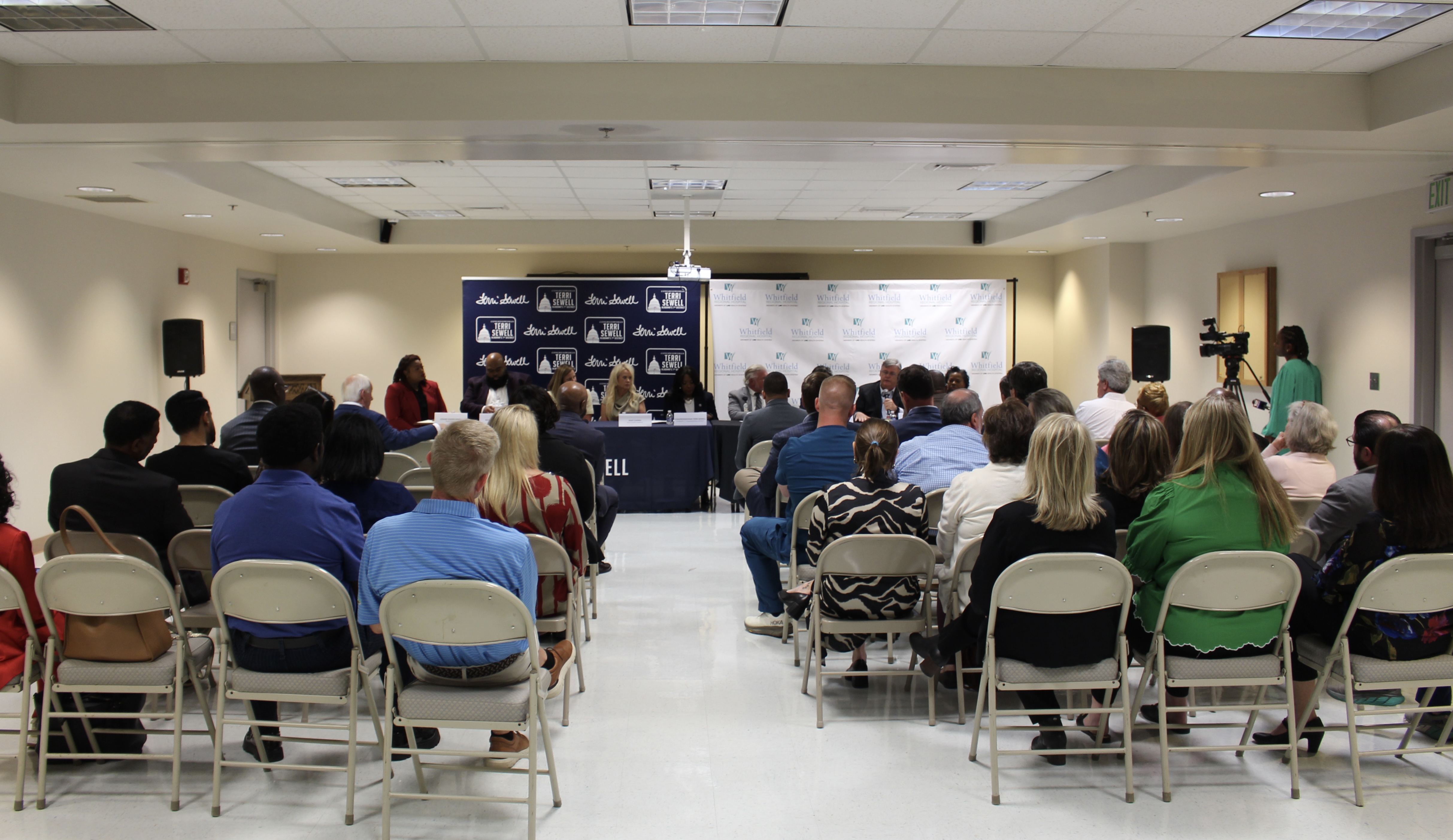
“One of the things that’s most challenging for any hospital in Alabama, rural or otherwise, is the fact that we get reimbursed for… Medicare at much lower rates than other states,” Sewell said during the roundtable. “Which means that the margins these CEOs have are razor-thin.”
As of January, 22 rural hospitals in Alabama were at risk of immediate closure, according to an analysis from the Center for Healthcare Quality and Payment Reform.
In December, Alabama’s entire congressional delegation sent a letter to CMS Administrator Dr. Mehmet Oz, urging the agency to reclassify rural hospitals under the wage index to help them stay afloat.
The lawmakers requested that low-wage index providers that are within 50 miles of a higher-paid wage area be allowed to reclassify to that area and thus receive a higher reimbursement rate. The current requirement only allows low-wage index rural hospitals within 35 miles of a higher-paid area to reclassify to that area.
The Save Struggling Hospitals Act has bipartisan support in the House and Senate. Rep. David Kustoff, R-Tenn., and Sens. Marsha Blackburn, R-Tenn. and Mark Warner, D-Va., are also cosponsors of the bill. The legislation was also introduced last Congress, but it did not advance.