
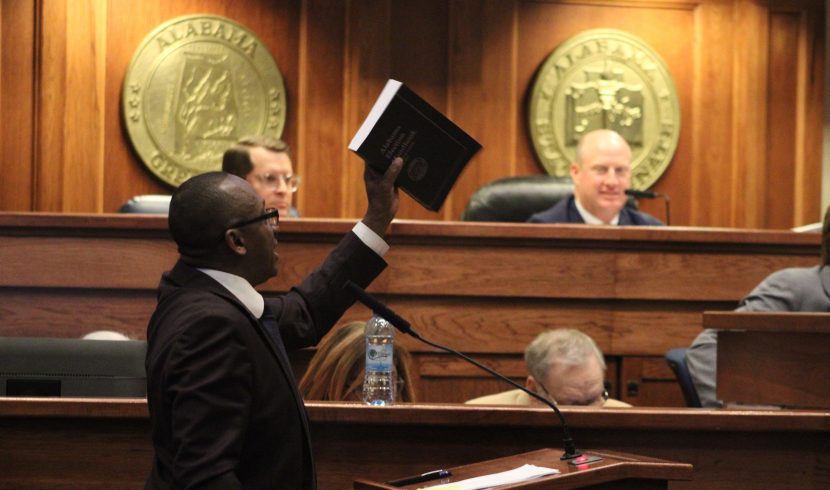
The Alabama Senate now has a new standing committee, the president pro tem has more authority — and the lieutenant governor has a bit less — and if a senator calls for a bill to be read at length, he or she better be prepared to stand for the duration of it.
The Senate on Thursday quickly and with no discussion approved several rules changes on how the body operates.
Sen. Arthur Orr, R-Decatur, introduced the changes on Tuesday. They passed unanimously Thursday morning.
Orr later told reporters that the changes related to giving some of what was the lieutenant governor’s authority to the president pro tem stemmed from wanting to let senators control the process more.
He noted that the House does not have an executive branch officer overseeing it.
“There was a little bit of a desire to have more control on the legislative side of the legislative process,” Orr said.
The changes take effect immediately. They:
-Allow the president pro tem to preside over the Senate if the lieutenant governor, the usual presiding officer, does not arrive within five minutes after the appointed start time. In the House, the House Speaker gavels in the chamber each day.
-Allow the pro tem, not the lieutenant governor, to recommit bills to another committee. The House Speaker also has that authority.
-Remove the lieutenant governor from the panel that selects the members and leadership of the Senate’s 17 standing committees.
-Allow the pro tem to select Senate appointees to conference committees, those bodies of Senate and House members that work out differences in House and Senate-passed bills.
-Create a new standing Committee on Economic Expansion and Trade.
-Take away floor access from the legal counsel of the Senate Rules Committee while the Senate is in session.
-Make it easier for the pro tem or bill sponsor to bring back for debate and vote a bill that has been carried over.
-Require that if a senator calls for a bill to be read at length, he or she must stand at the podium the entire time the bill is read. Having bills recited out loud is a common opposition stalling technique. For major bills like the budgets, the reading can take half a day or more.
Mid-term and mid-session rule changes are rare — work usually saved for the start of a new term. The Senate can change its procedural rules if three-fifths of the body votes in favor of them. While Democrats supported the changes Thursday, the Republicans and their 27-member supermajority could have also approved them alone.