
WASHINGTON — President Donald Trump’s recent escalation over his opposition to the century-old tradition that allows home state senators to object to judicial nominees spotlights how Alabama’s federal lawmakers on both sides of the aisle have used the practice to their advantage over the years.
The Senate process, known as “blue slips,” refers to the Judiciary Committee chairman sending a blue colored form to the home state senators of some federal judge and U.S. attorney nominees. The senators can either support or object to a nominee. In most cases, following the tradition, if a blue slip is returned with a negative response or withheld, a nominee does not advance.
Last week, Trump ratcheted up pressure against the practice as he seeks to confirm his remaining executive branch nominees.
“We’re also going to be filing a lawsuit on blue slipping,” Trump told reporters in the Oval Office. “You know, blue slips make it impossible for me as president to appoint a judge or a U.S. attorney because they have a gentleman’s agreement.”
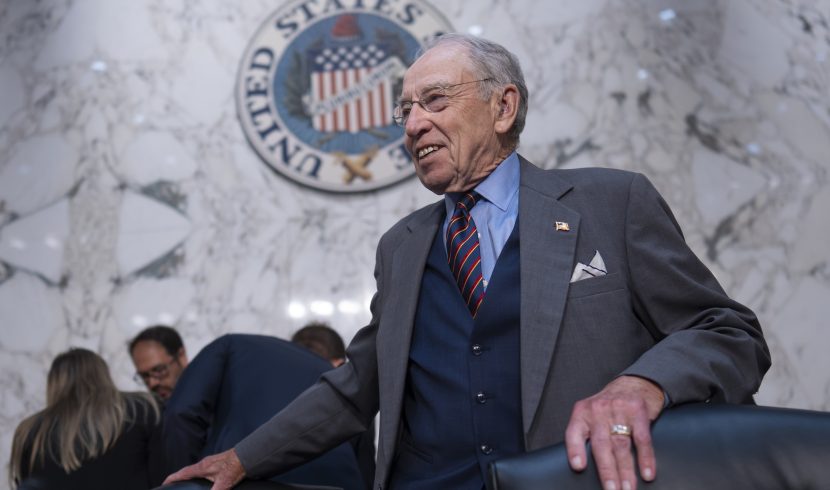
Senate Judiciary Chairman Chuck Grassley, R-IA, has continually pushed back on Trump’s claims and reiterated his support for blue slips in a series of social media posts.
Sen. Tommy Tuberville, R-Ala., backed up the president’s opposition to the tradition during an interview on the Charlie Kirk Show Monday.
“It’s come to the point now if we’re ever going to be able to help the citizens of these blue states, because it’s obvious…that the senators from those states aren’t going to allow common sense judges to go into those positions,” Tuberville said. “We need to allow the White House to vet the people that they think would fit in those positions.”
Sen. Katie Britt, R-Ala., who serves on the Judiciary Committee, could not be reached for comment.
Last month, Trump announced plans to nominate three Alabamians to the federal bench.
Alabama Solicitor General Edmund “Eddie” LaCour, whose previous nomination to the Middle District of Alabama was blocked by former Democratic Alabama Sen. Doug Jones not returning a blue slip, will now be nominated to the Northern District of Alabama.
Trump originally nominated LaCour in 2020 and renominated him to the Middle District of Alabama in 2021, but President Joe Biden quickly withdrew his nomination when he entered office.
LaCour has played a key role in the state’s federal cases involving transgender treatment for minors and redistricting.
Alabama’s two Republican Sens. Britt and Tuberville have expressed their support for LaCour, along with Trump’s two other nominees, Alabama Supreme Court Associate Justice Bill Lewis to the Middle District of Alabama and Harold Mooty to the Northern District of Alabama.
Former Sens. Richard Shelby and Jeff Sessions, Alabama Republicans, also used the blue slip practice to object to President Barack Obama’s nomination of Judge Abdul Kallon to the 11th Circuit Court of Appeals in 2016. Kallon was serving as a district judge for the Northern District of Alabama at the time. The 11th Circuit is the federal appellate court for Alabama, Georgia and Florida.
Sessions and Shelby did not return blue slips for Kallon; therefore, he never received a hearing in the Judiciary Committee, according to a Senate Judiciary Democrats press release from 2017. This allowed Trump to nominate Kevin Newsom in 2017, who was subsequently confirmed to the 11th Circuit post.
The blue slip tradition has been in place since 1917. The practice for circuit court nominees softened in 2017. The Senate Judiciary Committee no longer honors objections from home state senators on federal nominees who would serve multiple states on the appellate bench, according to the Congressional Research Service.
Alabama’s federal judicial nominees could have a hearing in front of the Senate Judiciary Committee as early as next week.