
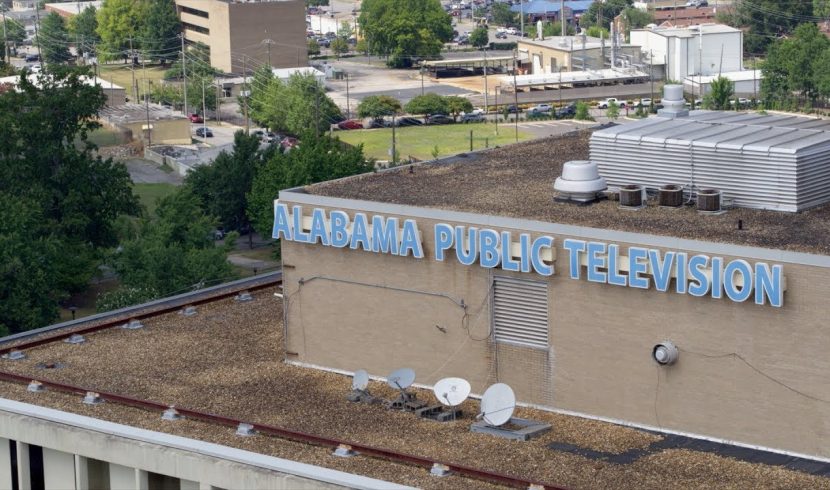
WASHINGTON — Faced with a Friday deadline, Congress narrowly approved clawing back roughly $1.1 billion for public media, which will mean a loss of some funding for Alabama Public Television and local radio.
Republicans approved the cuts to the Corporation for Public Broadcasting as part of a $9 billion rescissions package. Congress had until midnight Friday to pass the package, or else the already appropriated funds would have been released.
Alabama’s five House Republicans voted for the bill, and the state’s two Democrats, along with their entire caucus, opposed the package.
U.S. Rep. Robert Aderholt, R-Haleyville, who is an appropriator, said he’s hopeful lawmakers will be able to find ways to support local PBS stations that aren’t trying to push a political agenda.
“We’re going through some transitions, and so there’s going to be some changes here and there, but at the end of the day, I’m optimistic that Alabama Public Television and other public television (stations) across the nation that really are trying to do a good job and just trying to report the news, that are trying to just educate their viewers, then they’ll be okay,” he told Alabama Daily News.
Alabama Public Television receives about 13% or about $3 million of its funding from the Corporation for Public Broadcasting, which distributes federal funds to local public media outlets.
“We understand that difficult decisions will need to be made in the weeks and months ahead,” Wayne Reid, APT Executive Director, said in a statement. “However, we will remain focused on our core mission of public service and delivering programming that informs, educates, and inspires.”
WBHM in Birmingham said Friday it will lose 10% of its annual operating budget because of the funding cuts. WBHM’s Executive Director Will Dahlberg said this loss will pose a “serious and immediate challenge” to the station.
“This decision will force difficult choices, but we will do everything possible to preserve our journalism and the role we play in strengthening our region,” Dahlberg wrote in a letter Friday to members and listeners.
Republicans have long complained about NPR and PBS, having a liberal bias. GOP lawmakers’ votes this week made good on their efforts to cut funding for the media outlets.
“I’ve long called for NPR’s funding to be cut – your taxpayer dollars shouldn’t be used to promote left-wing propaganda,” U.S. Rep. Dale Strong, R-Huntsville, said in a post on X. “I am proud to work with my Republican colleagues to restore fiscal sanity.”
Two Senate Republicans joined Democrats to oppose the bill in the U.S. Senate this week. Sen. Susan Collins, R-ME, who voted against the recessions package, said she was also frustrated with NPR but wanted to protect local outlets.
“Nevertheless, local TV and radio stations continue to provide important coverage,” Collins said in a statement.
Federal funding for public media will stop at the end of the fiscal year, Oct. 1. Congress is now in the process of crafting and approving the 12 appropriations bills to fund the government for fiscal year 2026.
Aderholt, who chairs the Labor, Health and Human Services, and Education Appropriations Subcommittee, said the appropriations bill is still in the works, but said there could be efforts to specifically support local TV stations, making a distinction from their national counterparts of PBS and NPR.
“I think in this new appropriation bill, we’ll try to help, try to structure (it) in such a way so that public televisions that are trying to do the right thing will be okay,” Aderholt told ADN.
Editor’s Note: Alex Angle also reports for Alabama Public Television’s Capitol Journal.