
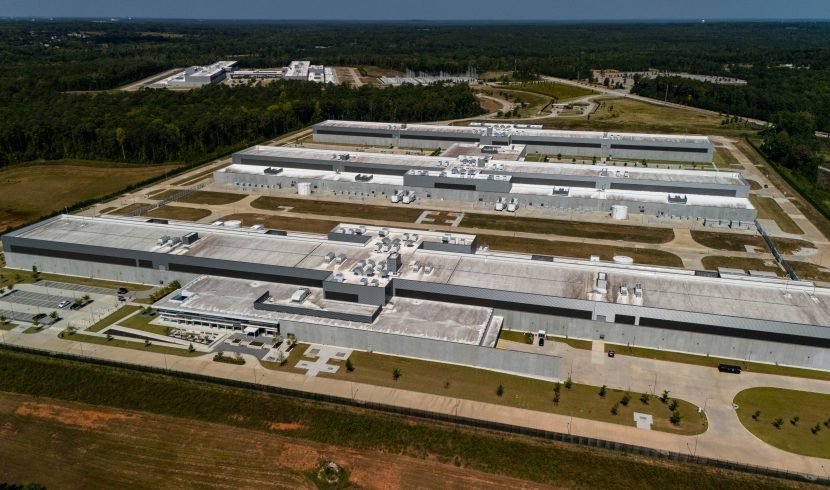
WASHINGTON (AP) — The House overwhelmingly approved a bill Wednesday that aims to have artificial intelligence data centers pay for their substantial energy needs as lawmakers used what was expected to be their final day in Washington before the midterm elections to address a growing voter concern.
The legislation would require state utility regulators to consider a standard by which utilities charge data centers for the full cost of the new power and transmission upgrades needed to serve them. The bill passed by a vote of 417-3.
All of Alabama’s House members voted in support of the data center bill. It now heads to the Senate, where Alabama Sens. Katie Britt and Tommy Tuberville have signaled their support. It’s unclear if the Senate will take up the measure during its three weeks in session before recess.
“It’s a good step in the right direction,” U.S. Rep. Barry Moore, R-Enterprise, told Alabama Daily News. “I think that obviously, energy is an issue, and so we want to make sure we take (care of) our ratepayers going forward as demands increase.”
Supporters of the bill described the legislation as a “modest first start” in protecting families and businesses from higher utility bills. It essentially provides a federal recommendation while preserving state power to regulate electricity markets.
“I promise that this bill is not the end of our focus on these issues. It’s only the beginning,” said Rep. Frank Pallone, the ranking Democrat on the House Energy and Commerce Committee.
Some lawmakers are calling for a full moratorium on AI data centers until safeguards are put in place that ensure AI is safe and effective and that the data centers don’t increase utility prices or harm the environment. Meanwhile, more than 100 Democrats signed onto a letter this week that called on House Speaker Mike Johnson to keep the House in session this month until Congress advances meaningful artificial intelligence safeguards.
Johnson said the bill that passed the House “strikes the right balance of protecting local communities while keeping America on the cutting edge of AI development.”
The debate over the bill offered different views on the merits of data centers. House Majority Leader Steve Scalise, R-La., said the development of a data center in Richland Parish in his home state generated bonuses of up to $50,000 for local teachers as a result of increased tax collections.
“Those are the stories you’re seeing in communities that have embraced it,” Scalise said.
But Pallone said Americans have real concerns about what data centers will mean for them, adding that President Donald Trump and Republican congressional leaders have swept those concerns to the side. He noted that Trump posted on social media that communities opposed to data centers must want to end up being “backwards and poor.”
“The president in my opinion is out of touch on this issue and the American people are demanding action,” Pallone said.
Nearly two-thirds of Americans are extremely or very concerned about data centers’ impact on energy prices and 57% are extremely or very concerned about the impact on water supplies, according to a new poll from The Associated Press-NORC Center for Public Affairs Research and the Energy Policy Institute at the University of Chicago.
Rep. Gabe Evans, R-Colo., the bill’s sponsor, said the U.S. can either build out its power systems to meet demand or become dependent on countries like China for its digital infrastructure.
“We cannot accelerate this growth on the back of Americans working hard to pay their electric bills at the end of the month,” Evans said.
Alabama Daily News’ Alex Angle contributed to this report.