
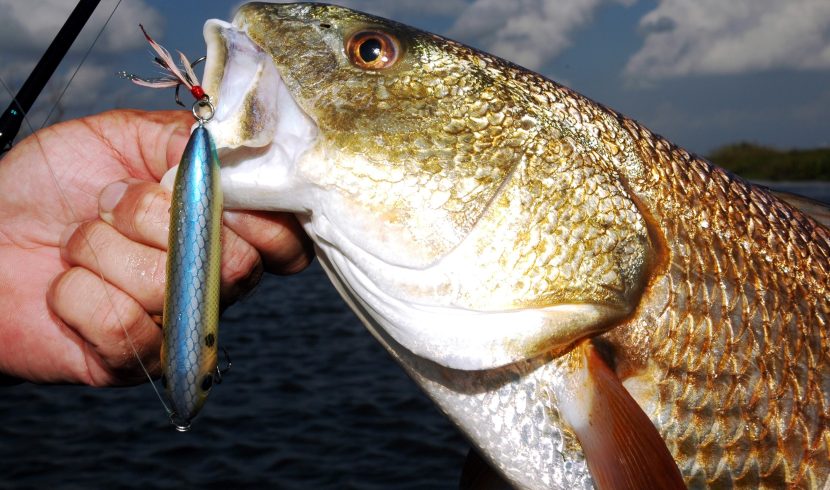
Sticking their heads above water like the prey they pursued, a huge pod of redfish herded terrified mullets against a sandbar running parallel to the shoreline in this bay. The bar cut off their escape route, leaving panicked mullets at the mercy of the rampaging spot-tails.
A big, aggressive redfish can easily swallow an adult mullet. Quickly, I tossed the largest topwater popper I could find into the maelstrom. Moments later, the water exploded as if someone threw hand grenades into the bay. Few experiences in inland salty waters come close to matching the savagery of a redfish smashing a topwater bait.
Despite living with downward-turned mouths better suited for slurping shrimp off the bottom, redfish regularly grab things swimming above them. These spot-tailed marsh marauders can make the adrenaline in even the most veteran angler pump on turbo drive when big redfish rush toward a topwater bait and obliterate it.
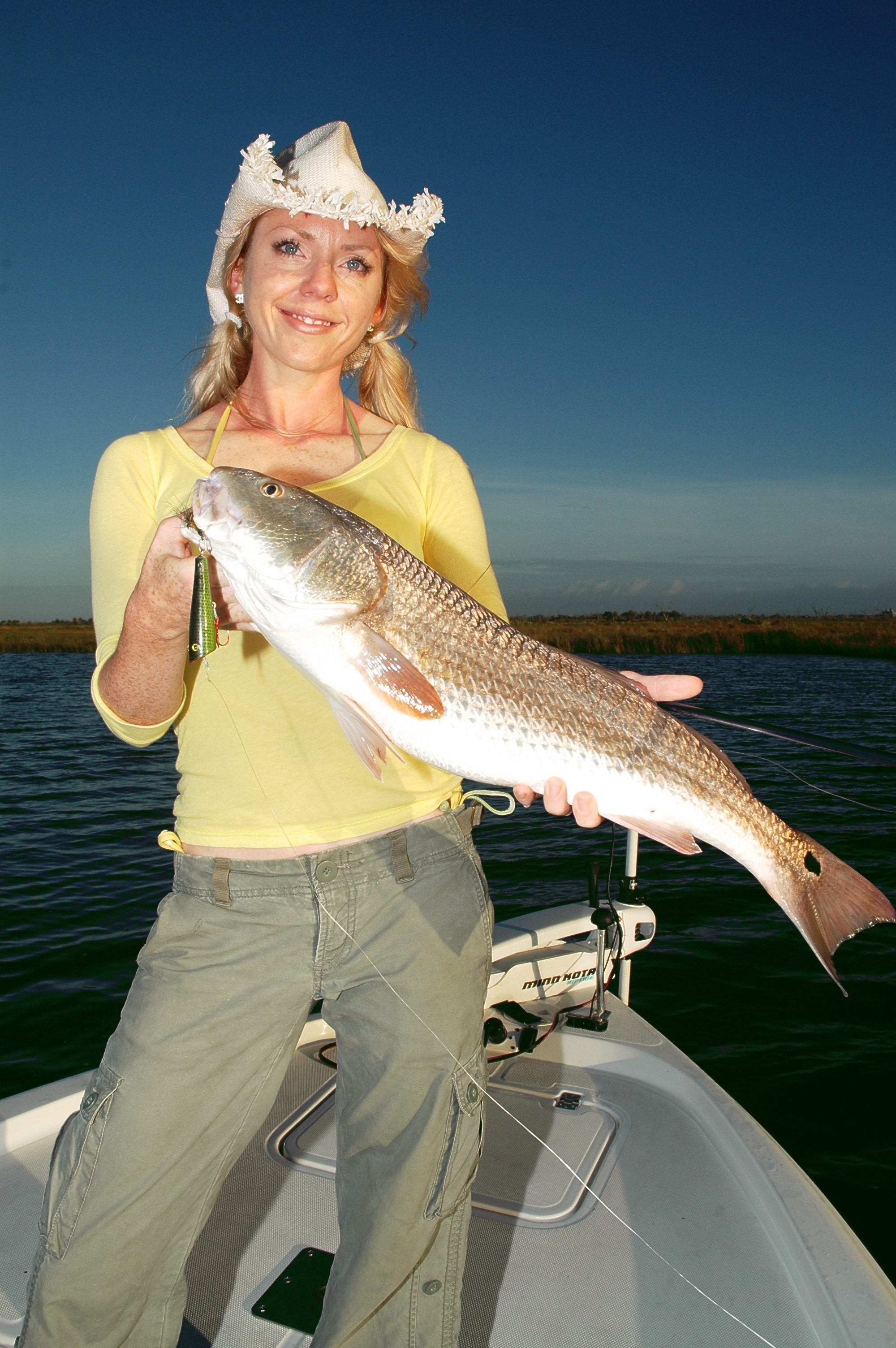
A redfish might eat just about anything, including menhaden, also called pogies, crabs, mussels, practically whatever they can fit into their mouths. However, succulent mullets full of oil and protein rank among the favorite morsels for gluttonous redfish. Sometimes, huge wolf packs of reds attack baitfish on the surface.
Mullets habitually stick their heads out of the water as they slurp plankton and other food on the surface. Topwater baits that mimic mullets make effective enticements for redfish of all sizes. Many topwater baits look like mullets. All displace the water on the surface as well as create noise and vibrations when retrieved. Some come with built-in rattles for extra enticement. Sound travels extremely well through water and attracts fish.
Most saltwater anglers use “walking baits,” which probably simulate mullets more than any other topwater lures. With a flick of a wrist, these baits zigzag across the surface with a scintillating motion that mimics wounded baitfish. Walking baits best entice fish actively feeding in relatively open, calm waters. Fish them over sandbars, reefs, around points and other structures, but they work wherever redfish feed.
Anglers can fish walking baits with a steady retrieve at any speed from barely moving to slashing across the surface or with a pause and go approach. For the pause and go method, move the bait a few feet and periodically let it rest motionless for a few moments. Often, a slight pause provokes a curious fish to make a brutal strike. While sitting motionless on the surface, the bait still exhibits a mullet-like silhouette.
Heavy walking baits sail long distances and can cover water quickly, so they make great search baits. Frequently, a redfish might follow a lure for a long distance before striking, so work it all the way back to the boat. Experiment with different retrieves to see what works that day.
Redfish commonly cruise weedy shorelines, sometimes in water so shallow that their backs protrude. These ambush predators also burrow into weedy pockets or similar cover along marshy shorelines. Anglers routinely see reds “tailing,” hanging downward with their tails jutting from the water as they forage for prey on the bottom.
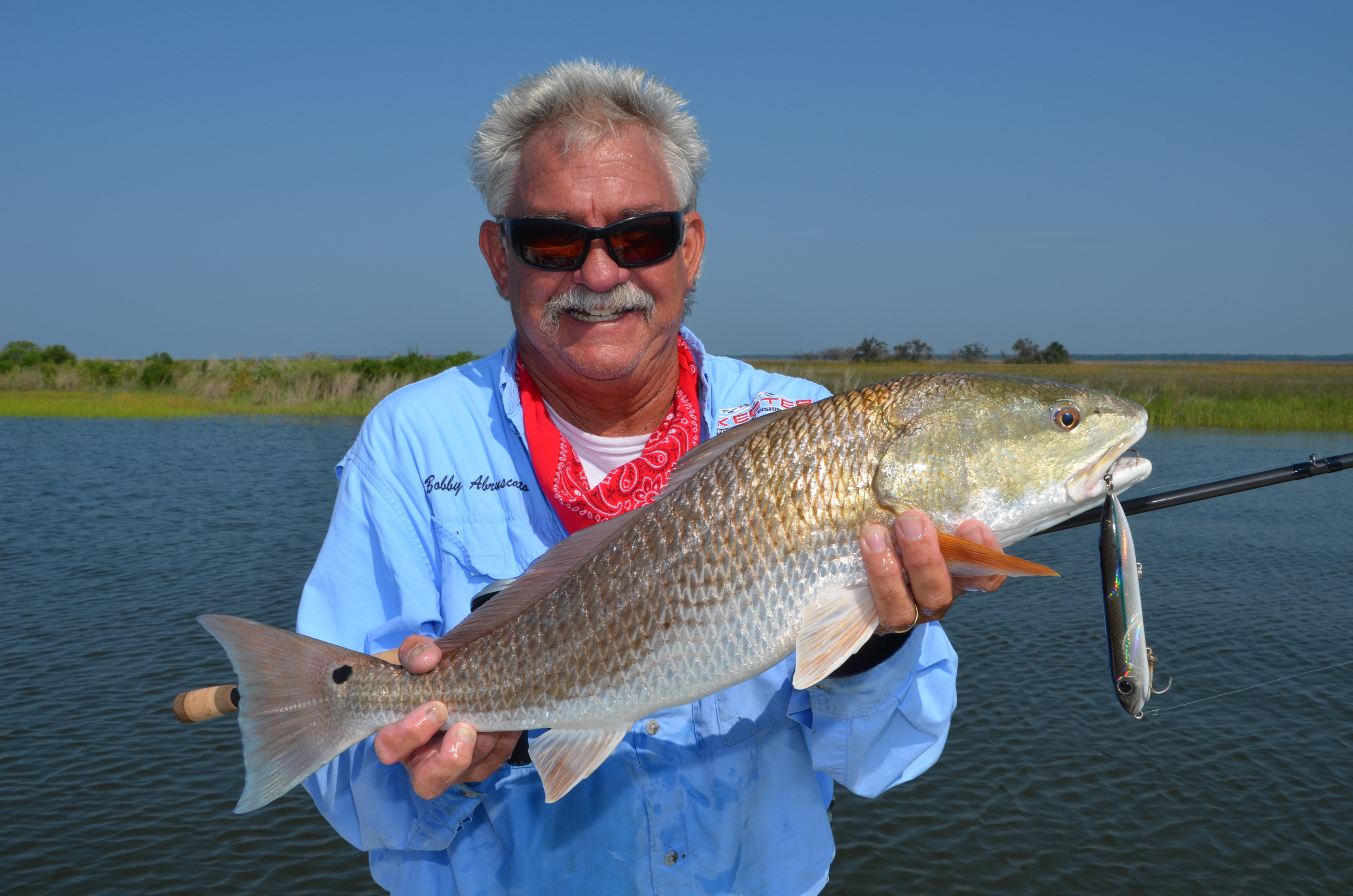
For fishing shallow waters, try a popper. Also called chuggers, poppers can create quite a stir on the surface by displacing water with curved surfaces at their noses. These baits pop, chug or gurgle, generating significant commotions. Poppers require slow, deliberate movement so fish them near visible structure such as a shoreline.
Toss a popper to a good spot and let it sit until the concentric splash rings dissipate. Then, jerk the rod to make a surface disturbance. Let it rest again. By popping and stopping these baits, anglers can keep their temptations in the strike zone longer. Even redfish not actively feeding might still grab an easy offering that looks like a meal and doesn’t consume too much energy to snatch.
Try different retrieval cadences to see what fish what that day. Sometimes, redfish want more dynamic action. Sometimes, they want just a little twitching or might explode on a bait floating motionless on the surface. In rougher conditions, pop lures faster and more vigorously.
Almost a cross between a popper and a walking bait, propbaits come equipped with propellers on the nose, tail or both ends. Not many anglers throw propbaits in salt water, but they can still catch fish. Since so few redfish see them, a big spot-tail might hit one just out of curiosity.
Easy to master, propbaits create significant noise and vibrations, making them excellent attractants to throw in murky water or on windy days. The harder one jerks the rod, the more sputter these lures generate. Retrieve a propbait with a steady motion or work it like a popper with a stop-and-go approach.
Many anglers consider floating jerkbaits a fourth category of topwater lures. These baits come with short lips and long, slender minnow-like bodies. When the angler jerks the rod, these lures make shallow dives. Then, they float back to the surface. This makes them excellent enticements for fishing around shallow cover, such as a shoreline.
On the surface, work jerkbaits almost like poppers. Also wake them just below the surface, retrieving them like shallow-running crankbaits. Under the water, jerkbaits create a slow, erratic, wobbling action that fish can’t resist.
Sometimes, monster reds want just one big meal without expending too much energy to catch it. Large chuggers or walking baits work superbly in such situations. At other times, redfish prefer more subtle action. When fishing in clear water or in an area that typically holds smaller redfish, downsize baits.
Topwaters come in various colors. Whenever possible, try to match what the fish want to eat. If they chase mullets, use something with mullet colors. In general, use darker colors on dark days or in dark water. On bright days, use brighter colors. Some traditional popular colors include clear, bone, black, chartreuse and white, red and white, chartreuse and orange, gray and white, or green and silver.
Stay on top of the action with floating baits. Any cast could produce exhilarating explosive action.