
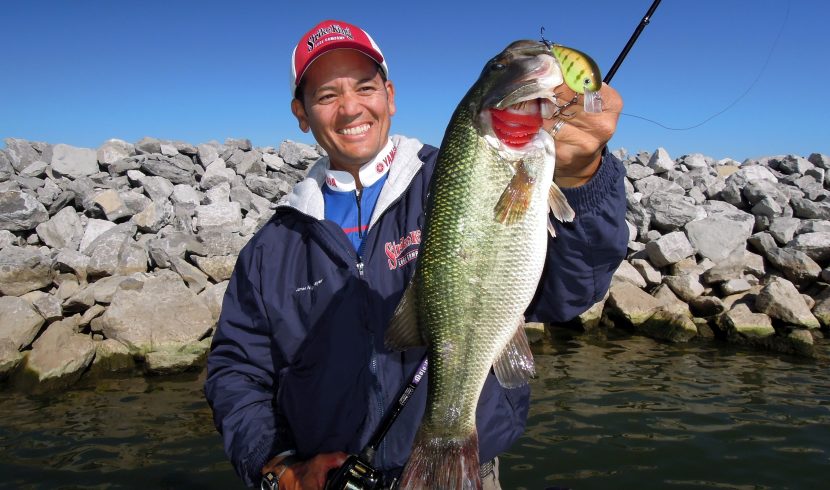
Anglers commonly catch the biggest bass all year during late winter as females swell with roe before spawning.
When temperatures drop, so do bass. Deeper water stays more stable all year long. Bass can tolerate cold temperatures to a point, but hate major fluctuations. Fortunately, advancements in electronic technology enable anglers today to easily pinpoint practically anything under the water. Anglers can even specifically target individual fish holding next to cover.
In deep reservoirs, few techniques work better than vertically jigging a 1/2- to 3/4-ounce chrome spoon. Small, heavy and compact, a jigging spoon sinks quickly and flutters down like a dying shad.
Most anglers simply drop spoons to the bottom, but bass don’t always stay there. In the winter, bass commonly suspend in deep water, wherever they can find the best combination of good oxygen and reasonable temperatures. Rather than letting a spoon freefall, control the sink rate. Keep a finger on the line to slow the descent and detect any strikes as it falls. Bass frequently hit spoons as they sink.
If the spoon hits bottom without a bite, jig it up and down a few times. If nothing strikes at the bottom, reel it up a few feet and jig it at that depth. Keep working the bait higher in the water column to find the most active fish. With good electronics, people can almost tap fish on the nose by watching the spoon fall on their screens.
“Water temperature, clarity and depth determine my lure selection in the winter,” explained Kevin VanDam, a four-time Bassmaster Classic champion. “I might start out on a deep creek channel with a jigging spoon. As the day warms up, I might switch to throwing a suspending jerkbait or a jig. I like to fish main lake structures, such as bluff banks, riprap and bridges pilings. Main creeks where a channel swings against a steep bank can hold many bass in the winter.”
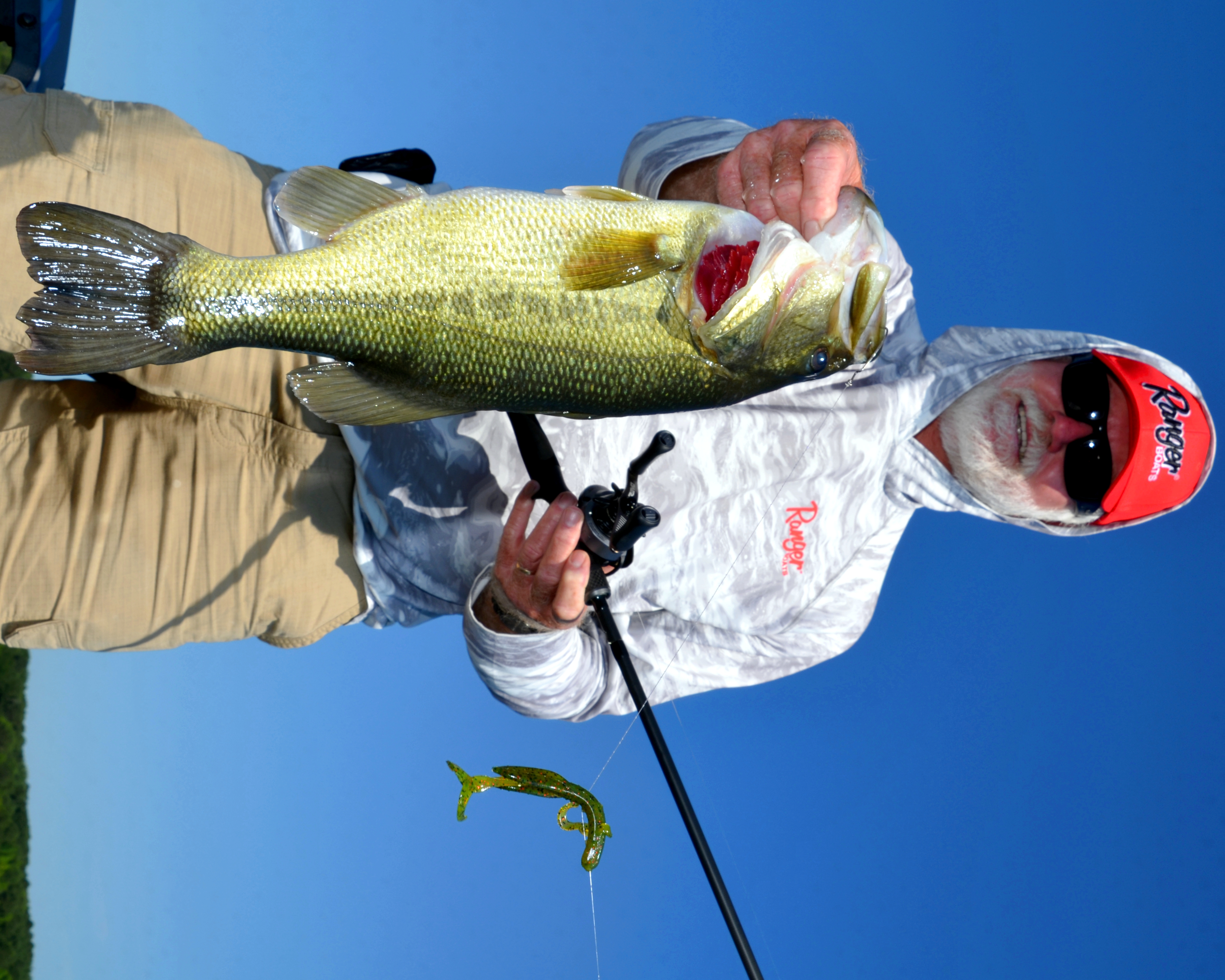
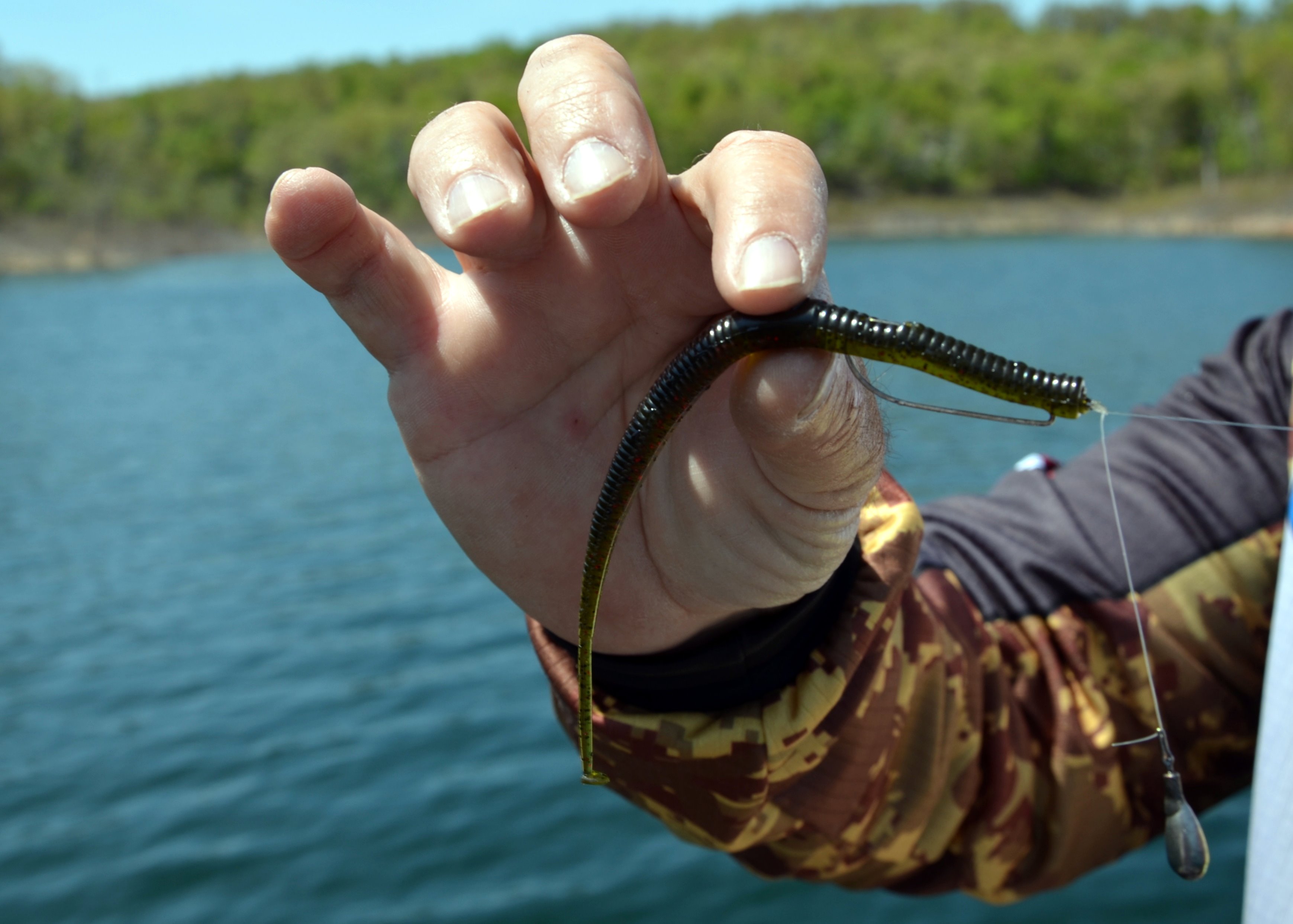
A drop-shot rig also works well for tempting deep bass. On a spinning rod with 6- to 8-pound-test fluorocarbon line, tie a hook to the main line about 12 to 48 inches above a weight. Sweeten the hook with a small grub or other soft-plastic enticement for a smaller, more subtle presentation. In deep water during the winter, bass won’t find much food, so they might hit just about anything.
Fished vertically, a drop-shot rig keeps small subtle baits in the strike zone longer. Shake the rod to make vibrations pulse down the line while keeping the sinker in place. Dangling just off the bottom, the lure quivers in a largemouth’s face. Lethargic bass in chilly water won’t chase baits far or fast, but they might slurp an easy temptation they can grab without expending too much energy.
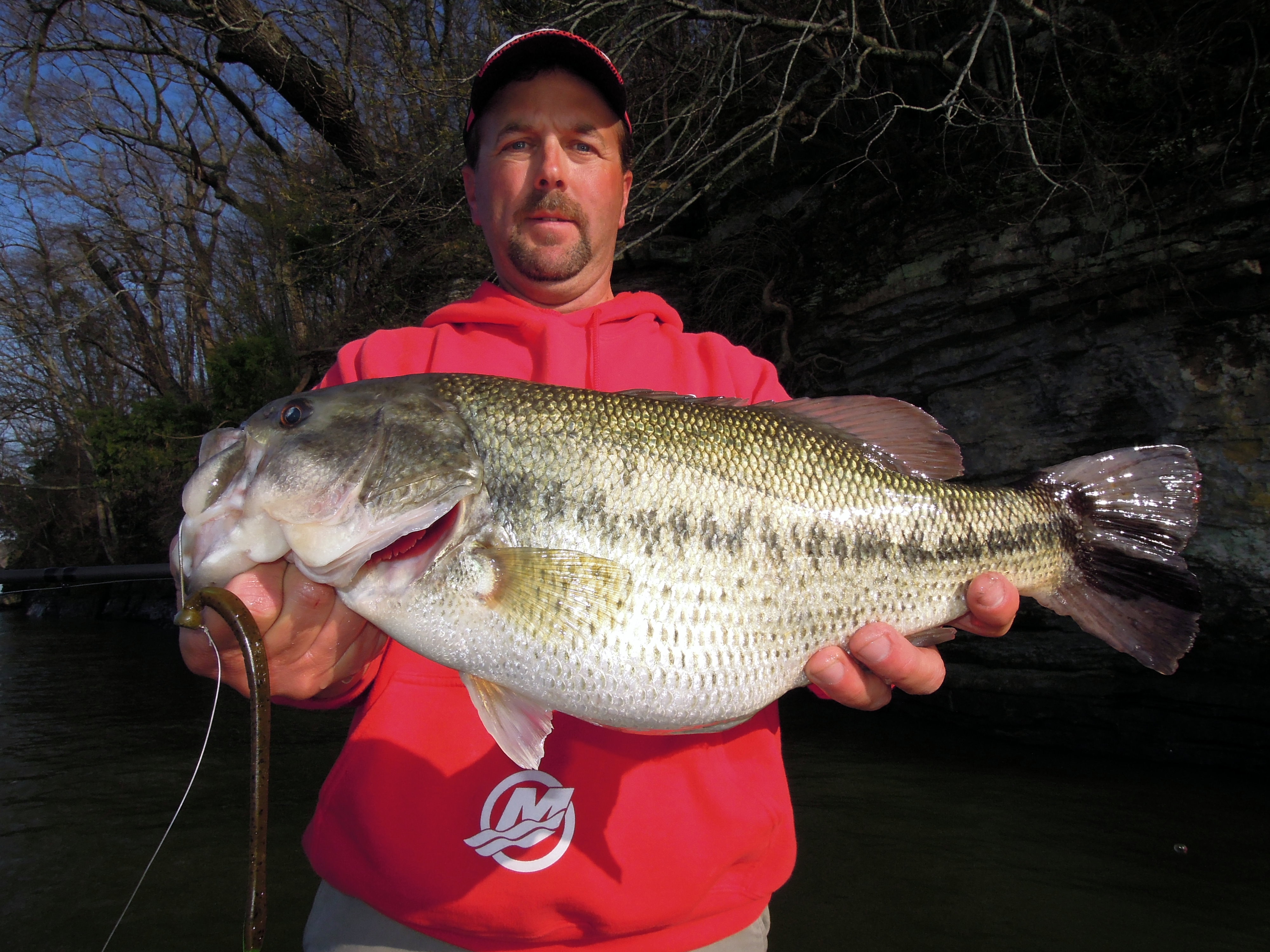
In rivers, anglers can fish deep channels and holes. Any channel constriction forces current to run faster. That scours holes. The deepest water occurs around the outside bends. Water must go farther in the same time as the water flowing on the opposite side of the river. Scour holes trap logs, brush and other debris that make even more excellent bass cover.
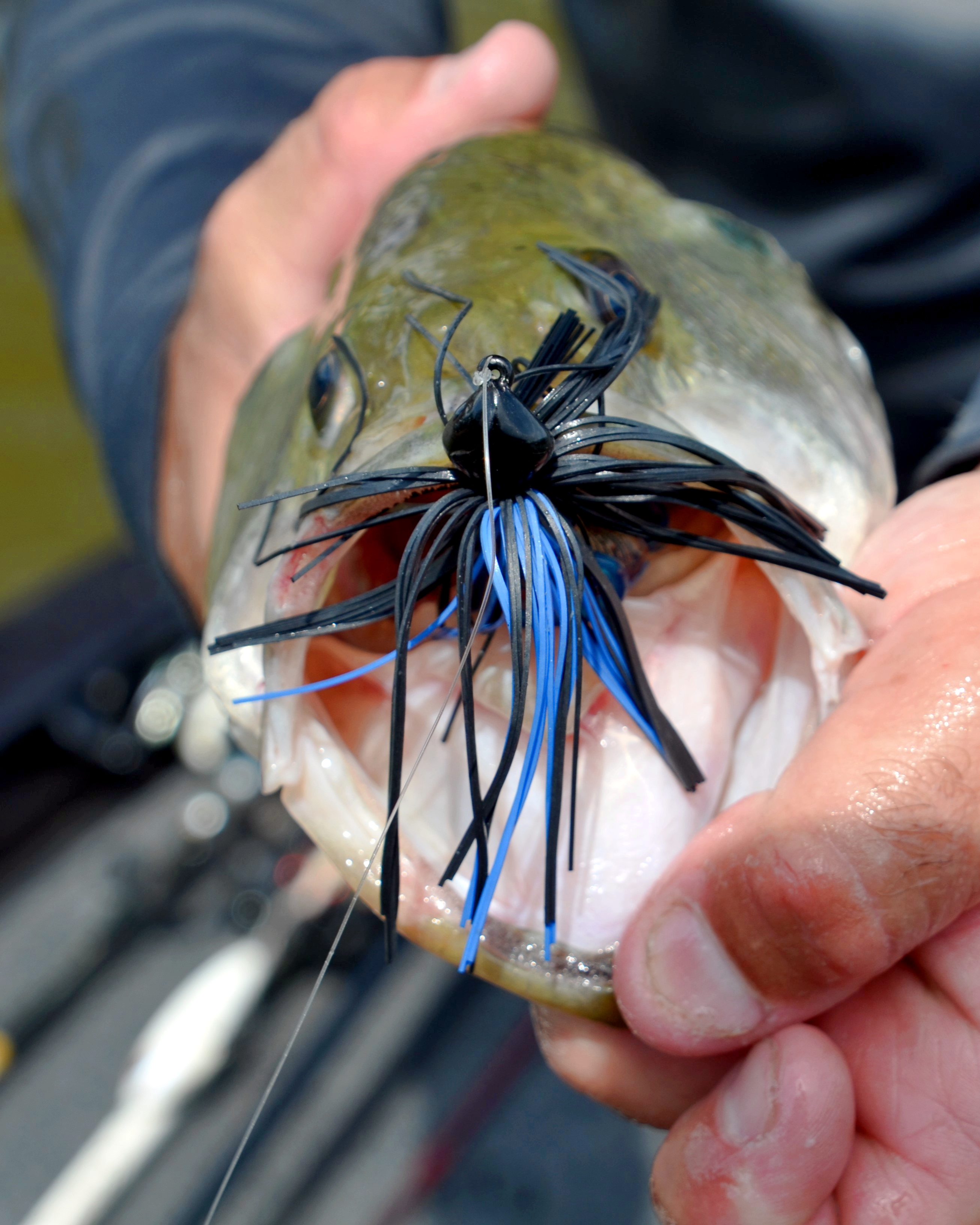
For fishing shorelines and other places with woody cover, few baits can beat a jig tipped with a crawfish-imitating soft-plastic trailer or a Texas-rigged temptation like tubes or worms. No hungry bass can resist a succulent crawfish scurrying along the bottom. Use craw trailers in brown, red, black or orange colors to mimic crawfish. In tidal waters like the Mobile-Tensaw Delta, a black trailer with blue claws simulates a crab.
“I use a jig in the colder months until the bass go to the spawning beds,” recommended Denny Brauer, a former Bassmaster Classic champion. “Then, I start experimenting with a tube. Sometimes, bass might want a tube 10 to one versus a jig. Sometimes, it’s 10 to one for a jig.”
During the winter, bass seek the warmest water they can find. Just a slight temperature change could make a huge difference to a cold-blooded bass on a chilly day. Even on frosty days, direct sunlight warms water a bit.
“In winter, I look for areas that are a bit warmer or that have a darker bottom to hold heat a little better,” VanDam advised. “Creeks can be good areas to find temperature changes. A creek that meanders through shallow sunny flats can flow with slightly warmer water. Rocks are my favorite choice for cold-weather fishing. My second choice is wood.”
With the sun in the more southerly sky before the vernal equinox, the warmest and most intense solar rays hit the northern shorelines. In addition, since the sun sets in the west, eastern shorelines receive more direct afternoon sunshine than shady western shorelines. In addition, tree trunks, cypress knees, stumps, pilings, rock or concrete riprap, fallen logs or any other hard objects in sunlight absorb a little solar energy. That warmth radiates into the surrounding water column.
The colder the water, the tighter bass generally hold to cover. Toss a jig up as shallow as possible close to a tree trunk or other hard object. Slowly drag it along the bottom and over the drop-off edge to the deepest water. In deep, cold water, anglers can’t fish a jig too slowly. Frequently, just subtle water movements making antennae, tails or appendages on a lure twitch slightly, tempting fish to bite.
Whenever possible, work a jig completely around any trees, stumps or other cover. Perhaps the sun hits one side better and slightly warms the water. Maybe one side hides submerged cover that creates good hiding places for bass to ambush bait. Anglers might never understand the reason, but fish know why they want to stay in that spot.
Tempting largemouths in frigid conditions might take considerable patience, endurance, persistence, perhaps even a little faith. Anglers might not catch as many bass on a cold day, but they typically catch bigger ones. On a frosty day, any pull on the line could mean a fish of a lifetime.
**********
An avid sportsman, Felsher is professional writer, photographer and radio show host who has written thousands of articles for many publications. He’s always looking for ideas or outdoors adventures that will make good stories. Contact