
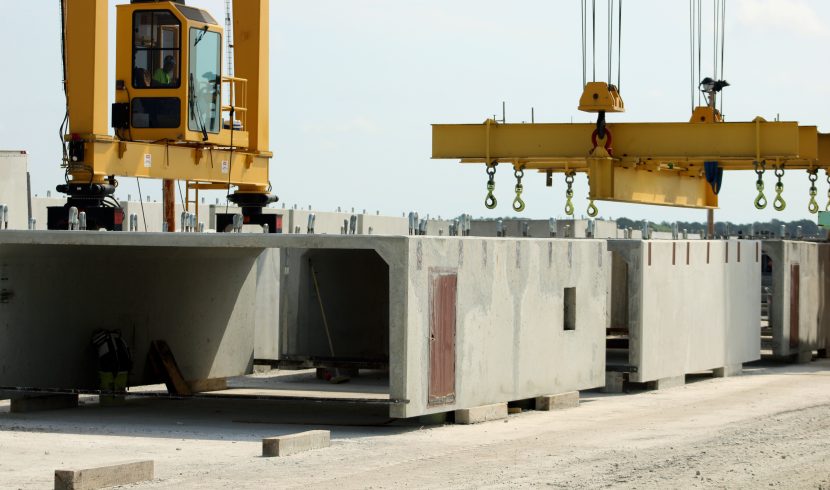
MONTGOMERY, Ala. — Alabama lawmakers confirmed to Alabama Daily News recently the state has more than half of the money needed for a proposed 4,000-bed prison in Escambia County and is “on target” to be able to secure the remaining funds.
Alabama House Speaker Nathaniel Ledbetter, R-Rainsville, recently said Rep. Rex Reynolds, R-Hazel Green, chair of the House budget committee, had identified 60% of the prison project’s funding.
“Is that not amazing?” Ledbetter said in Montgomery. “It’s something we have to do.”
State officials have not said publicly how much the prison in Escambia County is expected to cost. A design contract was approved in November.
In 2021, the Legislature passed a plan to dedicate $1.2 billion in funding for two 4,000-bed prisons, the first already under construction in Elmore County. Initially projected to cost around $623 million, the Elmore County prison’s cost skyrocketed to more than $1 billion, leaving legislative leadership concerned with how to fund the second prison.
As of this week, however, some lawmakers now see a path forward for fully funding the Escambia County prison without having to shift tax dollars from other areas. Sen. Greg Albritton, R-Range, chair of the Senate budget committee, considered himself among them, and told ADN recently how the state had managed to secure more than half of the project’s funding.
“We have been able, in our fat years, to capture monies in accounts, mostly conditionals and such; for example, we have been trying to hire people (for the Alabama Department of Corrections), and we haven’t been able to,” Albritton said.
“But every year we’ve been setting up money – $40, $50 million every year – to fund the hiring of new people. So we’ve been putting that away for the intention of hiring. Well, we haven’t been able to hire any folks, so I’m not going to let that sit there, so we scraped that in.”
The 2025 General Fund bill and a supplemental spending bill also approved in 2024 had a combined $400 million for prison construction, ADN previously reported. Separately, the $100 million in excess revenue from the 2023 General Fund was also dedicated to new prisons.
Albritton added that, as budget chair, he had spent “the past couple years knocking hands out of the pie a few times,” budgeting conservatively and amassing pools of funding that the state could dedicate toward completing the Escambia County prison project.
Officials have said they expect the Escambia County prison to cost less than the Elmore County site given the absence of specialized medical and mental health facilities, as well as some of the facility’s design being reused from the Elmore project.
Albritton said he was satisfied with the amount of funding that had already been secured for the Escambia County prison project, noting that the state still had hundreds of millions of dollars’ worth of bonds it could sell to help secure the remaining funding. He did say, however, that lawmakers still had “some more ways to go.”
“That won’t be enough either, but each one of these are bumping on the billion dollar level; the numbers we had starting out were just way low. So we’re considering changing that up to increase the amount of bonding; that will cover some of the edges that are there, so I’m comfortable that we’re on target to do what we said we were doing.”
The Elmore County prison is expected to be open in May of 2026, and construction is roughly 50% complete, according to ADOC. Construction on the Escambia County prison will be completed in two phases, with the first phase expected to commence in May of this year and complete by January of 2029.
Lawmakers hope the new prisons will help in the lawsuit filed against the state by the U.S. Department of Justice over the conditions of the state’s violent and overcrowded prisons. As of September, the state’s prison population is at 20,383, up 17,769 from three years prior when lawmakers initially approved the new prison construction.
The two new 4,000-bed prisons will only moderately help with prison overcrowding, however, as an equal number of prison beds are set to be lost upon their completion, with several older prisons set to be closed in the coming years.