
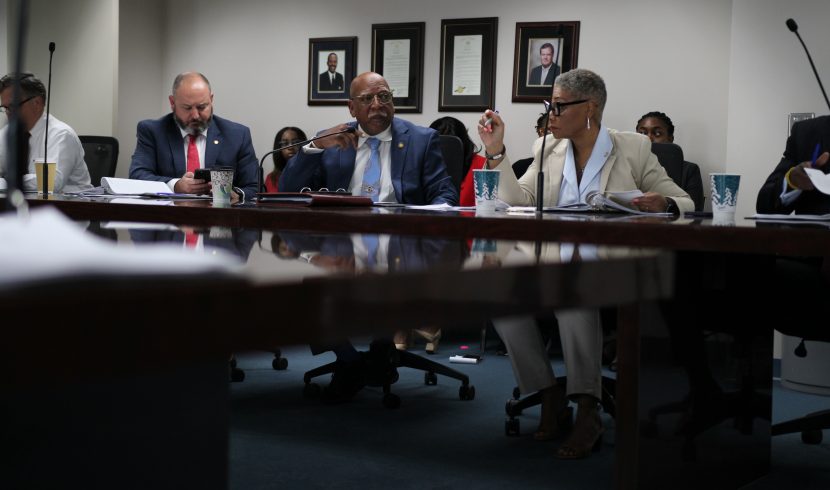
MONTGOMERY, Ala. — The divide over a bill to expand police immunity was on full display Wednesday during a public hearing at the Alabama State House.
The bill will likely receive its final votes next week.
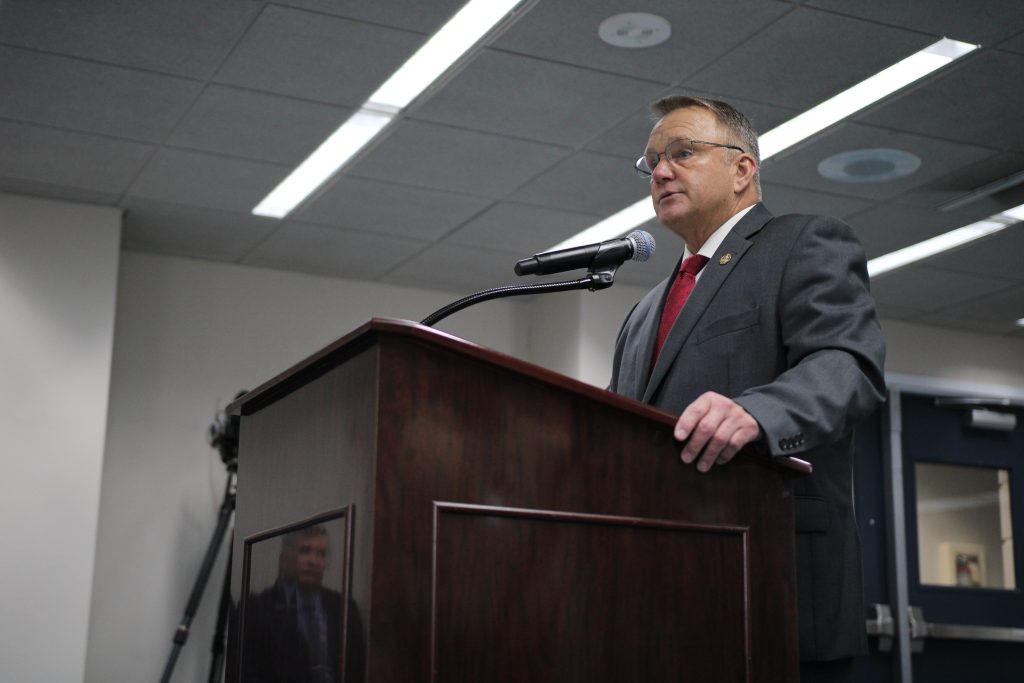
The bill is a key priority of Gov. Kay Ivey, who unveiled the proposal in February as part of her ‘Safe Alabama’ package of public safety bills. It’s being carried by Rep. Rex Reynolds, R-Hazel Green, a former police chief, who made the case for the legislation Wednesday to members of the Senate Judiciary Committee.
“Here to me is the core of the bill: law enforcement officers who have used force, constitutionally, while carrying out their duties are immune from prosecution,” Reynolds said. “If it’s unconstitutional, they have no coverage under this piece of legislation.”
The bill, House Bill 202, would make it more difficult to sue or prosecute members of law enforcement unless their conduct were overtly reckless or unconstitutional by establishing higher and more narrow legal standards. For instance, for an officer to face charges, his or her conduct must not only be reckless, but constitute a specific violation of state law.
The bill would also entitle officers to a pre-trial hearing to determine immunity, and facilitate the early dismissal of charges that fail to reach the newly-established legal threshold.
House Democrats pushed hard against the bill before it passed through the lower chamber last month in a partisan vote, arguing that law enforcement officers were already rarely prosecuted or held civilly responsible for instances of misconduct. Nationally, less than 2% of officers between 2005 and 2016 who killed civilians while on duty were charged with a crime, and of those charged, around two-thirds were not convicted, according to the Henry A. Wallace Police Crime Database.
Reynolds argued that his bill would not in any way stand in the way of the initial stage of officers being charged with a crime or sued.
“I’ve also heard this is going to make it harder to arrest police officers; that’s not true,” he said Wednesday. “Typically, when this occurs, an indictment or arrest of a police officer has already occurred.”
Sen. Rodger Smitherman, D-Birmingham, did not mince words with his opposition to the bill, calling it a “green light for Black folks to get killed.”
“We don’t get the benefit of the doubt, I don’t care what it is, Black folks do not get the benefit of the doubt, and that’s the problem,” Smitherman said. “If we weren’t dealing with that aspect, then you could probably look at (this bill) in a more favorable light, but that’s the realities of life, and because of that, this bill is going to cause a lot of Black folks to get killed, and it’s going to be done under the name of immunity.”
While noting his respect for Smitherman, Reynolds pushed back on his comments, citing his concern for law enforcement officers who have to make quick, life-or-death decisions.
“I take what you said and I flip the coin, and I worry about that split-second decision they’ve got to go through,” Reynolds said. “What if they hesitate and then what if they are killed?”
The bill has seen continued support from Ivey, as well as legislative leadership, such as from House Speaker Nathaniel Ledbetter, R-Rainsville, who last week named HB202, along with other Safe Alabama bills, as being his top priority for the remainder of the legislative session, expected to conclude in early May.
Another of the bill’s supporters, Sen. Greg Albritton, R-Range, praised the proposal during Wednesday’s committee meeting, callin git the “best effort” he’d seen in establishing clear guidelines around police immunity.
“Policemen, unfortunately, have become targets and hated,” Albritton said. “They are people, errors are made.”
The public hearing saw three opponents and one proponent to the bill sign up to speak, the first of whom being Montgomery resident Gita Smith, a former news reporter.
“I think what we have to look at is where we’re moving, what direction are we moving in,” Smith warned. “We do not want to create more situations where more boots go on the necks of more George Floyds, where a police officer kills a father and then there’s no civil recourse for the family later on. Please take a step back, please slow down from this bill and consider what happens if the needle keeps moving and moving.”
Other opponents to the bill included Jerome Dees, policy director for the Southern Poverty Law Center, and Travis Jackson, an Iraq War veteran and advocate with the Alabama Equality Advocacy Committee.
“Law enforcement agencies will have a jail free card due to not being held accountable for their criminal mischief,” Jackson warned.
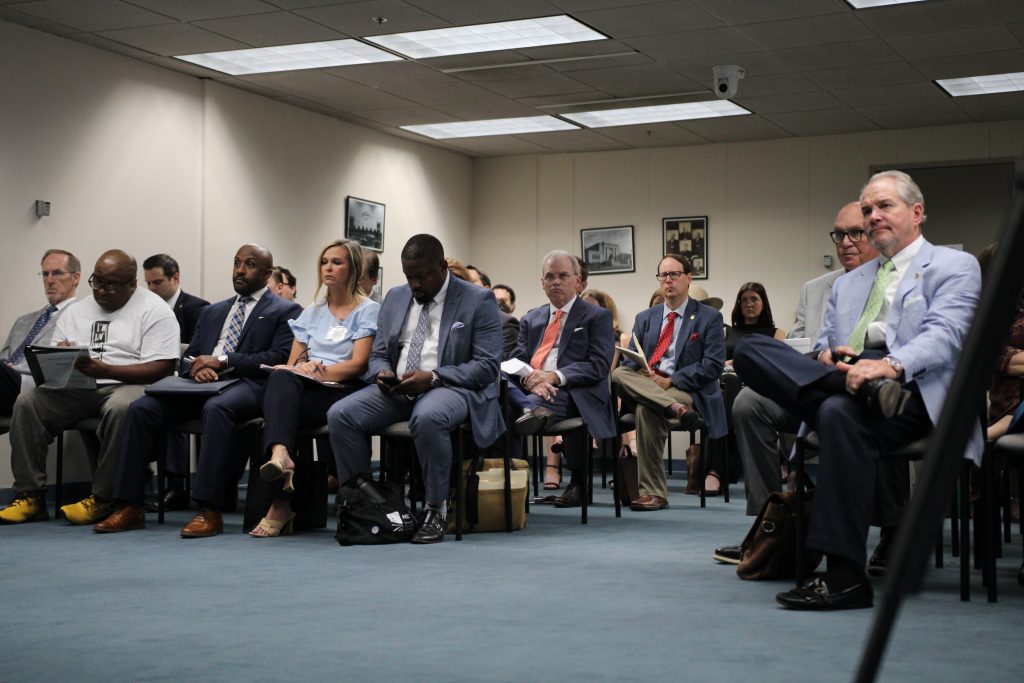
Hoss Mack, former sheriff of Baldwin County and current executive director for the Alabama Sheriffs Association, spoke in favor of the bill.
“When I heard the mischaracterization of this, that this was a license for law enforcement officers to do more harm, a license for law enforcement officers to use more deadly force, I couldn’t disagree with those comments more,” Mack said.
“As a law enforcement officer, I believe I set a standard, and I saw others set the standard to hold law enforcement accountable. I’ve arrested police chiefs. Law enforcement should be held accountable, but this bill is necessary to support law enforcement.”
No vote was taken on the bill, and Reynolds later told Alabama Daily News that he expected it to be taken up for a vote in the Senate Judiciary Committee next Wednesday, April 30, and on the Senate floor the next day on Thursday.