
BIRMINGHAM, Ala. – The Alabama Educational Television Commission voted 4-3 Tuesday to hire a polling firm to survey Alabamians about what they want from Alabama Public Television, then later voted overwhelmingly to continue its partnership with PBS indefinitely.
The two votes reflected a deeper disagreement over what comes next for APT.
Some commissioners said polling the public is necessary to understand whether the network’s programming reflects Alabama viewers’ priorities and values.
Others argued the commission was moving ahead with a costly and potentially biased step that Gov. Kay Ivey, in her November letter to the commission, suggested would be necessary only if APT were seriously considering disaffiliation.
Chairman Ferris Stephens told commissioners he had researched firms that could conduct the survey and recommended McLaughlin & Associates.
The commission then approved spending $47,500 to hire McLaughlin & Associates to conduct a phone survey of about 600 Alabamians. Stephens said the survey would include 35 to 40 questions and take about 20 minutes per interview.
Voting yes were Stephens, Les Barnett, Bebe Williams and William Green. Voting no were Pete Conroy, Tijuanna Adetunji and Logan Glass.
The vote came after an advisory committee recommended that commissioners not break with PBS. The committee was created after Ivey urged the commission to undertake a planning process.
Committee member Pam Huff said disaffiliation “would be a critical mistake,” while committee member Eric Land called it “a catastrophic financial disaster on so many levels.”
“Eliminating PBS would be tantamount to destroying one of Alabama’s prized assets at a time when APT’s statewide educational value should be celebrated, not torn asunder,” Land said.
Still, commissioners who backed the survey said the issue is bigger than whether APT should immediately leave PBS.
They argued that a scientific poll would give the commission a better understanding of what viewers want from their public television network and help shape future programming decisions.
Green said the survey would be useful in gathering broader feedback about what viewers want from APT, not simply to ask whether the network should cut ties with PBS. He said that information could help commissioners press PBS for different programming or identify ways APT could supplement what PBS already provides.
“This survey would make us able to serve our people – even the people in the audience – better, to make APTV better, to better serve them,” Green said.
Commissioners who opposed the survey questioned both its purpose and the choice of McLaughlin, a Republican polling firm.
Conroy argued that Ivey’s letter contemplated a survey only if the commission planned to move toward disaffiliation, something it has not done.
Alabama Daily News requested comment from Ivey’s communications director but did not receive a response prior to publication.
Glass asked how the board could know the firm would be unbiased.
Adetunji questioned whether the survey was the best use of money when the commission had already decided not to sever ties with PBS.
After the survey vote, Director of Government Affairs Jack Williams volunteered to work with the polling firm to see that the job was done correctly, but Barnett voiced strong opposition to that idea. He took issue with an email Williams had forwarded from Alabama House Education Budget Chairman Danny Garrett, R-Trussville, warning that the Legislature’s future funding of APT could be cut if its educational programming suffered as a result of dropping PBS.
Stephens said commissioners would determine which questions should appear on the survey and give them to APT Executive Director Wayne Reid, who would bring them back to the commission at its next meeting for approval.
Later, Conroy tried to revisit the survey decision, proposing that Reid oversee the survey process. Barnett said only someone who had voted with the majority could make that motion, and none did.
“We just keep on beating this dead horse,” Barnett said. “This horse is dead for this meeting.”
In a separate action earlier in the meeting, before public comments, Conroy moved to continue APT’s partnership with PBS beyond the June 30 contract end date.
“I move that the AETC maintain and continue its successful partnership with PBS indefinitely, or until there is a proven and verifiable financial reason not to do so,” Conroy said.
All commissioners voted yes except for Barnett.
The debate followed months of pushback from viewers, donors and public officials over talk of disaffiliation.
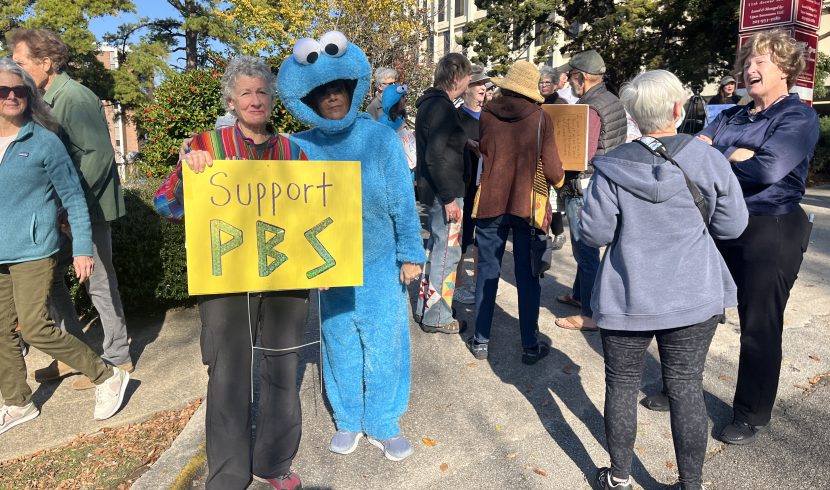
During Tuesday’s meeting, commissioners again heard that donors had warned they would stop giving if APT left PBS. Public commenters also spoke strongly in favor of keeping PBS programming.
The issue has surfaced in other states as well. In Arkansas, whose public television network had been moving toward disaffiliation, commissioners last month voted to delay that decision for 180 days.
Even with the later vote to continue APT’s PBS partnership indefinitely, Tuesday’s meeting made clear that at least some commissioners are still debating what the network’s long-term relationship with PBS should look like.
ADN Publisher and APT’s Capitol Journal Host Todd Stacy contributed to this article.
Trish Crain is a contract employee of the Alabama Public Television Educational Foundation.