
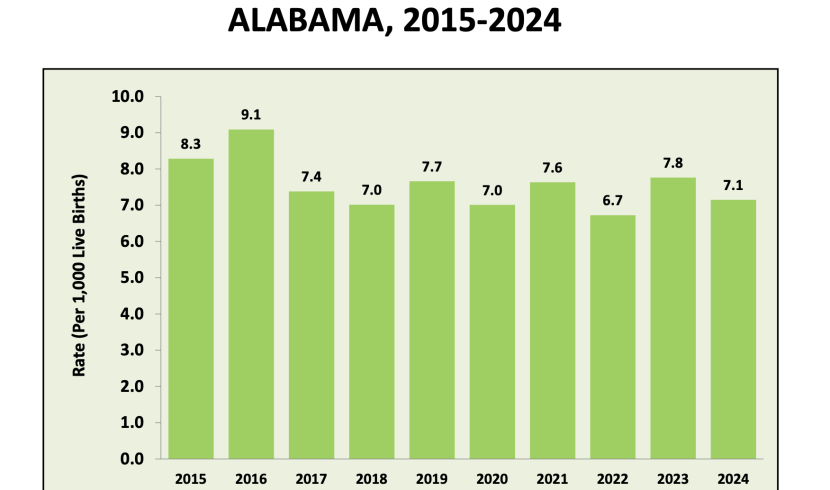
The infant mortality rate in Alabama declined in 2024 to 7.1 deaths per 1,000 births, down from 7.8 in 2023, the Alabama Department of Public Health said.
The new rate reflects 414 infant deaths within the first year of their life. The national rate was 5.5.
“Many factors contribute to infant mortality, including race, poverty, education, housing, nutrition, and access to care,” State Health Officer Dr. Scott Harris said in a written statement. “Racial disparities remain in birth outcomes; the Black infant mortality rate is more than twice the rate for white infants. Maternal health conditions such as diabetes and hypertension are linked to higher preterm births.”
The state’s lowest infant mortality rate was 6.7 in 2022.
The rate of infant deaths among black babies decreased in 2024 to 11.4, but remains higher than the rate of white babies, 5.4.
The three leading causes of infant deaths last year were: Congenital malformations, deformations and abnormalities, 21.5%; disorders related to short gestations and low birth weights, 15.9%; and bacterial sepsis, a blood infection, 5.1%.
Sudden Infant Death Syndrome improved from the third highest cause of death in 2023 to fifth, 3.4%, in 2024. Unintentional injuries, 4.1%, were the fourth leading cause of infant death in Alabama last year.
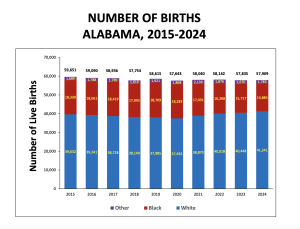
Other statistics for 2024 include:
A historic low percentage of teen births at 5.8%;
A decrease in births to mothers who smoke, 3.3%.
Medicaid covered 42% of births in 2024, while 55% of infant deaths were to mothers whose deliveries were paid for by Medicaid.
The percentage of births with adequate prenatal care dipped from 74.7% in 2023 to 73.9% last year.
The percentage of births with no prenatal care rose from 2.6% in 2023 to 3.1% in 2024.
The ADPH has multiple programs for low-income women. In rural counties, it is collaborating with medical providers to offer prenatal services to low-risk women at county health departments through telehealth visits, extending to 36 weeks of pregnancy.
The Well Woman Program encourages healthy living, prevention, and early detection of disease for women ages 15 to 55, leading to healthier pregnancies. The program is available in 11 counties for fiscal year 2026.
https://www.alabamapublichealth.gov/womenshealth/well-woman.html † † † †ALL Babies has expanded to statewide coverage for pregnant women without other insurance who meet the program’s income guidelines.
https://www.alabamapublichealth.gov/allbabies/
“We are hopeful that by following evidence-based practices, we will save lives,” Harris said.