
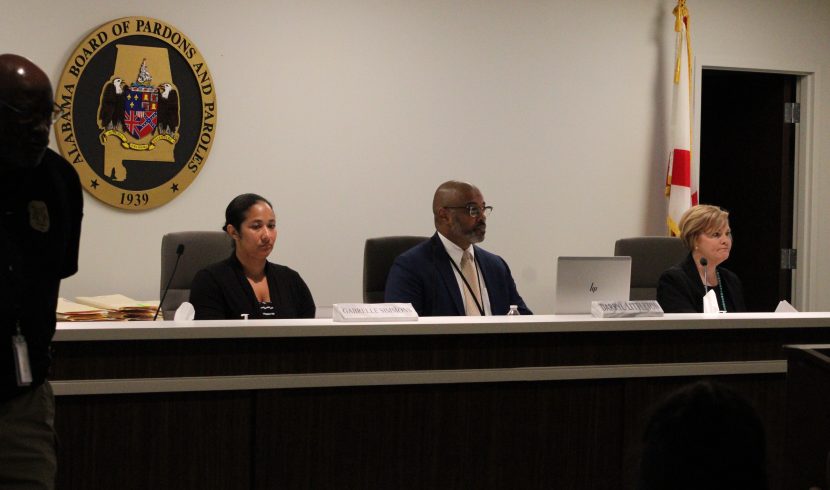
MONTGOMERY, Ala. — The Alabama Board of Pardons and Paroles granted conditional release to 26% of eligible inmates during the first quarter of fiscal year 2025, a significant increase when compared to the board’s record-low parole grant rate of 8% in FY2023, and the highest rate since 2019.
According to the latest monthly report, the board in December granted parole to 40 inmates and denied it to 148 for a grant rate of 21%. The board’s parole grant rate for October, the first month of FY2025, was 28%, and for November, 30%, giving the board an average parole grant rate of 26% during the first quarter of FY2025.
While reaching as high as 53% in 2018, the state’s parole grant rate saw a sharp dropoff in 2019 after several reforms to the parole board were signed into law by Gov. Kay Ivey. Those reforms gave the governor more oversight of the board and sought to further deter the release of violent offenders. The annual parole grant rate subsequently dropped to 31% in 2019, 20% 2020, 15% in 2021, 10% in 2022, and 8% in 2023.
After mounting public and legal pressure in 2023, however, as well as scrutiny from state lawmakers, the board’s parole grant rate increased dramatically in FY2024, from 8% to 20%. Now one quarter into FY2025, and the data suggests that that trend is continuing.
The ABPP’s December report also revealed improvements with parole racial disparities, among the chief complaints included in a high-profile lawsuit against the board. In the first quarter, white inmates were granted parole at a rate of 28% according to the report, Black inmates at a rate of 25%, and Hispanic inmates, 25%.
This marks a notable improvement from 2024, itself an improvement over 2023, in which white inmates were granted parole at a rate of 24%, Black inmates at a rate of 17%, and Hispanic inmates, 21%.
Rep. Chris England, D-Tuscaloosa, ranking minority member of the House Judiciary Committee, has pushed to reform the parole board for at least three years, but to no success.
After the October hearing of the Prison Oversight Committee, where parole board chair Leigh Gwathney was grilled by lawmakers for failing to adhere to the board’s own parole guidelines, England had told Alabama Daily News he had never been more hopeful for his parole board reform efforts to be received favorably by his legislative colleagues.
“Honestly, the best case for the bill that I sponsored for the last three years for oversight (of the parole board) was made by the chair,” England told ADN after that hearing. “That’s the best example I’ve ever seen of a government agency telling you they need help.”
England’s latest version of his effort to reform the parole board, House Bill 40, would create the Criminal Justice Policy Development Council to oversee the parole board and require them to produce a report on any deviation from its own parole guidelines, which today are entirely discretionary.
While the state’s parole grant rate appears to be trending upward, Cam Ward, director of the ABPP, previously told ADN that it was unlikely the parole grant rate would ever reach the state’s previous high of 55%, and would likely remain around 25%, absent any major reforms to state law.