
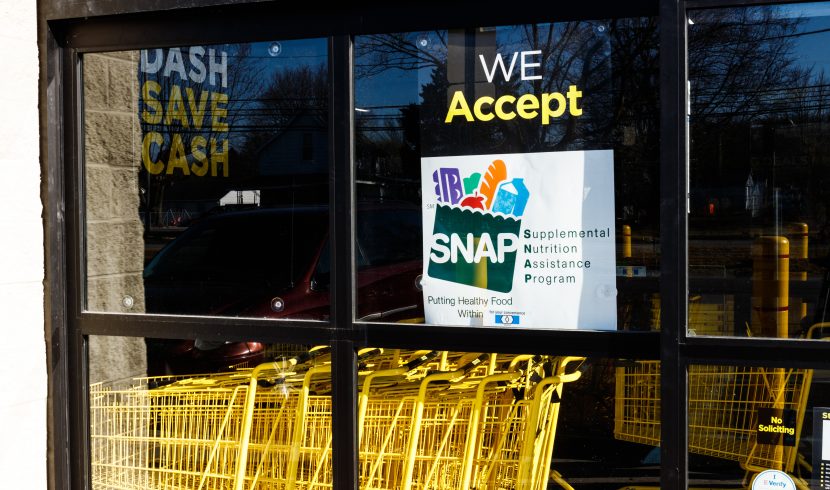
BIRMINGHAM, Ala. – Alabama officials are asking the state’s U.S. senators to help secure a two-year delay in new federal SNAP cost-sharing requirements that could force the state to pay $200 million or more to keep food assistance benefits flowing to hundreds of thousands of residents.
The new requirements are part of the One Big Beautiful Bill Act, which shifts more SNAP costs to states by requiring them to pay a larger share of administrative expenses beginning Oct. 1 and, starting in fiscal year 2028, a share of food benefit costs if their SNAP payment error rates exceed 6%.
The request for a delay surfaced Wednesday during a Make Alabama Healthy study group meeting in Montgomery, where state officials, grocers and child nutrition advocates warned that the Supplemental Nutrition Assistance Program supports not only low-income families, but also rural grocery stores, schools, farmers and the state’s broader food economy.
Figures that Alabama Department of Human Resources Commissioner Nancy Buckner presented in May showed SNAP serves about 670,000 Alabamians, including 300,000 children. Total benefits in fiscal year 2025 were about $1.74 billion, or roughly $145 million per month.
Brandon Hardin, who manages Alabama’s SNAP program for DHR, said the state is still waiting on federal guidance on how the cost-sharing provisions will be implemented.
“Absent any federal guidance, there’s only three current options available to us,” Hardin said. “And that is either pay the cost share if we’re over 6%, get the rate under 6%, or end the program.”
The state is also expecting an additional $35 million in SNAP administrative costs beginning Oct. 1, according to figures Buckner presented in May. The new law requires states to absorb 75% of administrative costs, up from the current 50%.
But the larger challenge comes the following year, fiscal year 2028, when Alabama could take on at least 10% of total SNAP benefits, or $174 million, in cost sharing if the state’s payment error rate remains at its published fiscal 2024 level of 8.32%.
Committee Chair David Thrasher told committee members he has already spoken with U.S. Sens. Katie Britt and Tommy Tuberville about seeking a two-year delay, possibly through the Farm Bill or another federal measure.
Britt’s office told Alabama Daily News that Britt is in “constant communication” with Alabama’s DHR regarding SNAP and wants the transition to be “as smooth as possible,” but that she “believes that states having a direct stake in the SNAP program will be a net positive.”
Tuberville’s office did not respond to a request for comment prior to publication.
Opelika grocer Jimmy Wright said the state’s food economy relies heavily on SNAP spending, particularly in rural areas where independent grocery stores operate on thin margins.
Because grocers operate on slim margins, Wright said, even a partial reduction in SNAP spending could affect stores that serve both SNAP and non-SNAP customers.
“We drive a tremendous amount of tax benefits for our state,” Wright said. “This has been proven again and again and again – in multiple studies – $1 in SNAP benefits generates $1.50 to $1.80 in economic activity.”
Wright said any major reduction in SNAP benefits would have “a tremendously negative effect on everything from the farmers to the plate and everybody in the middle of that.”
He said a review by the Alabama Grocers Association identified 752 grocery stores in high-density SNAP areas, including 337 that could be affected by major reductions in SNAP spending and 117 that could have trouble surviving if benefits were reduced or the state could not sustain the program.
“One of these 117 stores on this list is mine,” Wright said, referring to the Opelika grocery store his family has operated since 1973.
Cacyce Davis, who manages school meal programs for Elmore County schools and led the group’s children’s subcommittee, said SNAP reductions would ripple through multiple systems that support children and families.
“SNAP is not simply a nutrition assistance program,” Davis said. “It serves as a foundational support system. It influences child health, educational outcomes, family stability, local economics, agriculture and community well-being throughout Alabama.”
Davis said SNAP participation helps connect families to food while also supporting school meal eligibility, health outcomes, farmers, grocery stores and rural communities.
“Food banks cannot replace SNAP benefits,” Davis said, noting that food banks are designed to supplement SNAP, not replace it.
The law ties state benefit cost-sharing to SNAP payment error rates.
Alabama’s published fiscal 2024 payment error rate was 8.32%, which would fall in the 10% cost-sharing tier. DHR figures presented in May showed Alabama’s rate at 10.99% for the first three months of fiscal 2026 – high enough, if it held for the year, to put the state in the 15% tier.
Under the law, Alabama’s first cost-share calculation in fiscal 2028 will be based on either its fiscal 2025 or fiscal 2026 payment error rate, whichever the state elects. After that, the calculation will be based on the rate from three fiscal years earlier.
At Wednesday’s meeting, Wright noted that Alabama’s published fiscal 2024 rate was lower than the rates in several neighboring states, including Florida, Georgia and Tennessee, as well as the national average.
But because states with much higher error rates received more time under what officials called the “Alaska carveout,” Alabama officials said the state has less time to lower its rate before cost-sharing begins.
Buckner and Hardin emphasized that payment error rates are not the same as fraud. They said many errors involve eligibility or reporting issues, not intentional misuse of benefits.
With all eyes on the payment error rate, Buckner and Hardin outlined actions DHR is taking and federal changes the department would like USDA to consider. Those include adding staff to understaffed county offices, streamlining electronic processes and working closely with counties whose error rates are the highest in the state.
“Changing a program the size of ours on the dime is very difficult, but we’ve made a lot of changes,” Hardin said. “The workers in the counties are working through those changes, and we have seen some significant improvement in those areas, but it will take time.”
House Majority Leader Paul Lee, R-Dothan, said the state may have to view the SNAP changes as a painful “reset,” comparing it to budget changes lawmakers made after the state’s financial problems in 2010.
Wright later said Alabama should seek the two-year delay while also using that time to improve the program.
“We ask for this delay, and this is what we’re going to do in that period of time,” Wright said. “We know what the lay of our land is, and let’s go from here.”
Alabama officials are not the only ones asking for a delay. The National Governors Association has requested a delay, as have the American Association of School Administrators and children’s advocacy groups including First Focus on Children and Save the Children.
While no one at the meeting described ending SNAP as the state’s preferred option, officials and advocates repeatedly warned that any major disruption in benefits would leave families with fewer options and put more pressure on food banks, churches and local charities.
“People will say, well, the SNAP program goes away, Jimmy, they’ll still eat,” Wright said. “They’ll eat less, they’ll eat worse. The food banks will be covered up, and the food banks are supported by the grocery stores and churches and things like that, but how long is that sustainable?”
The committee will next compile its SNAP findings and recommendations into a report for lawmakers. When members meet again, they are expected to turn back to the group’s original charge: studying ways to improve the health and longevity of Alabamians.
The table below was produced by the Food Research & Action Center, a national nonprofit research and advocacy organization focused on hunger and federal nutrition programs, in March. It estimates state-by-state SNAP cost shifts under the federal law, including payment-error-rate-based benefit costs and higher administrative costs.
SNAP Cost Shift Table – Food Research Action Center, March 2026 by Trisha Powell Crain