
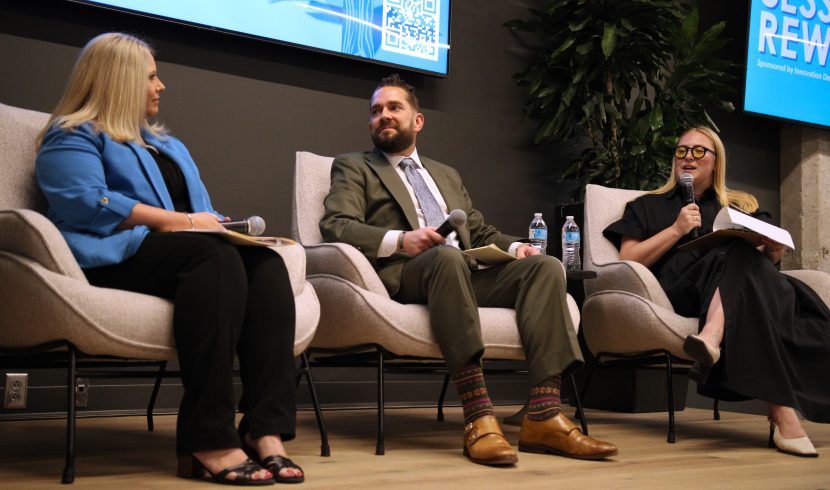
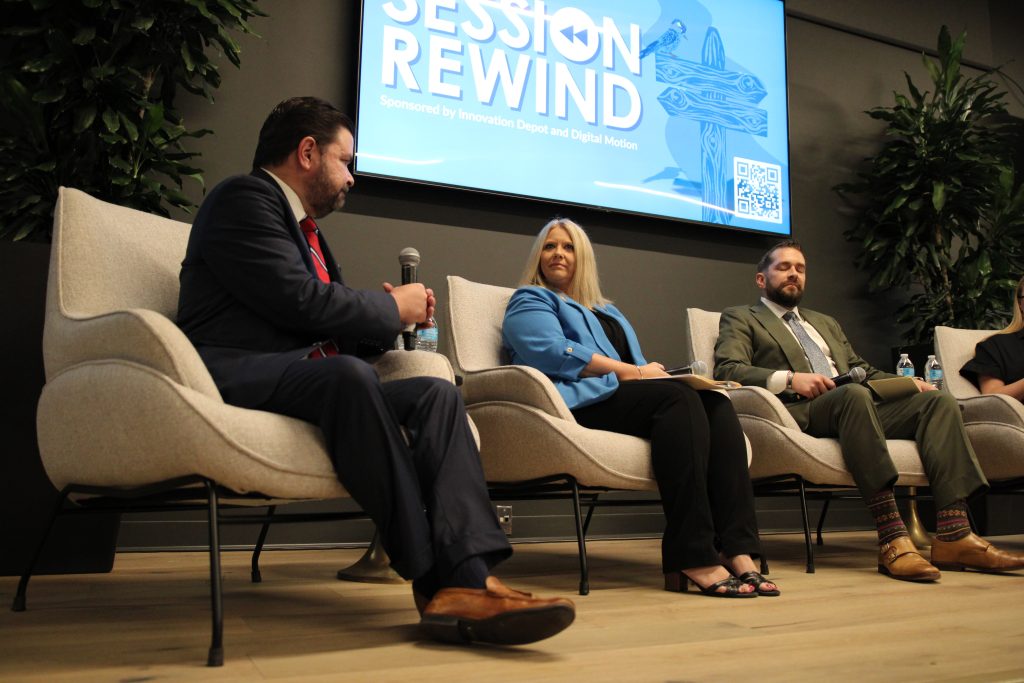
BIRMINGHAM, Ala. — Alabama lawmakers, advocates and industry leaders gathered in Birmingham Friday to reflect on how public opinion and special interest groups shaped the 2025 legislative session, from helping shape a new law affecting pharmacists to nearly advancing sentencing reforms.
Organized by Peritus Public Relations and hosted at Birmingham’s Innovation Depot, “Session Rewind,” saw participants including Rep. Neil Rafferty, D-Birmingham, Sen. April Weaver, R-Barfield, and advocacy leaders and industry representatives supporting everything from criminal justice reform, immigrant rights and employer-sponsored health insurance. ADN Publisher Todd Stacy was also a panel participant, offering the media’s perspective on the session.
A major topic of discussion was access to health care, something Alabama’s rural communities have grappled with for years amid rural hospitals’ growing financial struggles, which both Rafferty and Weaver named as among the top issues brought to them by their constituents. That public sentiment, both said, played a partial role in two legislative successes this year; the establishment of a rural hospital tax credit program, and a portable benefits program for gig workers.
“Rural hospitals are huge employers in a rural area, they are huge economic drivers, so it’s so important for us to protect them, not only for those issues, but for providing health care,” Weaver said, speaking of the motivation behind Senate Bill 105, which established a program for individuals and organizations to receive dollar-for-dollar tax credits for donating to rural hospitals.
The bill had been several years in the making, and was originally filed by Rep. Terri Collins, R-Decatur, who carried the bill again this year and whose bill ultimately was the one to reach Gov. Kay Ivey’s desk this year.
“So this year we had some great success,” Weaver said.
Another response, at least in part, to public sentiment was Senate Bill 86, which creates a system for independent contractors like Uber or Door Dash deliver drivers, who as contractors are not eligible for employer-sponsored health insurance, to maintain a portable benefits package that follows them across different independent contract jobs. It was carried by Sen. Arthur Orr, R-Decatur, in the Senate, and in the House by Rafferty.
“This is another way for a growing sector of the workforce to be able to provide for themselves and their families,” Rafferty said. “This is a big, big thing, this is huge because Alabama is actually one of the first states to put this into place.”
House Bill 445, which will impose regulations on consumable THC products like delta-8, was another bill that came about in part due to concerns from the public. Legislative action sometimes lags behind public outcry, however, Stacy suggested, who noted that a bill didn’t draw considerable attention until it neared final passage.
“What you’re hearing in terms of public reaction is (from) the people who rely on these products, the same people that would have relied on legal medical cannabis products,” Stacy said, noting that legal, medical cannabis, while legal since 2021, has yet to reach patients due to ongoing litigation.
“That’s one I could see influence the next legislative session because you could see some changes to that law.”
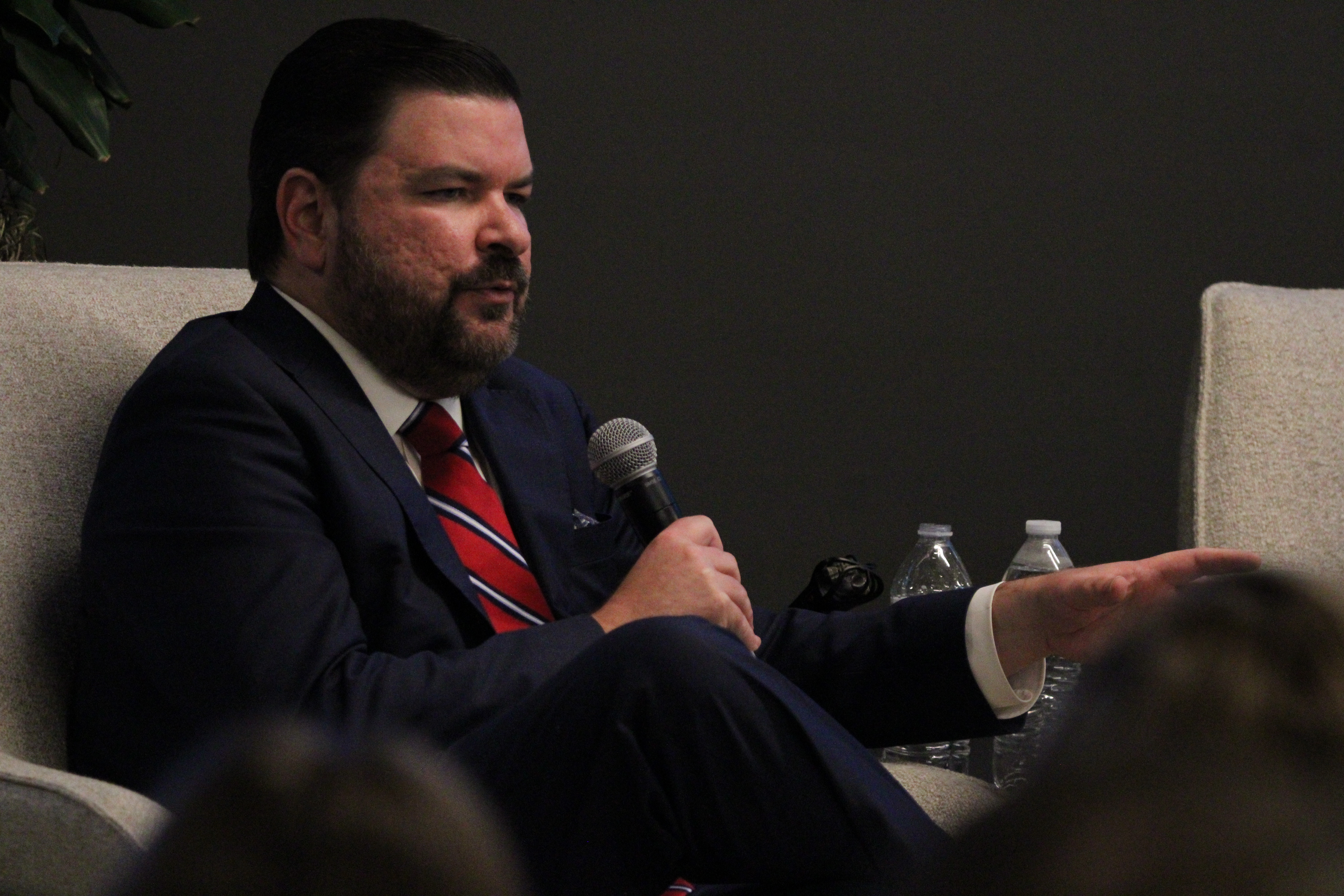
A second panel comprised primarily of state leaders who lobby on behalf of specific issues was kicked off by Carlos Javier Torres, director of policy for the Hispanic Immigrant Center of Alabama, or HICA, speaking on his organization’s efforts to push back against around a dozen bills filed this year targeting illegal immigration.
“We held the line, and only two of those bills passed and were signed by the governor,” Torres said, speaking of Senate Bill 53 and 63, which criminalizes the transportation of undocumented immigrants into the state and requires law enforcement to collect DNA samples from undocumented immigrants, respectively. “They are challenging, they can be destructive, but part of the process is going through these motions.”
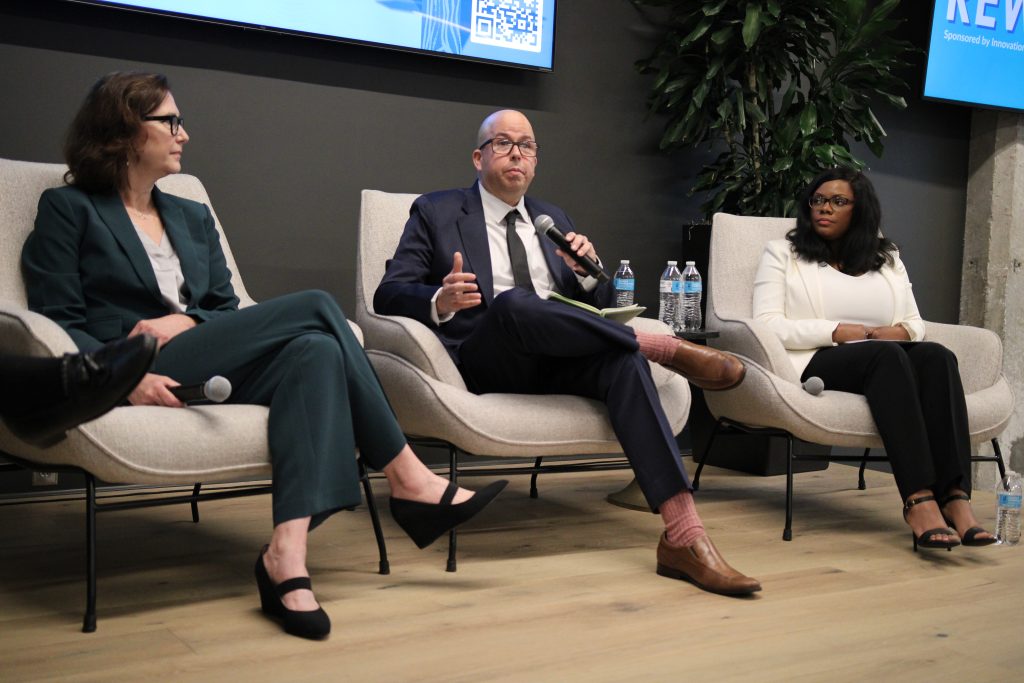
Carla Crowder, executive director of Alabama Appleseed, a nonprofit organization that advocates for marginalized groups, noted that her organization ended up shy of a total victory on a sentencing reform initiative this year, though through its advocacy efforts, amassed strong, bipartisan support that boded well for future attempts.
“My proudest moment (is) we secured bipartisan support, Gov. Ivey’s support, and sponsorship of Sen. Will Barfoot (R-Pike Road), a conservative powerhouse down in the Senate, for what we call the Second Chance bill, and it would have opened up opportunities for about 160 people whose crimes involved no physical injury to get reviewed by a judge,” Crowder said.
“…To get that kind of bipartisan support, to get groups like Alabama Policy Institute, faith leaders, former judges and Supreme Court justices to support us was a really big deal, so we’re going to keep working on that issue.”
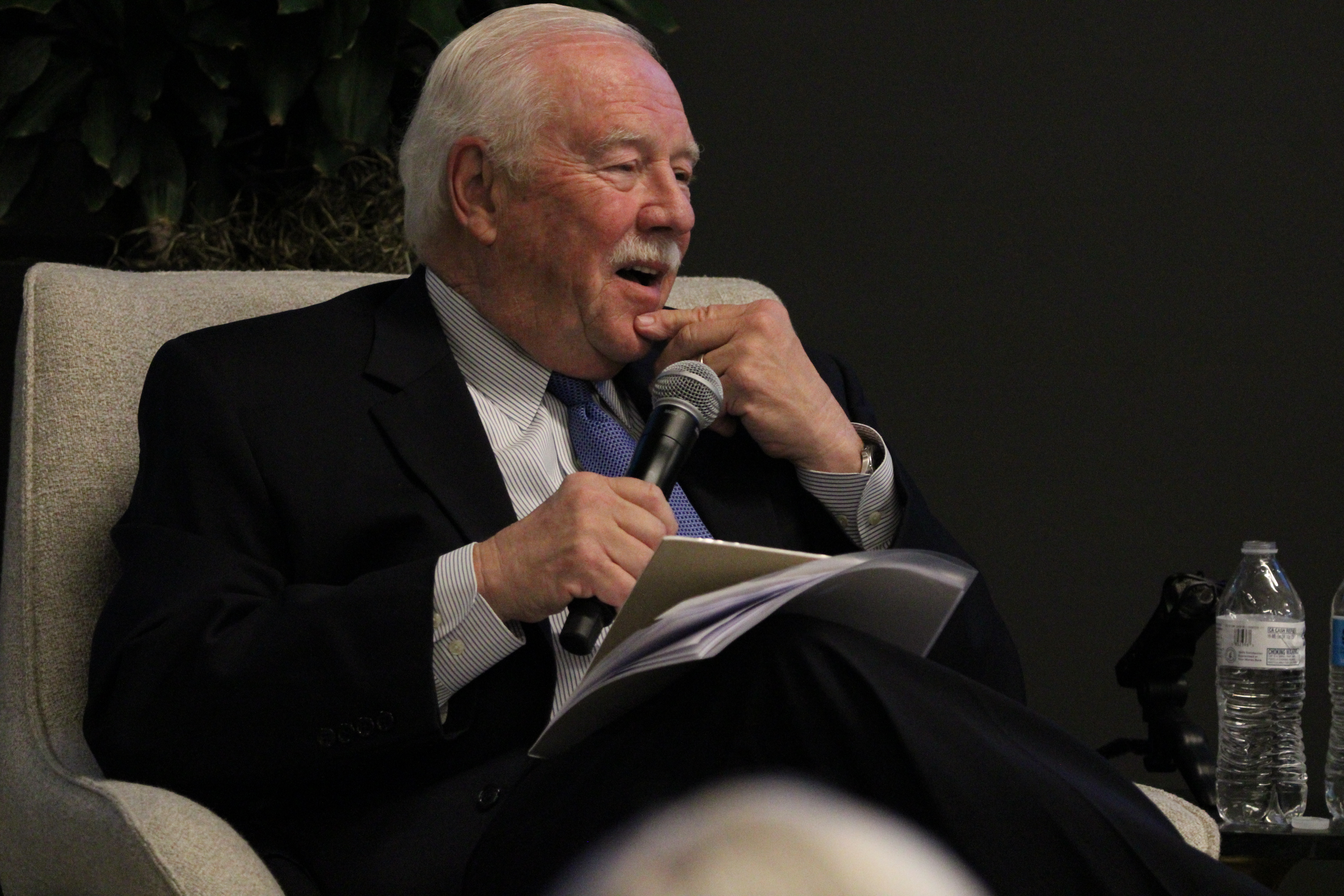
Sometimes, lobbyists and special interests groups don’t just miss out on a legislative win, but must settle for working to lessen the impact of a bill that they believe to be harmful to their industry’s interests, as was the case for Robin Stone, executive director for the Alliance of Alabama Healthcare Consumers, a nonprofit organization that advocates on behalf of employers for employer-sponsored health care.
Stone, who represents both public and private employers, pushed hard against Senate Bill 252, which will now require pharmacy benefit managers to reimburse independent pharmacies for drugs at higher rates.
“In terms of wins (in) the Legislature, sometimes you have a pretty big win, and sometimes you take your small wins when you can get them,” Stone said. “This year, (there was) a bill that we worked on that provided more compensation to pharmacists; it was very controversial.”
As it became apparent that the bill would ultimately pass, however, Stone said that through his organization’s efforts, the bill was modified to be more favorable to employers as it relates to health care, cutting the financial impact to employers nearly in half.
“At the end of the day, we were able to make some changes in that bill that greatly reduced the cost of the legislation,” he said. “So that’s a pretty big win. It’s not a completely satisfying win, but you take what you can get sometimes and you move on to fight another day.”