
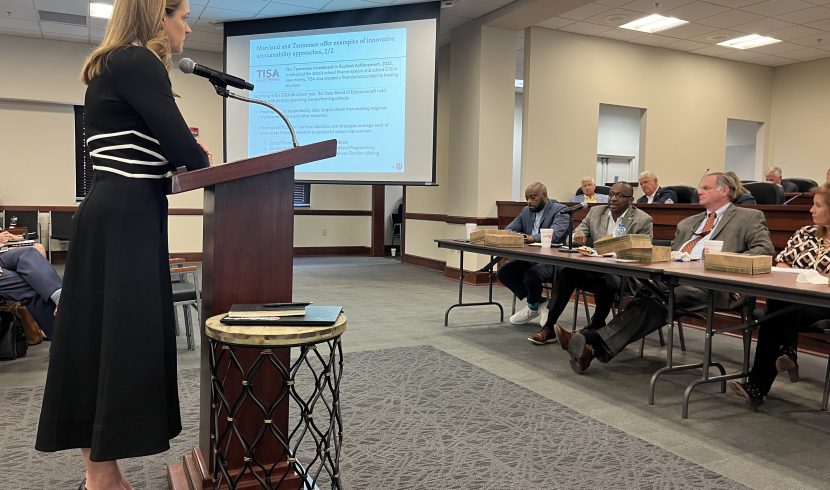
MONTGOMERY, Ala. – Alabama lawmakers got a first look at what a new K-12 school funding formula could look like during a joint legislative task force meeting on Tuesday.
The new model would provide more funding for students with challenges like poverty, disabilities and English as a second language. It could also provide additional money for public charter school students and gifted education, too.
The Legislature earlier this year began studying the possibility of changing the decades-old way the state funds public schools. Some of the comments and concerns at the State House meeting included how much a student-need based formula would cost and whether any school systems would lose state funding.
Senate Education Budget Chairman Arthur Orr, R-Decatur, said the way Alabama currently funds schools is not working.
“The current formula doesn’t address student need,” Orr said at the State House meeting. “In other words, it just gives funding based on (student) head count, more or less.”
“Those that have greater educational needs, our English learners, our students with a disability, poverty, etc., require more support to meet their academic goals and require greater investment of our taxpayer dollars.”
According to the analysis by Bellwether Partners, which has worked in other states to modernize their school funding formulas, Alabama provides no targeted funding to address challenges related to student poverty.
Bellwether’s Jennifer Scheiss told committee members that research shows student-weighted funding better meets the needs of students and that additional spending targeted to address a student’s needs produces better academic outcomes.
“That’s where you get the biggest bang for your buck, based on the research base currently,” she said.
There is additional line-item funding not included in the state’s primary funding mechanism for schools to provide services for “at-risk,” English learner and gifted students, but that is nowhere near the level it should be for students to be successful.
Alabama’s current state funding mechanism, called the Foundation Program, was created in 1995 and uses the previous year’s student count to provide school districts with money for salaries for teachers, principals, assistant principals, counselors and librarians along with textbooks. Funds for classroom and library materials are also included.
House Education Budget Chairman Danny Garrett, R-Trussville, said a set of ground rules governs whether lawmakers move forward. Rules include that no school district would lose per pupil funding, that local tax money is not a part of the new formula, that a new formula must provide more flexibility for local officials to use funding as needed, and that new funding must better meet the needs of students.
More targeted spending is possible
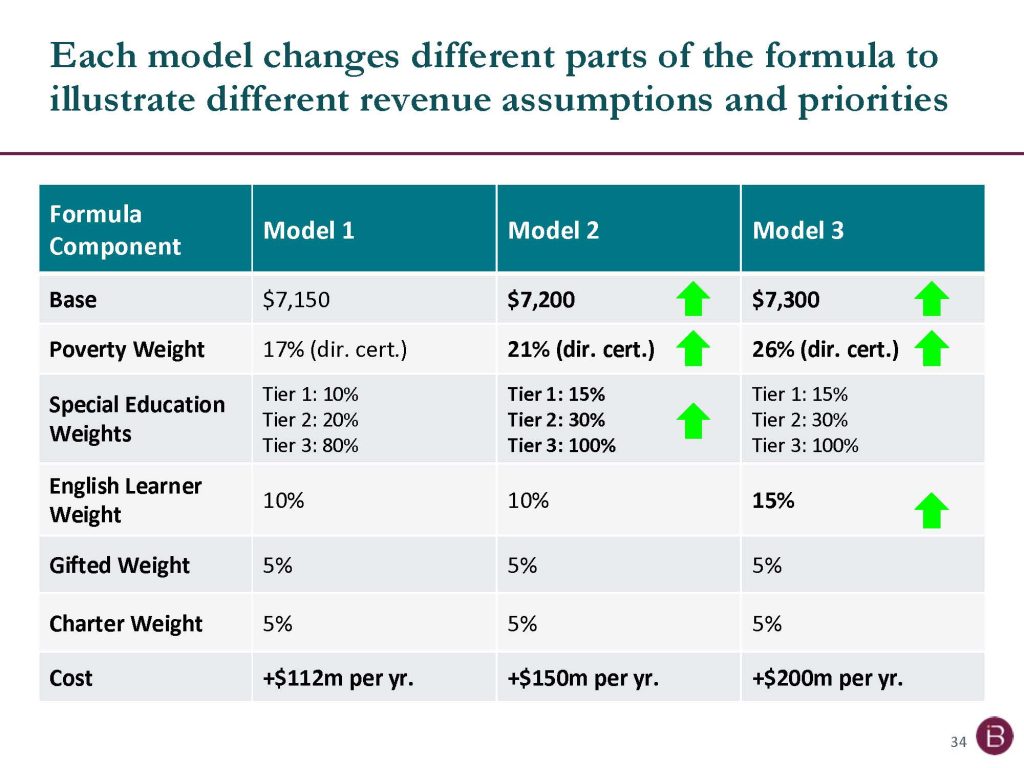
Under the proposed student-weighted formula, Alabama would need to spend more money to fund K-12 schools, experts said. That amount could be between $112 million and $200 million more than current funding levels, based on models shared with lawmakers.
The good news is that Alabama can afford it, Legislative Fiscal Officer Kirk Fulford said. Fulford said his revenue projections were based on average growth in recent years but acknowledged he couldn’t make long-term predictions about what might happen with the economy.
“As long as you continue to receive more than you’re spending, you’ve got excess money to be able to do a lot of things,” Fulford said.
Fulford said the Educational Opportunities Reserve Fund, a savings account for excess revenue, created by lawmakers in 2023, will have more than a billion dollars in it.
“One of the allowable uses of that money is for transformative changes in education,” he said. That money could be used during a transition from the current Foundation Program formula to a student-weighted one.
All presentations are posted on the Legislative Services Agency’s website, can be seen at this link and are shared at the end of this article.
Scheiss then gave lawmakers a better look at how funding would be calculated, sharing three models, or examples, of what funding might look like and how changing the weights for various student needs changes the amount the state provides in funding.
“All of these models are illustrations, not recommendations,” she said. “Our goal here today is to kind of show you what’s possible and get your gears turning so we can then get input and feedback for any possible future modeling that we might do.”
A student-weighted formula starts with a base amount – which has not yet been determined, according to Garrett – that all schools receive for each student. Base amounts for the models were set at $7,150, $7,200 and $7,350 for comparison.
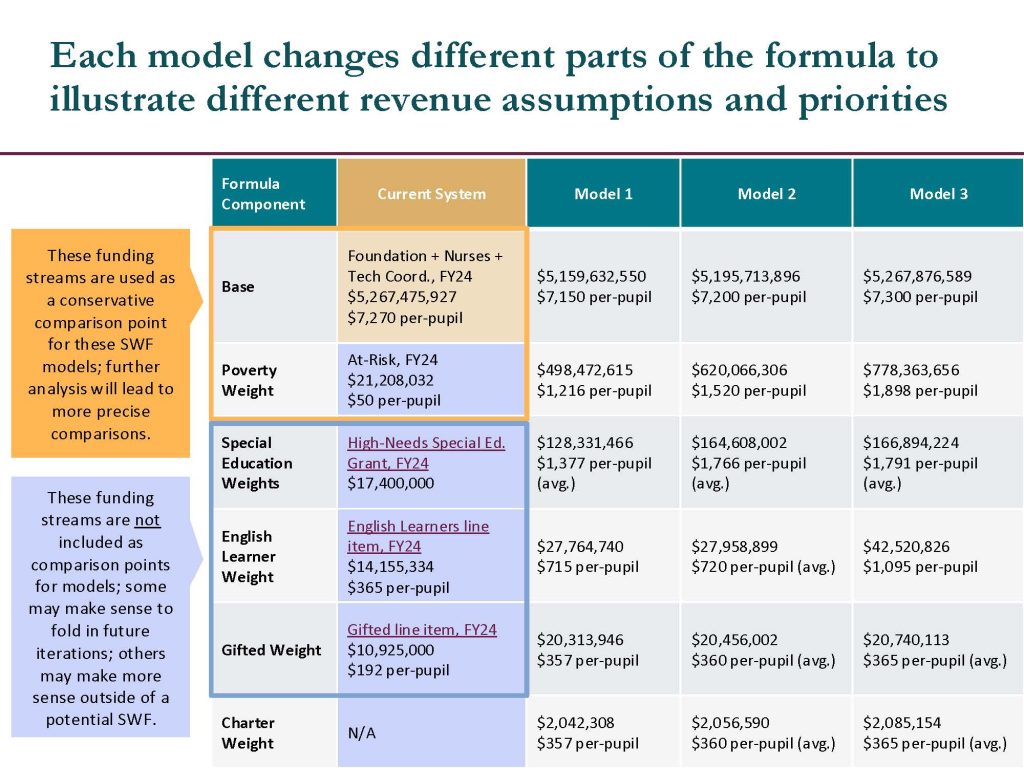
The model then considers a student’s needs which add funding to the base. She showed varying percentages, or weights, for students in poverty, students with disabilities, English learners, gifted and charter school students in each of the three models.
While all Alabama school districts would see an increase in state funding in models 2 and 3, some districts – those with students with more needs – would see a bigger increase in state funding than those with fewer needs.
In closing comments, Garrett reminded lawmakers that 45 states have student-weighted funding formulas.
“It just stands to reason that if we continue to fund the way we fund, we’re going to continue to see similar results that we’ve seen in the past,” he said.
Sen. Bobby Singleton, D-Greensboro, said he is optimistic about the potential impact of student-based funding on educational equity. Singleton represents school districts with some of the highest levels of student poverty in the state.
“This is the best refreshing conversation that I’ve had about education in being able to say no child will be left behind if you choose to go down these roads,” he said. “We’re finally going to get an opportunity to make sure that all of our kids are getting the best that we can offer them in the state of Alabama.”
Rep. David Faulkner, R-Mountain Brook, represents some of the wealthiest school districts in Alabama where residents pay high property taxes and local funding is used to improve educational offerings.
“They’ve made the case that we need to be looking at our funding, and I think it’s good what we’re doing,” Faulkner said. “The devil is going to be in the details.”
“The key now is going to be those weights,” he said. “It’s probably the biggest question: Where the weights are (set).”
After the meeting, Orr told reporters while it’s time to consider a new funding model, he is concerned about whether Alabama can increase and sustain funding at that level, pointing out that few of the current Senate and House budget committee members experienced the “dark days” of the Great Recession and the strain it placed on state budgets.
“Who knows what the economy will be,” Orr said, referring to projections of long term revenues.
Sales tax revenue was down in fiscal 2024, ADN previously reported. And income tax receipts were down in October, the first month of fiscal 2025.
The committee plans to meet again in early December and will submit a report to the Legislature in February.
The earliest a new formula could be put in place is during the 2027 fiscal year, which starts Oct. 1, 2026, Orr said.
K12 Ed Funding Study Commission – Nov. 12, 2024 by Trisha Powell Crain on Scribd