
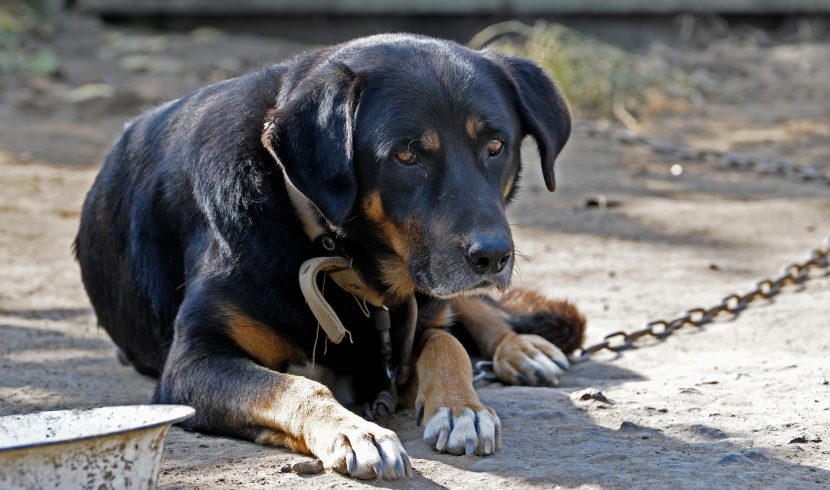
MONTGOMERY, Ala. – As the legislative session winds to a close, advocates of Beau’s Law are urging lawmakers to bring the bill requiring minimum care standards for outdoor dogs to the House floor for a vote.
The Senate passed Senate Bill 361, sponsored by Senate President Pro Tem Garlan Gudger, R-Cullman, by a vote of 28-1 last month. A House committee advanced the bill to the full House on March 18 with a few changes, but the legislation has yet to appear on the House’s calendar.
Advocates say it’s crucial to pass the legislation this session to avoid future harm to animals kept outside, but the time to do so is waning. There are three legislative days remaining.
What would Beau’s Law do?
Beau’s Law would make keeping a dog outside without adequate food, water and shelter punishable by a Class C misdemeanor. The legislation was inspired by the namesake dog, Beau, who was outside in cold weather with only cardboard for shelter.

Per the bill, an adequate shelter has a roof, walls and a solid floor and is large enough to allow a dog to stand up and move around.
It also forbids Alabamians from tying a dog to a stationary object like a tree, stake or structure without a trolley system for long periods of time. It bans logging chains and choke or pinch collars as ways to tether dogs as well.
A person who violates any of the standards set in the bill would be responsible for the full cost of boarding and veterinarian care for the dog and would be guilty of a Class C misdemeanor. Additional offenses would carry a charge of a Class A misdemeanor.
The bill exempts several situations from the tethering and confinement standards, including temporary instances like running into a grocery store and grooming. Hunting, service and working dogs would also be excused from the standards.
Law enforcement officers who have probable cause that someone has violated these standards of care could order the owner to change the dog’s living conditions or remove the dog if they believe the animal’s life is in danger.
The House’s committee substitute exempts commercial dog breeders from the law and allows animal control officers to remove dogs in addition to law enforcement.
What’s next for SB361?
The Greater Birmingham Humane Society, which has been a vocal proponent of the bill, is holding a press conference on Tuesday morning on the State House steps to call for a floor vote.
On social media and its website, GBHS, under CEO Allison Black Cornelius, has repeatedly urged community members to call their representatives in support of the bill.
Organizers of the event said that Gudger and Rep. Phillip Ensler, D-Montgomery, will speak at the event. Ensler is the sponsor of a House companion bill.
Gudger and Ensler have both indicated their support for the bill to move forward to a House floor vote.
“No matter how long and hard it takes, I will not stop fighting until the Alabama legislature passes Beau’s Law,” Ensler said in a statement.
Gudger shared a video of his own dog on Sunday and asked for help in supporting the legislation.
Celebrating Titus today. Our family hasn’t been the same since we brought him home from our Cullman County Animal Shelter. Thank you @millyspetbakery for his special cake!
Please help our current State Bill, Beau’s Bill SB 361, to give cats and dogs a voice pic.twitter.com/kp1pOlGHLS
— Garlan Gudger Jr (@GarlanGudgerJr) April 5, 2026
Opposition to Beau’s Law
The bill isn’t without its opponents, though.
The Alabama Farmers Federation and the Alabama Cattlemen’s Association, two organizations with powerful lobbies in the State House, are strongly against the bill.
Brian Hardin, ALFA’s external affairs department director, called SB 361 “a bad bill” in a recent newsletter.
“This is the kind of government overreach farm groups have been fighting in Washington and liberal states for decades,” Hardin said. “This legislation uses language identical to laws that banned agricultural practices in other states. Animal rights groups are unapologetic about their agenda to dictate how families and farmers care for their animals.”
Hardin encouraged all ALFA members to call their representatives to voice their opposition to the bill. The organization has more than 350,000 members, according to its website.
The organization also published talking points against the bill on its website, including that the bill criminalizes common practices and establishes subjective standards.
“The bill’s language is vague and broad, opening the door to further regulation for farmers and landowners,” Hardin said in a different newsletter. “Many of the bill’s requirements are left to interpretation by animal control officers, and it attempts to criminalize humane practices commonplace in rural areas. Farmers are stewards of both the land and the animals in their care, including their dogs. Animal cruelty is already illegal — this bill is another example of government overreach that goes too far and infringes on the rights of private individuals.”
The ACA also encouraged members to express opposition to their representatives in a newsletter.