
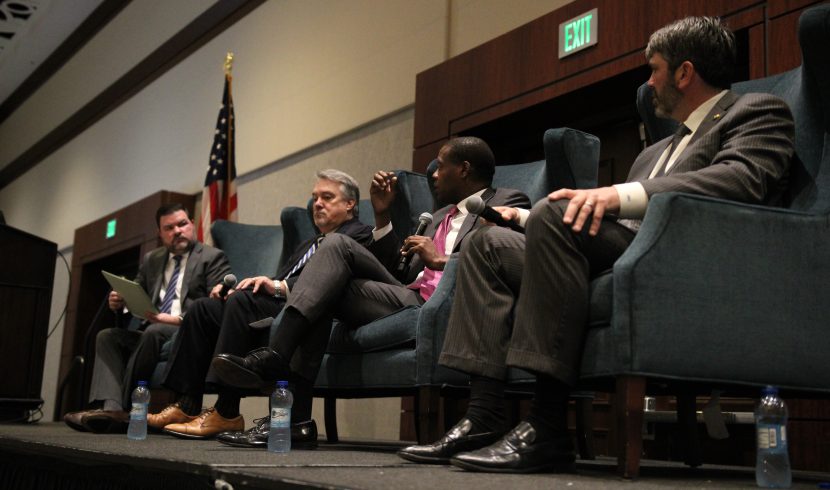
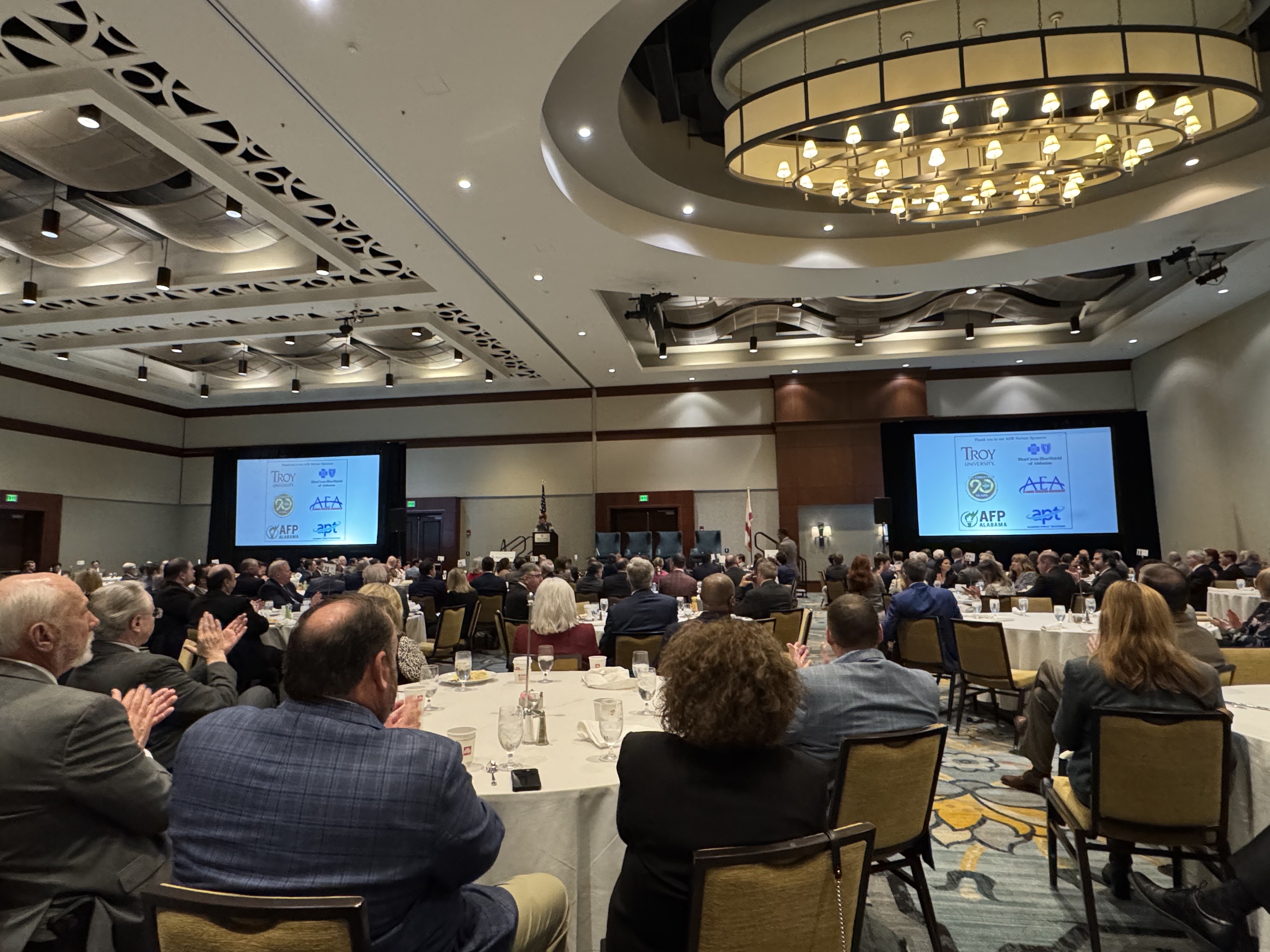
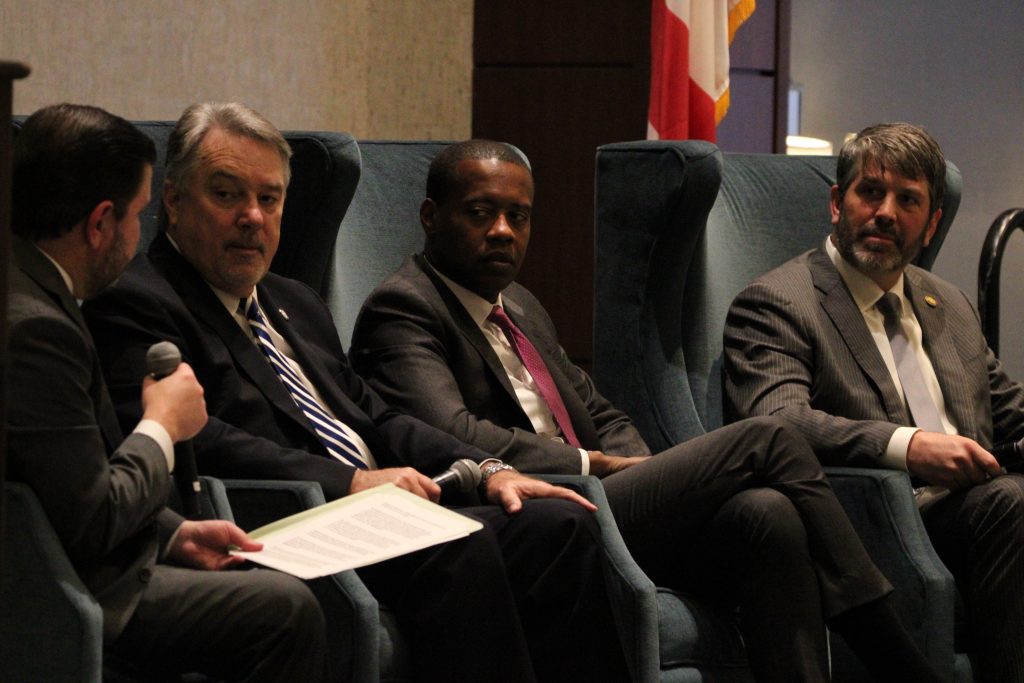
MONTGOMERY, Ala. — Reducing crime is a priority for both Gov. Kay Ivey and legislative leadership this legislative session. Beyond improving communities, low crime rates are an economic development driver, legislative leadership said Wednesday at the Alabama Daily News Legislative Issues Breakfast.
“If you look at what goes on when you have violent crime, your ability to recruit industry goes down,” said House Speaker Nathaniel Ledbetter, R-Rainsville. “Your ability to shop locally decreases, you lose revenue off of that, and your property values go down, so it does affect the economy.”
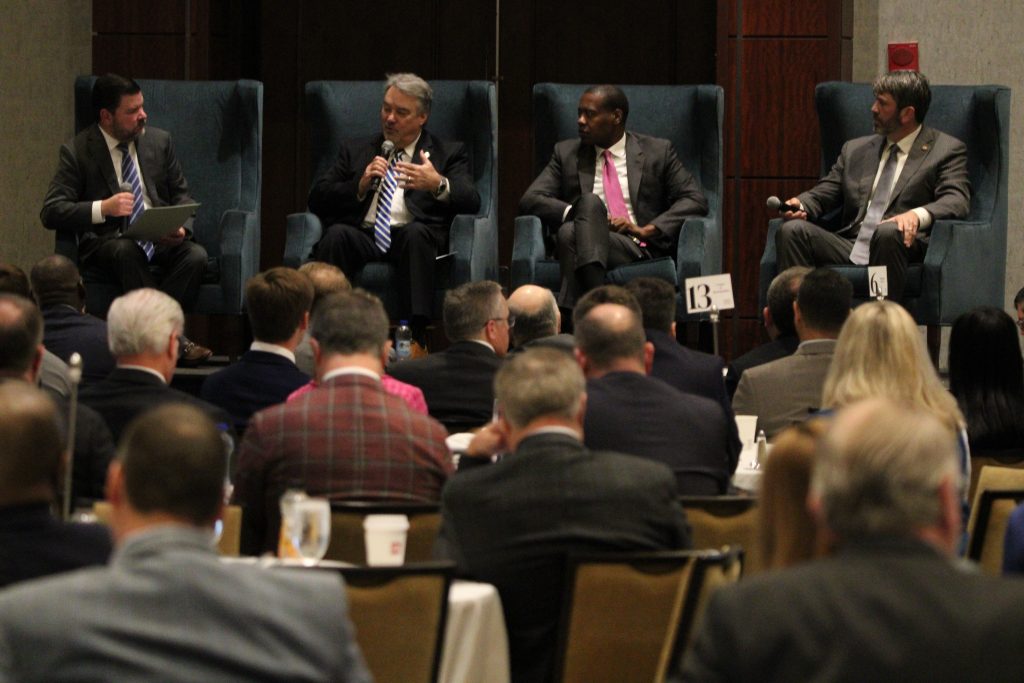
Ledbetter previously said legislative crime package would include proposals to help with police recruitment and retention, measures to expand crime suppression units, and increased penalties for gun crimes. Ivey expanded on what the bill package would include at her State of the State address on Tuesday.
Rising instances of gun violence in the state, particularly in metro areas such as Birmingham and Montgomery, are what ultimately led Alabama lawmakers, in a bipartisan effort, to begin crafting the package early last year.
House Minority Leader Anthony Daniels, D-Huntsville, said it was likely that Republicans and Democrats could work together on the bill package. He did note that additional details were needed before fully committing to support the package in its entirety as some of the bills have yet to be filed in the Legislature.
“… At the end of the day, every person in every community wants to be safe,” Daniels said. “So we recognize that and it’s something that has to be addressed, but I do think that there has to be not just boots on the ground, but we have to invoke technology.”
He also said that he hoped technology could be incorporated into the state’s effort to address crime.
“Right now, there are some cities across the country that use drones to respond to a 911 call, and those drones are able to give law enforcement that’s en route the intel that they need on the ground before going into that situation,” Daniels said. “So there is technology we could implement.”
The state’s tax cut on overtime pay was also essential to boosting the state’s economy, Daniels said. Widely supported and passed into law in 2023, the tax cut, introduced by Daniels, was originally estimated to cost the state around $34 million for fiscal year 2024, but was found to have cost $230.7 million through September of last year.
Despite the higher-than-expected cost, Daniels has argued for state leaders to make the overtime tax cut permanent and spoke to the cut’s net benefit to the state’s economy.
Alabama Daily News Publisher Todd Stacy asked the legislative leaders how they might advance President Donald Trump’s goal of boosting domestic energy production, among his key campaign pledges. Senate President Pro Tem Garlan Gudger, R-Cullman, said not only did Alabama have the ability to lead the nation in energy production, but that doing so was another key component to growing the state’s economy.
“We have natural resources, and we should be one of the first states that are at the forefront,” Gudger said. “We need more energy; it produces jobs, and that is a part of economic development, so I think that we’re primed and ready to be number one in the nation.”
Three more ADN Legislative Issues Breakfasts are scheduled:March 5, education and workforce development; April 9, veterans’ affairs and mental health; May 9, health care.