
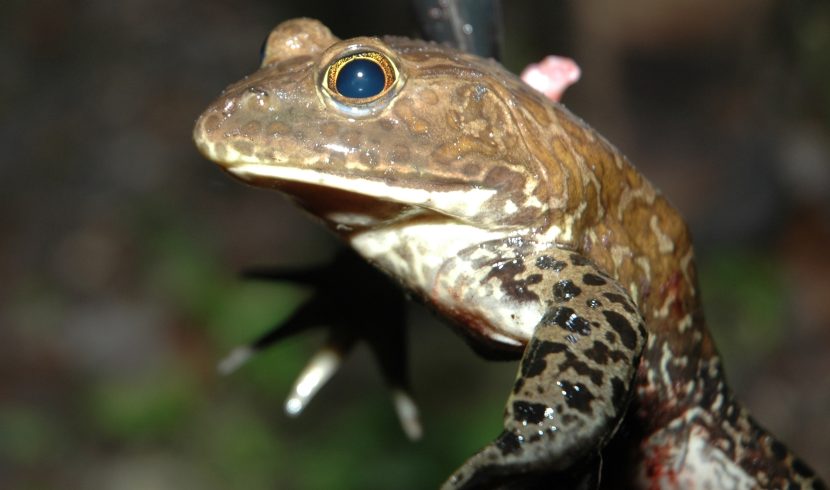
Little breeze stirred on this sweltering, humid night where even the air seemed to sweat as we hunted a bellowing beast capable of jumping more than 10 times its own length and swallowing creatures nearly its own size.
In the foreboding darkness, every object and sound seemed dangerous as we navigated through a wet labyrinth of black water and sucking mud. In the cloaking blackness, skeletal trees looked like long-fingered giants reaching out for a snack. Fallen trees resembled dinosaurs struggling to climb onto soggy banks. Real massive reptilian monsters lived in this swamp. Bull alligators grunted their territorial warnings not to approach too closely as our tight light beams punctured through gripping darkness.
Fortunately, the voracious predators we sought seldom weigh much more than a pound or measure significantly longer than a foot. In Alabama, people can catch bullfrogs and pig frogs all year long day or night. Each person can keep up to 20 frogs from noon one day until noon the next day. Pig frogs resemble bullfrogs, but don’t quite grow as large and show narrower more pointed snouts than their cousins.
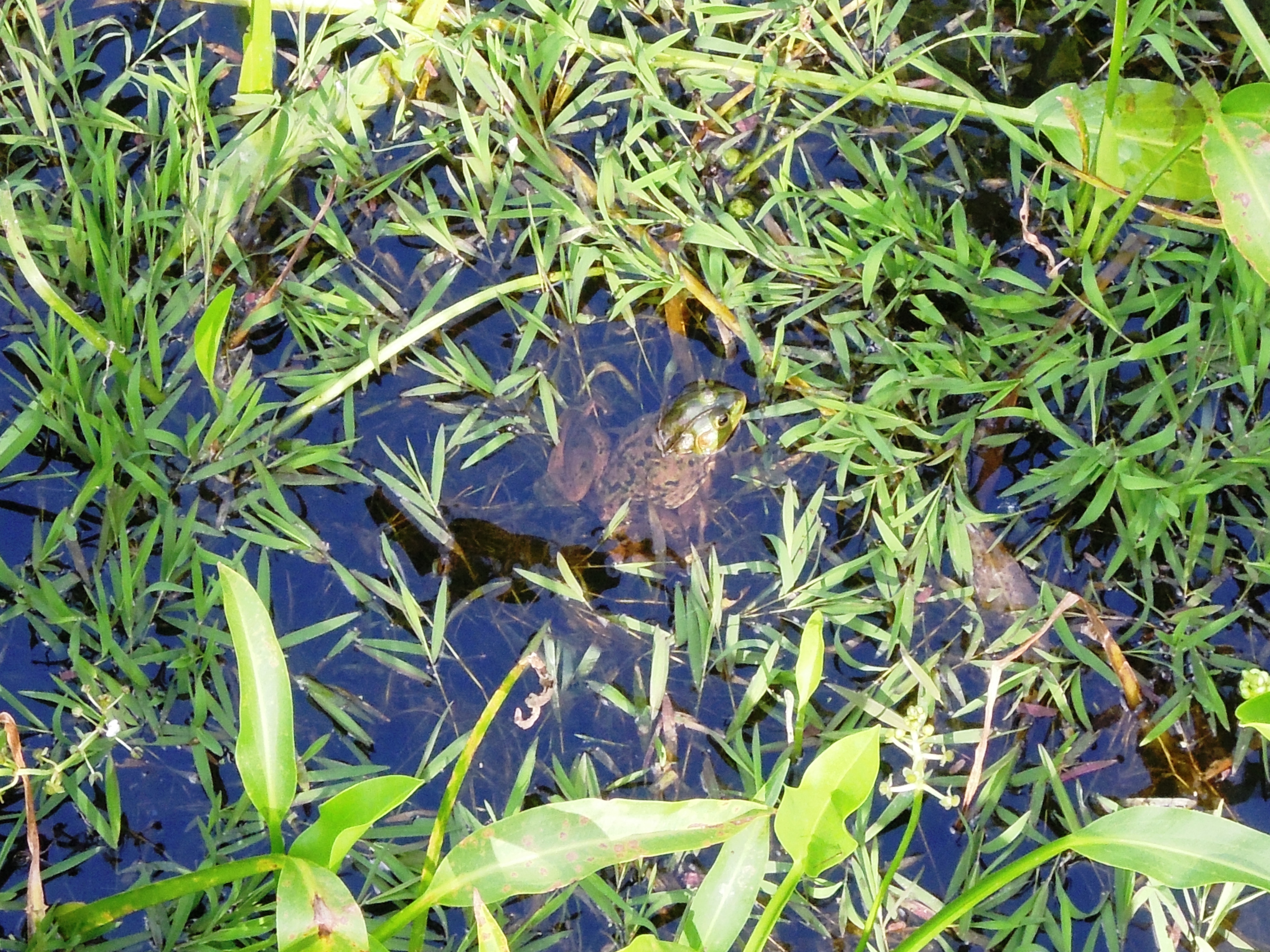
The nocturnal amphibians generally become more active on hot summer nights. They will eat almost anything they can swallow. Frogs sit on shorelines waiting to snatch anything that passes too close. Any rivers or lake shorelines in Alabama can provide great places to catch the insatiable croaking critters.
Most froggers slowly cruise along in small boats scanning the shorelines, lily pads, matted weeds and other likely spots. When a powerful light beam illuminates a frog, its chin and throat shine bright reflections. The frog’s eyes appear like two dots hovering over a cottony splotch.
Shining a light in a frog’s eyes temporarily stuns it so it freezes, allowing people to approach close enough to catch it with mechanical spring-loaded grabbers, gigs, nets or other devices. Some people grab them by hand. However, more than humans could want a froggy meal. Before grabbing anything, look very closely around the area. A venomous snake, alligator or snapping turtle might also want a frog meal.
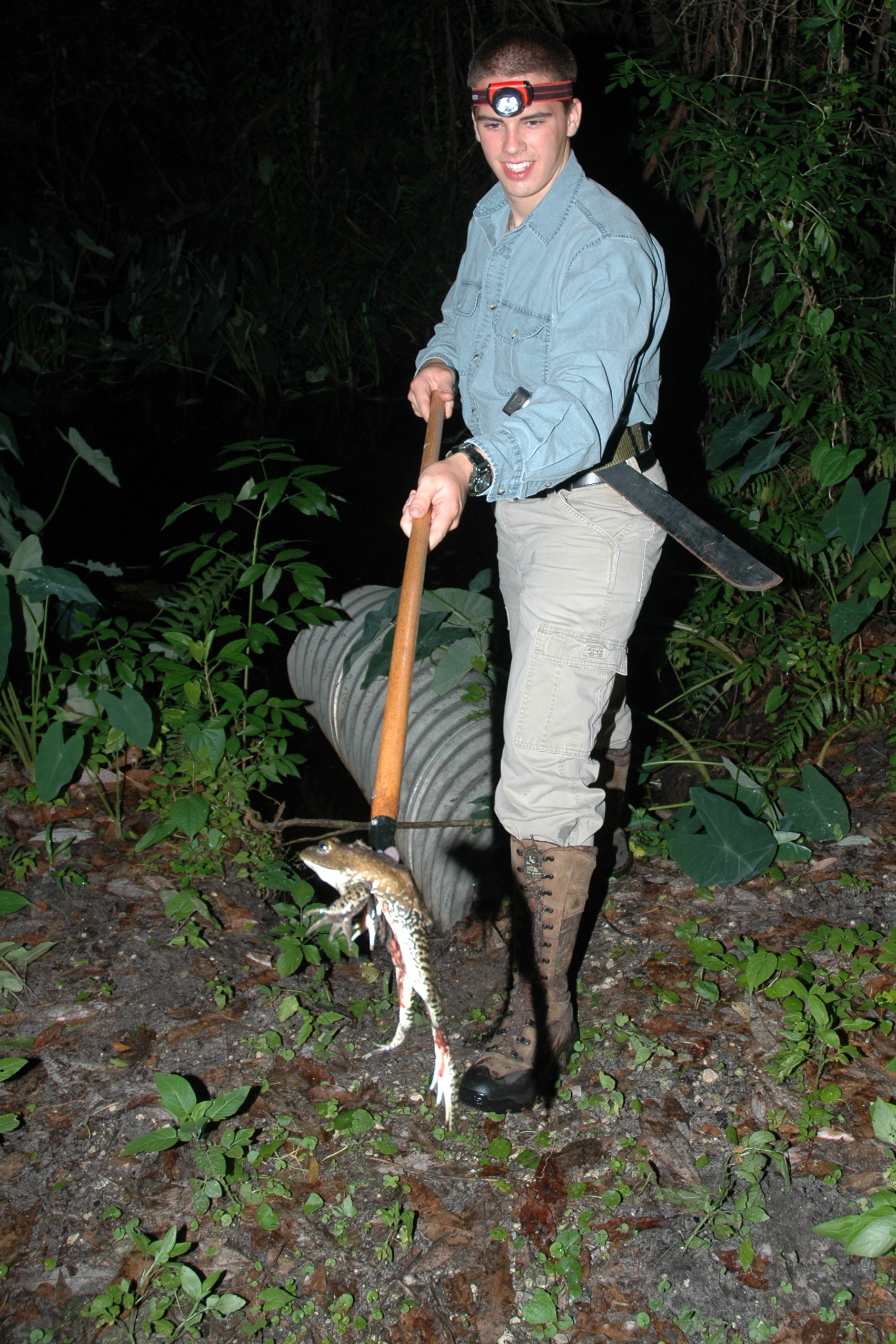
Frogging provides a fantastic way to take children on an outdoors adventure and build great memories. Long ago, Dad and I would fish until sundown. If we caught enough fish to eat, we lit a fire on the shoreline. We cut sticks and roasted the fish over the fire, telling stories as darkness enveloped us. With our stomachs full and the night creatures tuning up for their cacophonous evening symphony, we embarked upon our second wetland adventure by hunting frogs.
In many places, froggers on foot can also jump into the action. Frogs can live in the smallest habitats, if it remains reasonably wet. Small forest streams and isolated ponds can hold numerous bullfrogs. Irrigation ditches create outstanding frog habitat.
Where I grew up, many roadside ditches held water most of the year. Some became raging torrents after a significant storm. During dry times, frogs frequently congregated in slightly deeper pools at the base of culverts or where two ditches intersected. The biggest, wisest bullfrogs always sat in culvert openings. When frogs sensed danger, they jumped deep into the culvert where we couldn’t get to them.
On hot evenings, I walked along these roadside ditches looking for the delectable amphibians. Sometimes, a friend and I worked as a team. One person shined light into the frog’s eyes to keep its attention while the other crept up behind it to catch it.
One of the better places to catch frogs in my neighborhood, a fairly wide, shallow, weedy drainage ditch ran through the property of a crusty old veteran. He always welcomed my forays. The ditch created excellent bullfrog habitat, perhaps too good!
“Those *&^% things croaking loudly all night long keep me awake,” the salty veteran muttered. “Come onto my property anytime you want and catch them all!”
I didn’t catch them all, but I regularly made significant dents in the local amphibian population.
Sometimes we “fly fished” for frogs. Attach a red cloth or piece of yarn to a small hook or tie on a fishing fly. Of course, people can also use natural bait like a worm or cricket, but color or bait choice really doesn’t matter. Even if a bullfrog just stuffed something huge into its mouth, it still can’t resist snatching a succulent insect flying within lethal range of its tongue.
“Fly fishing” for frogs requires stealth and teamwork. One person sneaks up on a frog without spooking it. That person illuminates the amphibian from the front to hold its attention. The “angler” stealthily approaches the bullfrog from behind. With a long rod, the angler dangles the bait a few inches from the frog’s face to simulate a flying insect.
As the “insect” taunts it, the frog instinctively shoots out its tongue to pluck the bug from the air and suck it into its mouth with the hook. A large, agitated bullfrog hooked on light tackle jumping around puts on quite a fight and an amazing show.
After a good adventure, a mess of tender frog fried legs covered in spices makes a delicious meal. However, yellowish-white nerves run down the length of each leg. Even when severed, these nerves remain sensitive and active, something my dad and I discovered by accident after one nocturnal adventure. So did my mother!
After each swamp adventure, we kept the frogs in an ice chest or damp sack overnight until we could clean them the next day and make them ready for the frying pan. When Mom dropped the disembodied legs into the hot grease, they vaulted from the frying pan toward her face. Apparently, that touched a nerve in my mother as well. She rather loudly and vociferously announced her displeasure at our oversight!
Mom didn’t mind frying frog legs for us, but she always made extra sure we used a needle-nose pliers to remove the nerves first. I don’t think my hearing quite recovered yet even after all these years.
An avid sportsman, Felsher is professional writer, photographer and radio show host who has written thousands of articles for many publications. He’s always looking for ideas or outdoors adventures that will make good stories. Contact Felsh at [email protected] or through Facebook. He also hosts an outdoors tips show for WAVH FM Talk 106.5 radio station in Mobile.