
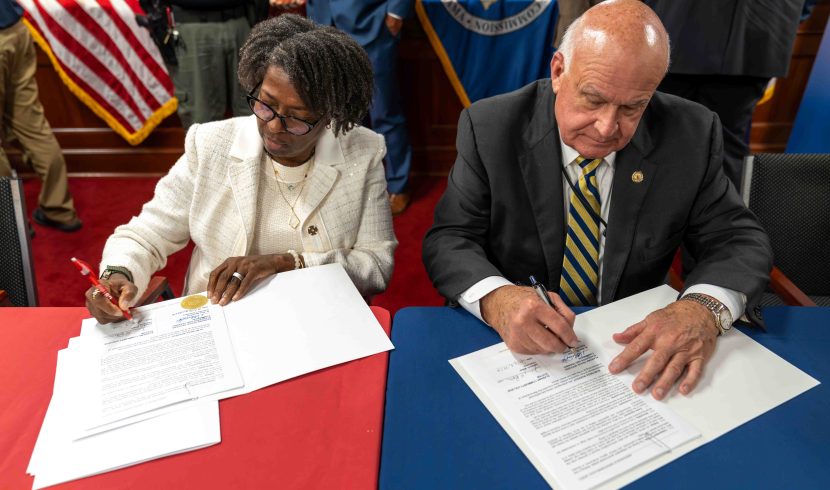
BIRMINGHAM, Ala. – Criminal justice students at participating Alabama community colleges will be able to earn law enforcement certification while completing their degrees under a new agreement announced Thursday by the Alabama Community College System and the Alabama Peace Officers Standards and Training Commission.
The program is intended to address a growing shortage of qualified law enforcement officers while reducing hiring and training costs for police and sheriff’s departments.
The new pathway changes the order in which recruits can obtain certification. Under the traditional process, a law enforcement agency must hire a recruit, give the recruit a provisional appointment and pay for academy training.
Eligible community college students will instead be able to serve as volunteer student reserve police officers, complete an approved training academy and earn APOSTC certification while pursuing an associate degree in criminal justice.
Participating colleges will not seek reimbursement from agencies that later hire those students, a provision intended to make recruitment less costly for smaller police and sheriff’s departments.
“By bringing together the ACCS and the APOSTC, this initiative strengthens the pipeline of qualified candidates, reduces the cost of onboarding new officers, and helps agencies fill vacancies more quickly,” Rep. Russell Bedsole, R-Alabaster, said.
ACCS Chancellor Jimmy Baker said the partnership would help prepare students for law enforcement careers.
“Together with APOSTC, we will help develop the next generation of law enforcement professionals with the education, character, and leadership needed to earn that trust,” Baker said.
Rep. Rex Reynolds, R-Huntsville, a former police chief, also pointed to the program’s potential effect on recruitment.
“This will clearly increase our ability to recruit young law enforcement professionals,” Reynolds said.
Eligible students must be at least 19 years old and enrolled in a criminal justice program at a participating community college. They also must pass a physical ability test and a comprehensive pre-appointment background investigation.
Fifteen of Alabama’s 24 community colleges offer an associate in applied science degree or short-term certificate option in criminal justice or law enforcement.