
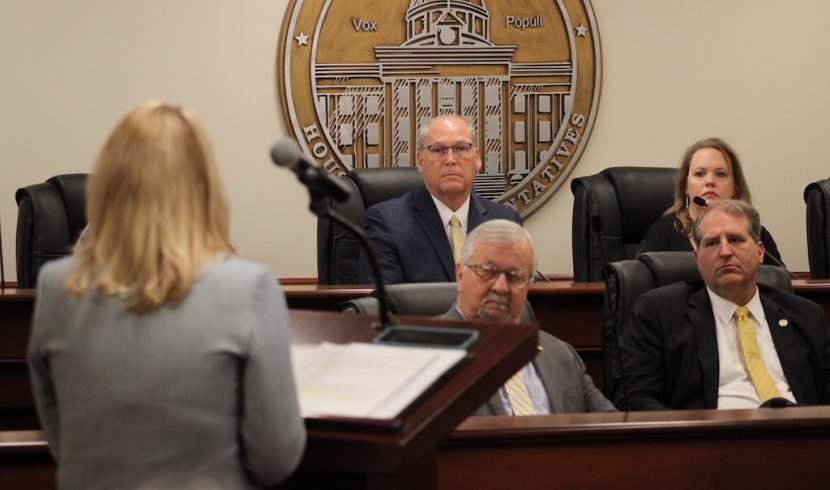
MONTGOMERY, Ala. — The Alabama Joint Health Committee will hear a presentation Wednesday from both Arkansas and North Carolina state lawmakers – and one former Arkansas state government official – on how they navigated Medicaid expansion there.
The presentation, according to Alabama Hospital Association Deputy Director Danne Howard, will see the Arkansas delegation “share their perspectives, experiences and the benefits their states have seen post-expansion,” she told Alabama Daily News.
Giving the presentation will be Republican North Carolina State Rep. Donny Lambeth, North Carolina Sen. Jim Burgin, Arkansas Sen. Missy Irvin, chair of the Senate Health Committee, and Cindy Gillespie, former Arkansas Department of Human Services secretary, the equivalent position to Alabama’s Medicaid commissioner.
Alabama remains one of just ten states that have yet to expand Medicaid in some form under the Affordable Care Act, and currently has among the strictest Medicaid eligibility requirements in the country. States that expand their Medicaid programs by increasing the income threshold for eligibility receive significant federal funding to help offset costs, though Gov. Kay Ivey and the Republican-controlled Legislature have for years been skeptical about if those offsets can fully meet expanded costs.
In January, however, Alabama House Speaker Nathaniel Ledbetter, R-Rainsville, floated the idea of expanding health care coverage during a Montgomery Chamber of Commerce event, albeit through a less traditional private-public partnership model, much like the Arkansas Health and Opportunity for Me program.
The ARHOME program’ expansion model was sufficient to meet the Affordable Care Act’s criteria for Medicaid expansion, and thus, entitled the state to federal funds.
Unlike more traditional Medicaid expansion programs, however, which typically see those federal dollars directed toward the respective state’s Medicaid agency, the ARHOME program instead diverts those dollars to private insurance companies.
Following Ledbetter’s remarks, state lawmakers, including a number of Republicans, were briefed on a new plan to expand Medicaid through a private-public partnership titled ‘ALL Health,’ created by the AHA. Howard said that under the plan, Medicaid expansion would not cost the state a dollar for a minimum of five years, though predicted federal assistance would likely make expansion cost free for a period of ten years.
The AHA gave a presentation to the House Health Committee last year on a similar topic, though with a greater focus on who exists within the health coverage gap, which refers to those who make too much to be eligible for Medicaid, but too little to afford health insurance in the private market.
“This one is very different; last year, we explained the coverage gap to help lawmakers understand who that involves and why it is important,” Howard told ADN.
Before the COVID pandemic, Alabama had among the highest uninsured populations in the nation, which in 2019 was 17.5%, compared to the national rate of 13.6%.
Uninsured rates dropped in the state with the introduction of federal protections in 2020, protections that prohibited people from being booted from Medicaid. But since those expired last year, about 186,000 Alabamians have lost Medicaid coverage.
That meeting last year saw Howard break down for lawmakers who existed in what is known as the health coverage gap.
Howard explained that through its research, the AHA had determined that approximately 400,000 Alabamians are uninsured. Were the state to expand its Medicaid program, however, with Alabama being among ten states that have yet to do so, close to 300,000 Alabamians would become eligible for Medicaid.
Of those close to 300,000, Howard said that more than half of them were employed, and that 70% of them lived in a home with at least one working adult. More than 50,000 of Alabamians that fall in the health coverage gap, Howard said, were working in either food service or retail, though included trades of all kinds, from barbers to ride share drivers.
Even since being briefed on the AHA’s ALL Health plan, Republican lawmakers have remained tight-lipped as to whether they would throw their support behind such a proposal.
Wednesday’s meeting is at 9 a.m. in Room 807 in the State House in Montgomery.