
WASHINGTON — Sweeping bipartisan legislation to overhaul college sports passed out of a Senate committee Thursday.
The Protect College Sports Act still faces hurdles, though, before it becomes law, as the wealthiest athletic conferences, the SEC and Big Ten, are opposed to the bill. Former Auburn football coach U.S. Sen. Tommy Tuberville, R-Ala., is also against the measure.
The Senate Commerce Committee advanced the measure on a 19-9 vote with 13 Republicans and six Democrats supporting it. Two Republicans and seven Democrats voted against the bill.
The bipartisan bill would set a national framework for student-athlete compensation, limit transfers and restrict coaches from switching jobs during a season. It also would create limited antitrust protections for the NCAA.
“Athletes get real NIL certainty, medical protections, academic and scholarship protections,” U.S. Sen. Ted Cruz, a sponsor of the bill, said during a committee hearing. “Schools get enforceable rules and stability. Fans get stronger protections for rivalries, access to games and fair competition.”
Under the legislation, the four biggest athletic conferences, the SEC, Big Ten, ACC and Big 12, will be restricted from merging to create a super conference. The ACC and Big 12 were added to the restriction during revisions to the bill.
Lawmakers on both sides of the aisle have struggled to find the best solution to revamp college sports in the wake of the explosion of college athletes being able to earn money from their name, image and likeness.
The Senate’s bill sponsors, Cruz and Sen. Maria Cantwell, D-Wa., have highlighted how their legislation is the result of months of input and compromise to garner enough support for the thorny issue.
“This bill stands tall on behalf of athletes,” Cantwell said. “This is a landmark in the protections that it gives student athletes.”
The Senate’s Protect College Sports Act also aims to provide protections for women’s and Olympic sports and to guarantee scholarship and healthcare opportunities for student-athletes. Twenty-four collegiate athletic conferences, 267 colleges and universities across 49 states and Washington, D.C., including historically black colleges, have publicly supported the legislation, according to Commerce Democrats.
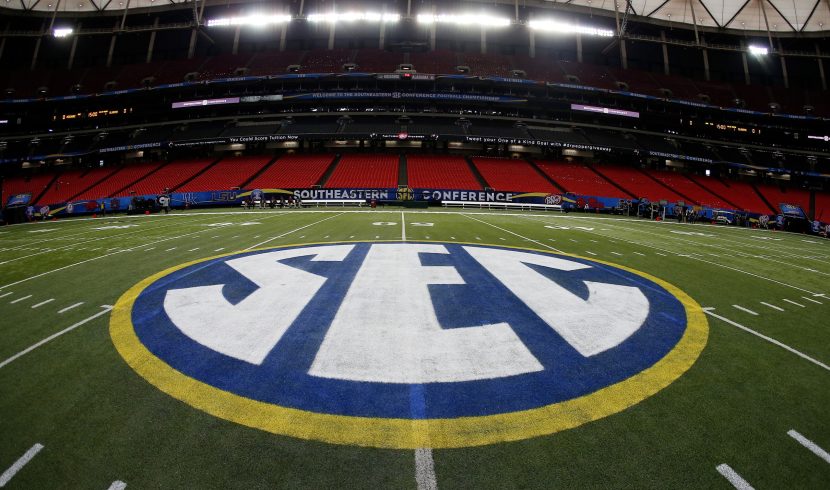
But on Thursday, the SEC and Big Ten reaffirmed their current opposition to the Senate bill.
“We have worked with both majority and minority staff to advance those revisions, which focus on better supporting student-athletes and stabilizing the college sports environment,” the conferences wrote in a joint statement. “We continue to believe revisions are needed to secure our support for the bill.”
The conferences have argued that the Protect College Sports Act does not do enough to preempt state NIL laws and provides too much authority to the federal government.
Tuberville stands opposed
Tuberville is also not a fan of the bipartisan legislation, arguing it tries to do too much to address the problems.
“It pulls the federal government deep into the day-to-day operation of college sports,” he said on the Senate floor Wednesday. “This is not the direction we should be heading.”
Instead, he’s pushing for his Student-Athlete Act, which is solely focused on eligibility and the transfer portal. His bill would restrict student-athletes to one transfer without a penalty. Any additional transfers would result in athletes sitting out a year.
It also would limit student-athletes to five consecutive years of eligibility regardless of injury.
“Congress should not decide how much money student athletes can earn,” the former football coach said. “That is not our job. Our role should be limited to setting clear rules for eligibility, transfers and scholarships, so student-athletes and families, coaches, and schools know what the rules are and can plan accordingly. “
On Wednesday, he asked the Senate to pass his bill via unanimous consent. But Cantwell and Cruz objected.
“It does nothing to address these larger issues of athletes’ rights, of women’s and Olympic sports, and the need for revenue,” Cantwell said on the Senate floor.
She also expressed concern that Tuberville’s bill leaves no exceptions for the five consecutive years of eligibility.
“If a student-athlete gets pregnant and needs to take time off, should they lose their eligibility for that?” Cantwell said. “If an athlete decides to go on a religious mission, should they lose their eligibility for that?”
But Tuberville argued that if the rules allow exceptions, it would create a “madhouse.”
The Protect College Sports Act now heads to the full Senate for consideration. It will need 60 votes to pass in the chamber. That’s why the sponsors of the bill said they put so much emphasis on the product being bipartisan. But it’s still unclear whether it can reach 60 votes and then also pass the House.
Last year, a House committee passed its own college sports bill, dubbed the SCORE Act, but the legislation has yet to get a floor vote. The Congressional Black Caucus came out against the bill recently and stymied its chances of passing the chamber.