WASHINGTON — Congress advanced a comprehensive bill to set national standards for student-athlete pay on Wednesday, backed by bipartisan Alabama lawmakers.
Dubbed the SCORE Act, the legislation would provide guidelines on name, image, and likeness, or NIL, deals. It passed out of two House Committees Wednesday in mostly party-line votes. The bill has some Democratic support, including from Rep. Shomari Figures, D-Mobile, who said it will help streamline the NIL process for students, universities and conferences.
The House Energy and Commerce Committee passed the NIL bill 30-23 with all Republicans voting for it and all Democrats opposed. From the Education and Workforce Committee markup, the bill passed 18-17 with one GOP member joining Democrats to oppose it.
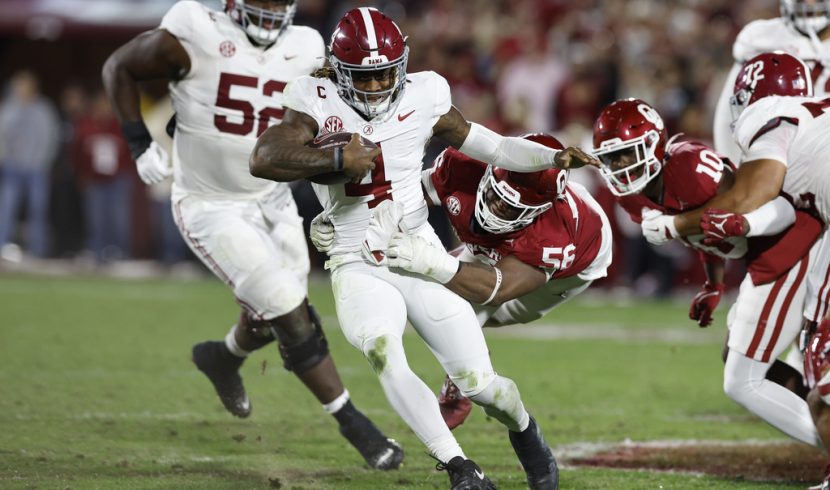
As a former walk-on University of Alabama football player, Rep. Gary Palmer, R-Birmingham, who sits on the Energy and Commerce Committee, said it’s important for college athletes to get paid without becoming employees, which the bill prohibits.
“What we’re trying to do here is meet the needs of the college athlete,” Palmer told Alabama Daily News.
Palmer introduced an amendment during Wednesday’s Energy and Commerce markup that would require student-athletes to make progress toward an undergraduate degree within five years to be eligible for NIL compensation. He said most student-athletes don’t pursue professional sports after college.
“We shouldn’t make the colleges an academic form of a minor league sports franchise,” Palmer told ADN. “It really should be about helping every athlete develop their full potential, whether as an athlete or academically, professionally, when they leave school.”
Palmer withdrew the amendment since the topic falls under the jurisdiction of the Education and Workforce Committee, but the conversation on how to ensure college athletes continue to pursue academic degrees will be ongoing as part of the bill, lawmakers said.
The Alabama Republican said he appreciated how Nick Saban emphasized the importance of academics when he was Alabama’s football coach.
“That ought to be the focus of every college and the treatment of their athletes to make sure whether they go to the NFL or the NBA or Major League Baseball, (or) whatever it is that that individual, male or female, leaves there equipped for life,” Palmer said.
The federal bill would overrule any state NIL laws. Student-athletes would be able to hire agents to represent them in NIL agreements. Agents would be required to register with an interstate intercollegiate college association, like the NCAA.
The SCORE Act also requires Division I schools to offer college athletes academic and health services.
Student-athletes would be prohibited from being employees of universities, conferences, or athletic associations.
Though the legislation has some bipartisan support, Energy and Commerce’s top Democrat said the NIL bill is “nothing more than a major giveaway to the National Collegiate Athletic Association and conferences.”
“The SCORE Act gives the NCAA and conferences nearly limitless and unchecked authority to govern how athletes get paid, if they can transfer schools, and how much time they can be required to spend training, traveling, and competing,” Rep. Frank Pallone, Jr., D-NJ, said at Wednesday’s markup.
Five attorney generals from Tennessee, D.C., Florida, New York and Ohio sent a letter to lawmakers Tuesday opposing the college sports legislation.
“The SCORE Act is a misguided effort that will enshrine in federal law the arbitrary and biased authority of the NCAA at its worst,” the attorneys general wrote.
UA Athletic Director Greg Byrne and the SEC commissioner previously expressed their support for the NIL bill. The SCORE Act will now move to the House floor.