
MONTGOMERY, Ala. — In last year’s $8.8 billion state education budget, lawmakers appropriated $6 million toward the Alabama STEM Council, an appointed body created by Gov. Kay Ivey in 2020 to improve STEM-related education, awareness and workforce development.
In an effort to update lawmakers on what their investment, as well as to urge their continued support, members of the STEM Council held an event last week at the State House in Montgomery, pledging continued success were adequate state funding to be continued.
An acronym for science, technology, engineering and mathematics, the STEM Council manages several programs and initiatives, all of which are centered around expanding STEM education, workforce training and careers.
“The progress is pretty breathtaking when you consider that four years ago, there was no STEM Council,” Lee Meadows, executive director of the STEM Council, told Alabama Daily News on Friday.
“In our first year, we had a $200,000 appropriation, that was it. Now, here we are with this $13 million portfolio, a team of six that will soon be seven, the programs are growing and pushing out across the state.”
Among the council’s initiatives include the creation of STEM Ecosystems, which are community-based training centers that partner with schools and organizations to provide STEM education and workforce training programs. Two regional STEM Ecosystems are currently under design in north and east Alabama, which will cover 10 counties.
Were Alabama lawmakers to maintain its funding for the STEM Council, Meadows said, its STEM Ecosystems could expand to cover an additional 19 counties.
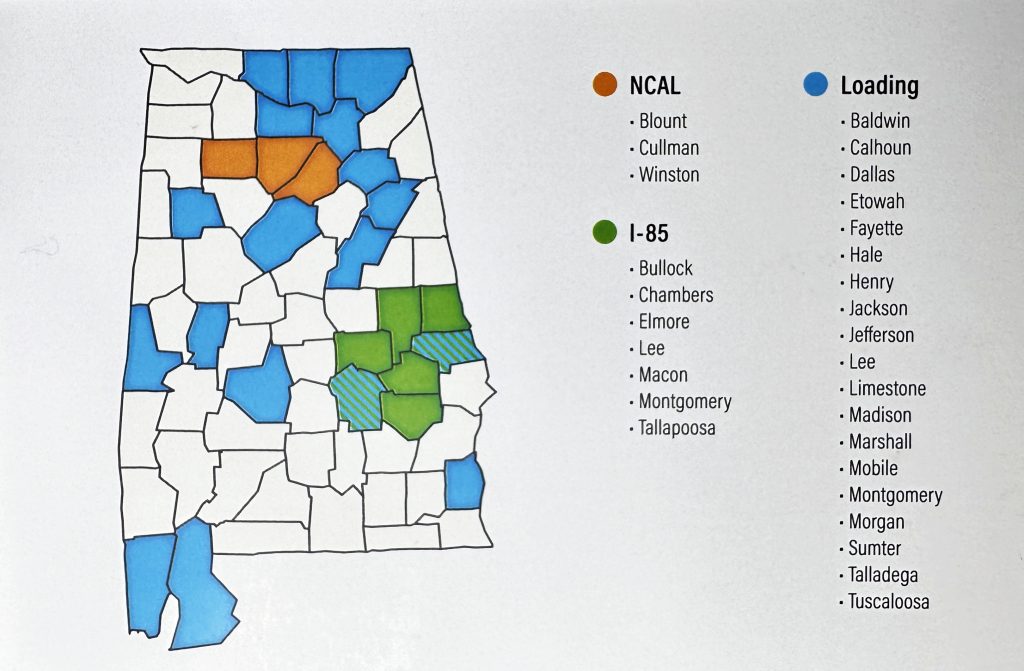
“One of our key goals is to try to get the regions that don’t have any activity, we want to change that,” he said. “We want to get STEM learning, STEM experiences and STEM workforce preparation to every kid in Alabama.”
Another one of the STEM Council’s initiatives include the establishment of UTeach programs at universities across the state, programs that allow for college students earning any STEM-related degree to also receive teaching credentials, with no additional costs or class time. In 2023 alone, the STEM Council helped launch six new UTeach programs, which are expected to produce around 250 new STEM teachers every year.
“Between the six new sites, we (currently) have 392 undergraduates majoring in STEM who are also exploring STEM teaching as a profession; that’s an unheard of number,” Meadows said.
The UTeach program, Meadows and others hope, will help put a dent in Alabama’s ongoing teacher shortage, particularly among math and science teachers.
Alabama lawmakers have already launched efforts to target this shortage, including with the 2021 TEAMS Act, which gave math and science teachers an additional $15,000 in pay annually, and an additional $5,000 for working in “hard-to-staff schools.” As of last year, however, the STEM Council still estimated Alabama to be short of up to 1,500 math and science teachers.
In the 2024 budget process, lawmakers preserved Ivey’s initial proposal to allocate $6 million to the STEM Council with little debate or opposition. Whether lawmakers will feel the same way in crafting the state’s 2025 budget remains to be seen, but Meadows is hoping the STEM Council’s initial success will help encourage continued support.