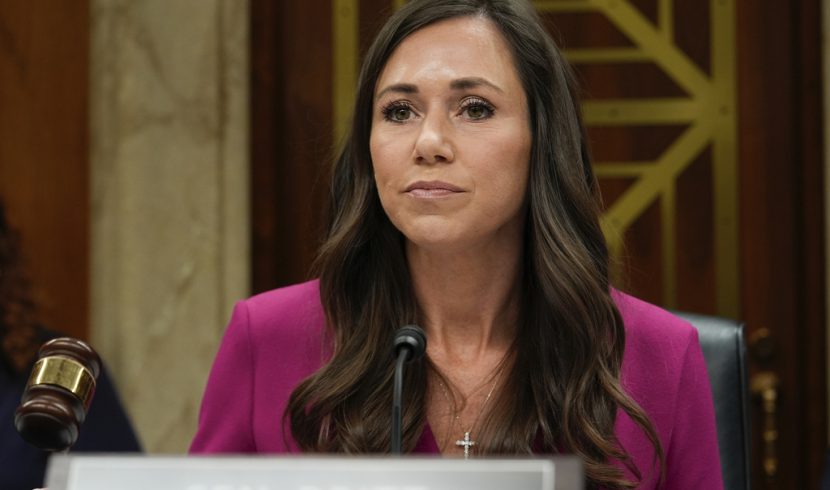
WASHINGTON — U.S. Sen. Katie Britt, R-Ala. has found herself at the center of key spending fights between the White House and Congress as the Trump administration has frozen and delayed federal funding that is central to Alabama institutions.
Most recently, Britt intervened to release funds for education and for the National Institutes of Health.
“When you’re looking at NIH, it is my belief, where there are life-saving and life-changing research, we need to see that through to fruition,” Britt told Alabama Daily News in an interview. “This is about cures.”
In a letter to the White House budget office on July 25, Britt led 13 other GOP senators to urge the administration to fully implement NIH funding appropriated in the fiscal year 2025 continuing resolution.
“Suspension of these appropriated funds – whether formally withheld or functionally delayed – could threaten Americans’ ability to access better treatments and limit our nation’s leadership in biomedical science,” the senators wrote.
Britt said she had a conversation with President Donald Trump about NIH funding, where he “reiterated his strong support for finding those cures.”
Days after the letter, a footnote in an Office of Management and Budget document led to the suspension of NIH funding for research grants, the Wall Street Journal reported. Sen. Patty Murray, D-WA, the top Senate Democrat appropriator, estimated that funding was worth $15 billion.
Once again, Britt was one of the people who intervened, Sen. Shelley Moore Capito, R-WV, said during a Senate appropriations markup last week.
“When the events of earlier this week occurred… I know Senator Britt was very active in having those decisions reversed,” Capito said during last Thursday’s markup.
The Trump administration appears to be listening.
Soon after the reports surfaced about that freeze, the decision was reversed.
And the administration confirmed to Britt that the issue of delayed NIH funding, as described in the letter, “has been resolved,” according to the senator’s office.
Being a mom is part of what has driven Britt to become a strong advocate for the research done through NIH.
“There are people out there who have gotten information about maybe their child, or themselves, a terminal illness or rare disease or whatnot,” Britt told ADN. “You want those parents, those people, to have every tool in their toolbox to help their child heal, to help their child live a long life, to help their child live another day, and I think that NIH has been so critical to that.”
She’s also motivated by how vital NIH funding is in Alabama. Researchers in the state received more than $380 million in fiscal year 2024, which led to $916 million in economic activity in Alabama. The University of Alabama at Birmingham ranks in the top 1% of all NIH-funded institutions.
“We want to make sure that investment continues to be there, and I am proud to have led the effort to ensure that it is,” Britt told ADN.
Before Britt led the letter about NIH money, she also joined with 9 other Republican senators to urge the White House to release education funds that were set to be given out right before the new school year, including about $70 million for schools and afterschool programs in Alabama. All of the funds were eventually released after pushback from Congress.
“I was proud to sign on to Sen. Capito’s letter, where we were urging the release of those funds to make sure that our students had what they needed throughout the summer and moving into the school year,” Britt said. “I was proud to see those funds released.”
Sen. Tommy Tuberville, R-Ala., also said he discussed getting the education funds released with White House officials.
The GOP-led letters directed to Trump administration officials, pushing back against moves to freeze and delay already appropriated funds, represent a small but significant way some Republicans are still getting their priorities funded, even while the administration aims to cut funding.
Some of the Senate’s funding bills for Fiscal Year 2026 have also bucked Trump’s efforts to widely slash federal spending. The Senate appropriations bill that funds NIH that passed out of committee with bipartisan support, including from Britt, boosts funding for the agency by $400 million, despite the administration’s proposed 40% cut to NIH.
But Britt has been supportive of the White House clawing back spending through a rescissions package. In July, Congress passed the package to roll back about $9 billion in foreign aid and public media funds that lawmakers previously appropriated.
“Creating accountability in this, and saying, if you spend these dollars outside of the mission in which they were appropriated for, then we will hold you accountable,” Britt told ADN.
“I think (it) is good for the appropriations process, and I think it is also good for the American taxpayer. It gives them more confidence that when we are doing our job, we are doing the proper oversight to make sure that those dollars are spent wisely.”