
MONTGOMERY, Ala. – With Alabama’s midterm election results certified, the stage is officially set for the next quadrennium in the Alabama Legislature.
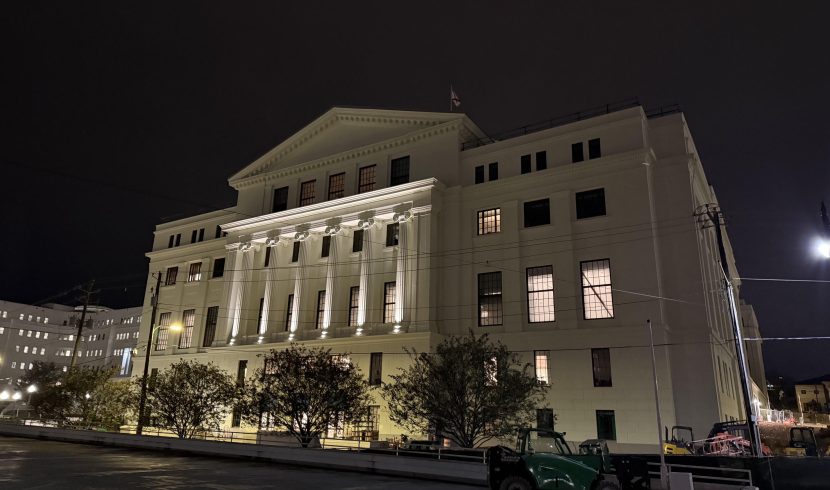
The Legislature, with 22 new lawmakers, will open debate next year in a new building for the first time since 1986.
Though Democrats flipped four seats, the Alabama Legislature was largely unaffected by the nationwide “blue wave” that saw Democrats win elections in Republican strongholds. Republicans in Alabama still maintain strong supermajorities in both chambers of the Legislature, and Gov.-elect Tommy Tuberville and Lt. Gov.-elect John Wahl are both Republicans.
Though there are many new faces, the turnover this election cycle – around 16% – was much smaller than the change in 2022. There were 37 new lawmakers in the State House to begin the last quadrennium in 2023, a rate of change of about 26%. There was no change of party balance between the end of the 2022 legislative session and the 2023 session, compared with the slight shift left this election cycle.
Here’s what we know so far about what to expect from the Alabama Legislature in 2027.
The Senate
The Alabama Senate had a turnover rate of around 17%, with six new faces entering the chamber for the next term.
Though Republicans comfortably maintained their supermajority, Democrats picked up two seats from north Alabama districts. And in the 35-member body, the impact of a two seat flip will be much more pronounced than in the 105-member House.
Democrat Rudolph Valentino Drake, a Navy veteran and former Department of Defense police officer, defeated Republican John Roberts in Senate District 2. The eastern Limestone County and western Madison County seat was left open after former Sen. Tom Butler, R-Madison, decided not to run for reelection.
Also joining the Senate Democratic Caucus is State Sen. Jared Sluss, a housing program coordinator. Sluss defeated incumbent Republican Sen. Sam Givhan, who had represented Huntsville-area Senate District 7 since 2018.
Beyond Democrats’ gains, the voters of northeast Alabama voted to send a rare independent candidate to the Senate. Jesse Battles, an independent, defeated incumbent Sen. Andrew Jones, R-Centre, after being removed from the Republican primary ballot by the Alabama Republican Party. The race was so close that it automatically triggered a recount, which took place on Wednesday. Battles re-emphasized his original intent to run as a Republican upon declaring victory but it remains unclear whether he will caucus with the Senate GOP.
Other newcomers include Republican Sens. Scott Ortis and Terry Waters, who each picked off an incumbent in the Republican primary in May. Ortis defeated Sen. Dan Roberts, R-Mountain Brook, while Waters beat out longtime Sen. Greg Albritton, R-Range, a powerful lawmaker who chaired the Senate General Fund budget committee.
The final “new” face in the Senate isn’t new at all. State Sen. Rusty Glover, R-Mobile, won his old Senate District 34 seat back running unopposed in the general election to replace Sen. Jack Williams, R-Wilmer, who ran unsuccessfully for Alabama commissioner of agriculture and industries. Glover previously served three terms in the Senate from 2006 to 2018 before running unsuccessfully for lieutenant governor.
Impact on policy
Just like in the previous four terms, if the Republican supermajorities in both chambers are united on legislation, there’s nothing Democrats or even the governor can do to stop them. But that’s not always the case, particularly on the issue of gambling. That’s because gambling bills require a constitutional amendment – needing three fifths majority to pass – and many Republicans don’t support expanded gambling.
The last time lawmakers made a major gambling push was 2024, when a plan authorizing a lottery, sports betting and casinos failed in the Senate 20-15, just one vote short. All “nay” votes came from Republicans, including former Sens. Tom Butler and Sam Givhan, whose seats are now held by Democrats.
Should there be another gambling push in 2027, the math in the Senate appears considerably more favorable to passage.
Other legislative items that require a three-fifths majority are the budget isolation resolution, which is required to move any bill before the budgets are dealt with, and petitions for cloture, which are used to end filibusters and call for a vote. Those measures require 21 votes to pass in the Senate, meaning Republicans could pass legislation even with dissent from three members of their caucus and Battles.
But with two more Democrats in the chamber, there could be more bumps in the road for controversial legislation.
Leadership
The Alabama Senate Republican Caucus renominated Sen. Garlan Gudger, R-Cullman, to lead the chamber as the Senate president pro tempore. Lt. Gov.-elect John Wahl, former chair of the Alabama Republican Party, will preside over the body.
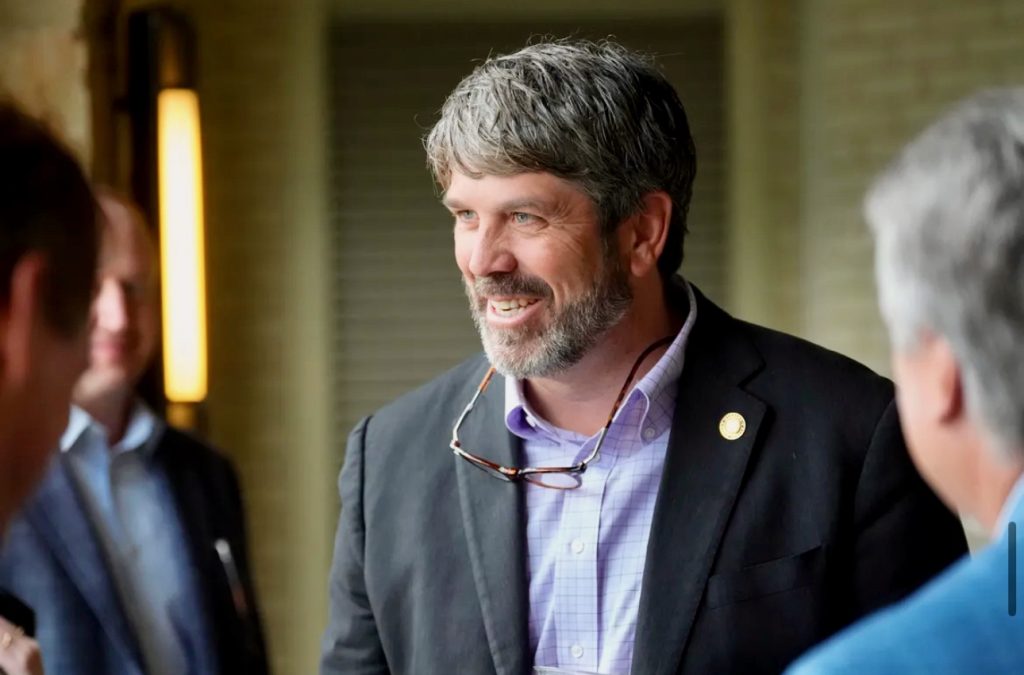
The caucus also made history by electing Sen. April Weaver, R-Brierfield, to serve as Senate majority leader, the first woman in Alabama history to hold that role.
There are also some major changes to committee leadership.
Gudger announced late Wednesday that State Sen. Will Barfoot, R-Pike Road, will assume the key role of Chairman of the Rules Committee. He takes over for State Sen. Jabo Waggoner, R-Vestavia Hills, who has served in the role for decades and will now hold the title of Rules Chair Emeritus.
The Rules Committee sets the daily agenda for the body, including which bills are considered and in what order. Barfoot previously chaired the Senate Judiciary Committee. That role will now be assumed by State Sen. Lance Bell, R-Pell City.
State Sen. Clyde Chambliss, R-Prattville, will serve as chair of the Senate Finance and Taxation General Fund Committee, which writes the state’s General Fund budget. Chambliss succeeds former State Sen. Greg Albritton, who was defeated for reelection in the primary.
Other changes include State Sen. Donnie Chesteen, R-Geneva, chairing the Confirmations Committee, which was previously chaired by Weaver. Chesteen’s previous committee, Education Policy, will now be led by State Sen. Keith Kelley, R-Anniston.
State Sen. Wes Kitchens will chair the Veterans and Military Affairs Committee, previously led by former State Sen. Andrew Jones, who lost reelection. State Sen. Matt Woods, R-Jasper, will chair the County and Local Municipal Government Committee, which was previously chaired by State Sen. Chris Elliott, R-Josephine. Elliott is expected to take a cabinet position with Gov.-elect Tommy Tuberville.
All other committee leadership positions are expected to remain the same, including State Sen. Arthur Orr, R-Decatur, continuing to lead the Senate Education Budget Committee for the third straight term.
Senate Democrats have yet to announce who will lead their caucus for the upcoming quadrennium.
The House
The House will welcome 16 new representatives for the next quadrennium. And just as in the Senate, Democrats picked up two seats.
Democrat Nell Brown beat incumbent State Rep. Leigh Hulsey, R-Helena, to flip House District 15, which includes parts of Jefferson and Shelby counties. Further north, Democrat Allison Montgomery defeated incumbent Republican State Rep. Phillip Rigsby, R-Huntsville, in House District 25. She is the first transgender lawmaker in Alabama’s history.
Democrats’ showing on Nov. 3 also included holding on to two seats the party took over during the previous quadrennium: Montgomery-based District 74 and Huntsville-area District 10.
Democratic Rep. Jasmyne Crimiel was elected in District 74 to replace former Democratic Rep. Phillip Ensler, who ran unsuccessfully for lieutenant governor. He flipped the seat in 2022, which at the time was the first flip in Democrats’ favor since 2010.
Rep. Marilyn Lands, D-Huntsville, held onto her seat after flipping it in 2024 amid fallout from an Alabama Supreme Court opinion that led clinics to temporarily halt in vitro fertilization procedures in the state.
Republicans also held onto a seat they flipped in 2022, with Rep. Rick Rehm winning reelection in the Wiregrass’ House District 85.
Four new Republican lawmakers earned their spots in the State House after challenging incumbents in the primary: State Reps. Maurice McCaney, Mike Elliott, Lloyd Peeples and Danielle Duggar. Democratic Reps. GiGi Hayes and Alicia Escott Lumpkin defeated Democratic incumbents in primary elections as well.
Six Republicans held onto seats occupied by Republicans who chose not to run for reelection, including Rep. Jody Linton, who took over former Rep. Rhett Marques’ seat in House District 91 after Marques, R-Enterprise, unsuccessfully ran for Alabama’s 2nd Congressional District instead of seeking reelection. The others taking over open Republican seats were Republican Reps. Patrick Johnson, Phil Segraves, Jeff Monroe, Bill Morris and John Knapp.
The retirement of Rep. Barbara Boyd, D-Anniston, made for the only open Democratic seat other than Ensler’s. Democratic Rep. Debra Foster will take over for Boyd in House District 32.
The new House will have 74 Republicans and 31 Democrats, a Republican supermajority encompassing around 70% of the chamber’s seats.
Republicans hold more than enough seats to pass bills on a party-line vote, with most legislation requiring a simple majority of 53 votes.
Democrats’ pickup of two seats leads them closer to blocking measures that require a larger majority, but the minority caucus still faces an uphill battle in stopping legislation.
As in the Senate, the House requires a three-fifths majority to pass the budget isolation resolution, constitutional amendments and Rule 25 to cut off debate on a particular bill. Those require 63 votes, still well within reach of the Alabama House Republican Caucus. Democrats would need 12 Republicans to join them to block any measures requiring a three-fifths majority.
Leadership
The Alabama House Republican Caucus renominated Rep. Nathaniel Ledbetter, R-Rainsville, to serve as House speaker. The group also tapped Rep. Chris Pringle, R-Mobile, to reprise his role as House speaker pro tempore.
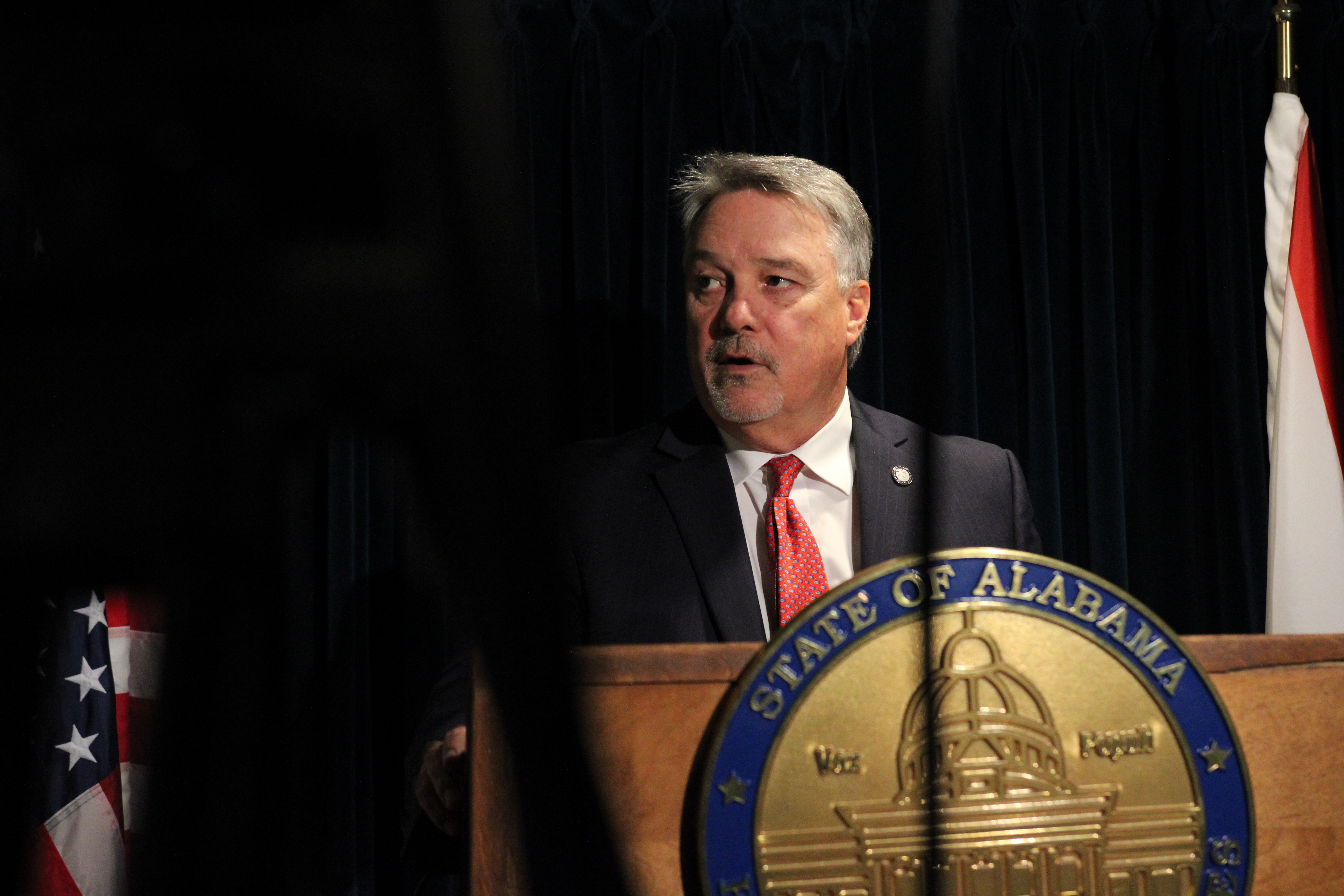
Both caucuses reelected their party leaders, with Rep. Paul Lee, R-Dothan, to serve as House majority leader and Rep. Anthony Daniels, D-Huntsville, as House minority leader.
Rep. Barbara Drummond, D-Mobile, will serve as assistant minority leader.
Other Democratic caucus leaders include:
- Caucus chair, Rep. Ontario Tillman, D-Bessemer
- Caucus vice chair, Rep. Mary Moore, D-Birmingham
- Party whip, Rep. Curtis Travis, D-Tuscaloosa
- Caucus whips, Reps. Kenyatte Hassell, D-Montgomery; GiGi Hayes, D-Birmingham; and Marilyn Lands, D-Huntsville
- Secretary/treasurer, Rep. Kelvin Lawrence, D-Hayneville
- Policy member at-large, Rep. Prince Chestnut, D-Valley Grande
Ledbetter has also announced several committee chairs, including:
- House Ways and Means General Fund Committee, Rep. Rex Reynolds, R-Huntsville
- House Ways and Means Education Committee, Rep. Danny Garrett, R-Trussville
- House Committee on Rules, Rep. Joe Lovvorn, R-Auburn
- House Judiciary Committee, Rep. David Faulkner, R-Mountain Brook
- House Economic Development and Tourism Committee, Rep. Andy Whitt, R-Harvest
- House Boards, Agencies and Commissions Committee, Rep. Margie Wilcox, R-Mobile
Among the several committee chair announcements remaining is the leader of the House Education Policy Committee. Former Rep. Terri Collins, R-Decatur, led the ed policy committee for around a decade but decided not to run for reelection.
The Legislature’s organizational session begins Jan. 12, 2027. The legislative session begins in earnest on Feb. 2, 2027.