
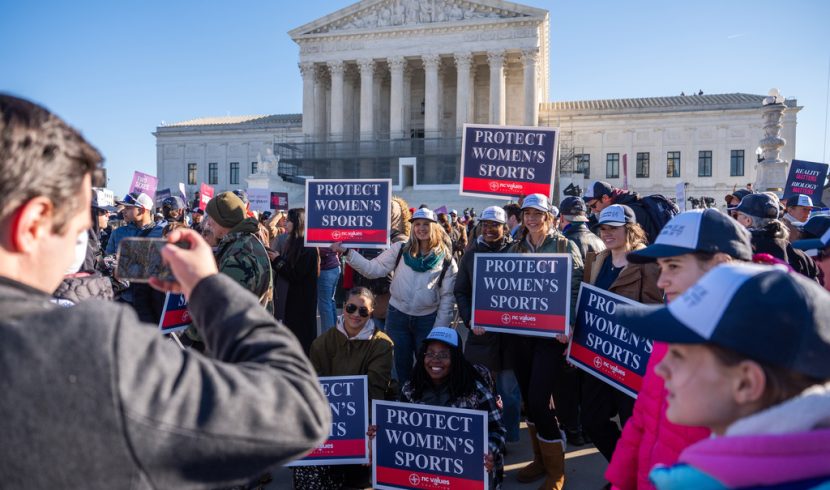
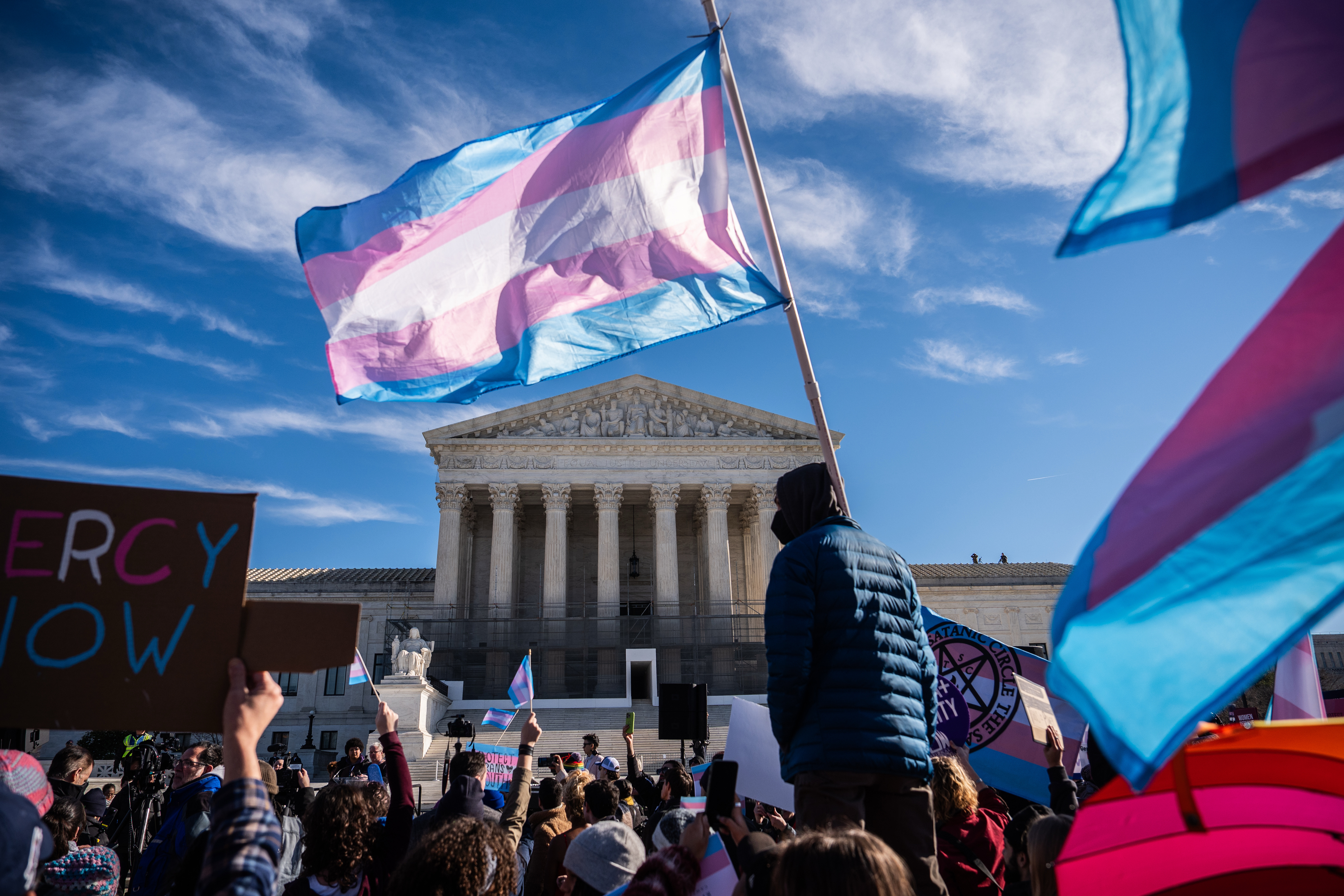
WASHINGTON — Outside the Supreme Court on Tuesday, side-by-side dueling rallies showed the sharp division over whether transgender athletes should be allowed to compete in women’s sports.
The conservative justices seemed poised to uphold two state laws, one from Idaho and the other from West Virginia, barring the participation of transgender athletes in girls’ and women’s sports.
At least five of the six conservative justices hinted that they would rule that the state laws don’t violate Title IX, which prohibits sex-based discrimination in schools, or the Constitution.
The court’s liberal justices focused on trying to get the majority to issue a narrow ruling on the individual athletes involved in the two cases to be allowed to compete.
Alabama and 26 other states have laws that ban transgender athletes from competing in sports that correlate with their gender identity, according to the Movement Advancement Project.
U.S. Sen. Tommy Tuberville, R-Ala., a staunch supporter of the bans, joined other advocates and fellow congressional Republicans at a press conference outside while the justices heard oral arguments. The group said they were rallying to protect girls and women.
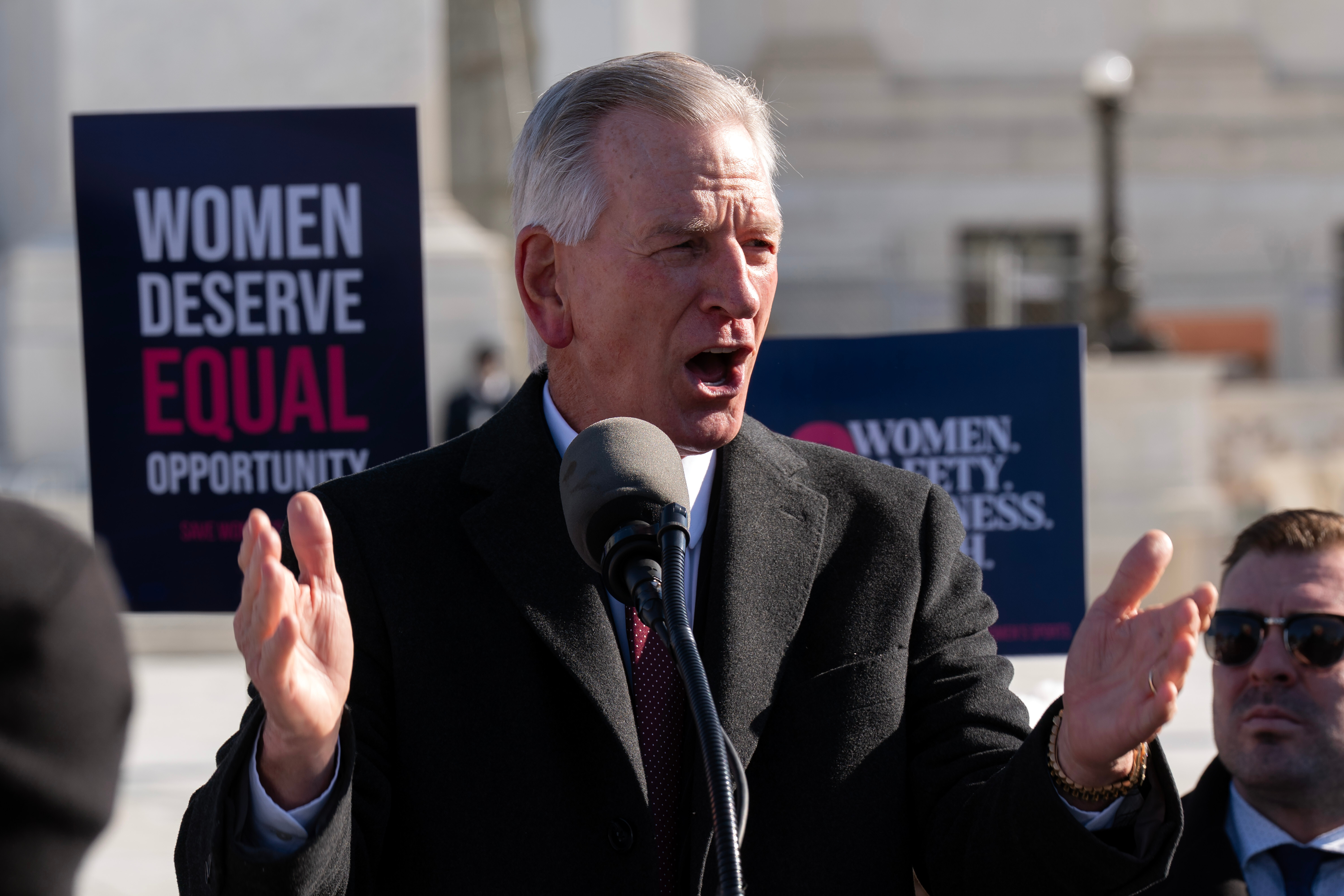
“I’ve got my first grandchild, Rosie Grace. I’d be damned if she’s gonna take a shower with a man,” Tuberville said forcefully outside the court.
On the opposite side of the steps stood transgender rights supporters, urging the court to reject the state laws to ensure all children are allowed to participate in sports.
“Every child deserves to hear that they belong exactly as they are,” Rep. Sara Jacobs, D-CA, told the crowd.
The legal fight comes amidst President Donald Trump’s efforts to target transgender Americans during his second term. He signed an executive order last year barring high schools and colleges from receiving federal funds if they allow transgender students to compete in women’s sports.
Last March, Senate Democrats blocked Tuberville’s legislation that would have prevented transgender athletes from competing in women’s sports. The Protection of Women and Girls in Sports Act would have categorized gender under Title IX as “based solely on a person’s reproductive biology and genetics at birth.”
Outside the court Tuesday, Tuberville invoked his former coaching career, as he often does, to describe how Title IX transformed women’s opportunities in sports. He argued that allowing transgender athletes in women’s sports would strip away those opportunities.
“The greatest thing that ever happened in that building right over there was giving women rights in sports, scholarships, facilities (and) more sports,” Tuberville said. “They want to give the rights of women to a gender group that is a fantasy.”
The Human Rights Campaign argued that preventing students from playing on teams that align with their gender identity violates Title IX and the Equal Protection Clause in the U.S. Constitution. The organization argued that the cases push back on anti-transgender discrimination.
“Anti-transgender sports bans do not protect women. Instead, they police gender for everyone and put all women and girls at risk,” Kelley Robinson, Human Rights Campaign president, said in a statement.
In the Idaho case, Lindsay Hecox, 25, sued over the state law that prevented her from trying out for the women’s track and cross-country team at Boise State University.
The other case was brought by 15-year-old Becky Pepper-Jackson, who has taken puberty blocking medication and has identified as a girl since she was age 8. In West Virginia, she is the only transgender athlete who has sought to compete in girls’ sports.
The debate around allowing transgender athletes to compete in women’s sports has garnered significant attention lately, despite few transgender athletes participating in girls’ and women’s sports around the country.
In an op-ed penned in The Washington Post, Alabama Attorney General Steve Marshall argued for the Supreme Court to rule in favor of the state laws and “to put to rest the claim that the Constitution affords transgender status special protection.”
Other Alabama Republicans, including Sen. Katie Britt and Rep. Robert Aderholt, chimed in on the case on social media. Britt argued that “biological men don’t belong in women’s sports.”
A ruling on the case is expected by early summer.
The Associated Press contributed to this report.